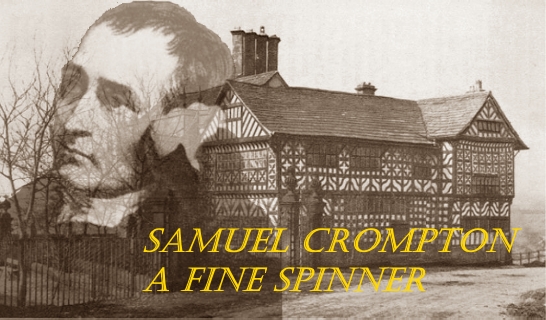
Samuel Crompton – A Fine Spinner

I am currently working with Bolton Little Theatre on an unusual one day theater piece called Samuel Crompton – A Fine Spinner.

Samuel Crompton is one Bolton’s most famous sons, a gifted engineer and inventor who created one of the key machines of the Industrial Revolution – the Spinning Mule. It changed the face of the cotton industry, enabling a worker to reliably spin yard upon yard of cotton thread without it breaking. It was also very scalable, leading to huge mills with rows of machines and much of Bolton’s wealth was built on it. But the man himself saw only a fraction of the wealth that he might have earned from his genius, due to not patenting his invention, but instead accepting payments from mill owners to come and view his designs.

A Fine Spinner by Donna A Hughes, is the story of Samuel Crompton, his invention and his troubled relationship with the new world that machine ushered in. A cast of five actors from Bolton Little Theatre will be performing this one act play at Crompton’s former home of Hall’ith Wood, on Tuesday 26 July 2016, as one of the events celebrating Manchester’s status as European City of Science 2016. Admission is to the house and the play is free, and we will be performing the play three times during the day.

You can find out more about the year long festival at http://www.manchestercityscience.com

European City of Science Logo_BLACK


It has been an interesting challenge so far to plan this production. The author originally intended the play for the theatre, with multiple sets, scenes and a larger cast. My first job was to sensitively edit her play to make it feasible for staging in one room and with the minimum of props. I also had to cut several characters to bring the cast down to a manageable level. First to go was the narrator, a fictional neighbour of the Crompton’s. He was purely a narrator, with no other role in the story, so it seemed sensible to take him out and give parts of his speeches to the characters to perform to the audience as asides. It also made the speeches a little more dynamic if the people involved were relating them. I chose to remove the first scene altogether, featuring Sam and his sister Ruth as children, since child actors bring their own complications and the scene mostly repeated information for elsewhere. My other main deletion was the Prime Minister, since he only appeared for about half a page. Instead the other characters will act as if he is there, while he remains off-camera as it were.

Hall’ith Wood is now a museum, dedicated to telling the story of the house, its role in the English civil war and its most famous tenant – Samuel Crompton. Open Tuesdays and Saturdays, free admission. You can find out more about the place by visiting its website.

I’ll be sharing some details about this production when we start rehearsal. But for now, if you are free during the day on Tuesday 26th July 2015, please mark your diaries!
The Tunnel Under the World

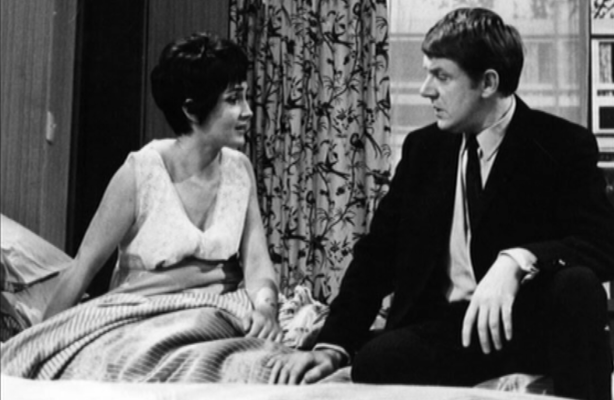
Husband sits on bed talking to his wife

By Frederick Pohl
Adapted by David Campton

I can remember reading Frederick’s Pohl’s short story in an anthology many years ago and loving it, especially its shocking conclusion which felt very fresh at the time. Since then the idea of a protagonist discovering his seemingly ordinary life is in fact an elaborate construct has become a regular in books, television and cinema. Not just in SF but also thrillers. The Tunnel Under the World is an entertaining episode that feels oddly reassuring after watching three extremely dark episodes set in enclosed futuristic environments of one kind or another.

Guy and Mary Birkett have a pretty comfortable life in an modern urban town, which is dominated by the local chemical plant where Guy works. At least it would be comfortable if there weren’t so many intrusive advertising campaigns, from the front page of the morning newspaper to a loudspeaker car driving by blaring out slogans. Who is Mr Swanson, the man who keeps trying to contact Guy and tell him that tomorrow doesn’t exist? Why does Guy have an increasing sense of deja vu? Why does he wake up screaming every morning?

This is as close to the feel of The Twilight Zone as Out of the Unknown has come so far. With its suit-wearing executive hero, I was reminded of the Richard Matheson episode A World of Difference in particular, although it has a different theme. The SF mystery is delivered at a steady pace and plays fair with the viewer, building up its clues and strangeness in a well-constructed fashion. The Groundhog Day element is established early on, but the ultimate reason for it is still a good surprise and well achieved for the effects of the time. Television regular Ronald Hines is fine as the increasingly concerned Guy.

Ever since WWII, science fiction writers have frequently worried about the increasingly scientific appliance of propaganda and advertising. George Orwell wrote about the Ministry of Truth in 1984, and oppressive advertising campaigns have become something of a shorthand for futuristic dystopia. This story reflects a fear of men who believe they can control society through clever messages, and worse, the worry that such people could be right. Towards the end, the industrialist Spelman talks about his political ambitions, with the inference that he will gain power through propaganda rather than principles.

In the same way that television drama writers often fail to create believable youth culture on camera, so made-up advertising campaigns always seem extra phony. It my be that Mad Men cracked that problem, but I haven’t seen it. It is a shame, because it does take away a little from the story, because the adverts seen and heard in the series are so annoying. It’s also a little odd that no one watches television either in a sixties household. It is also slightly ironic that the most effective sales technique is still the old-fashioned personal touch, when Guy and Mary are both persuaded to buy fridges.

For a story that is all about a character questioning the reality of his surroundings, it’s a shame the house set has got a severe case of wobble on it. Most noticeably early on, when Guy reassures his wife that “At least this house is sturdy enough” and knocks on a wall that visibly quivers! It’s a shame because it undermines a later scene where Swanson discovers a brick wall that is actually wallpaper covering metal. The pressure of Sixties ‘as live’ recording also leads to actress Petra Davis noticeably stumbling over lines as she wakes up for the third time. A suitcase which is meant to hit Guy on the head clearly misses, forcing him to pretend to fall unconsciousness for no evident reason.

Late on in the story a rather charming robot appears, looking like two Bakelite radios placed on top of each other, with eyes on tubes that expressively extend and retract as it talks. I was glad to see they went to the trouble of creating this puppet for a relatively short amount of screen time and it is a fun moment.

Ultimately the story is about that modern feeling we’ve had since the industrial age began that we are not so much individuals as components in a system designed to exploit our humanity and make us permanently dissatisfied consumers, always being manipulated. Despite my nit-picking about the production, it’s a very enjoyable SF tale with a great final reveal. It is such a shame that most of this second season is missing from the archive, because Out of the Unknown really found its feet this series. Nevertheless my ranking goes as follows:

  1. The Machine Stops
  2. The Tunnel Under the World
  3. Level 7
  4. Lambda 1

Next stop – colour!

April 2016 news round-up

It’s time for another quick collection of announcements about what my friends and I have been up to creatively and in some cases professionally too.

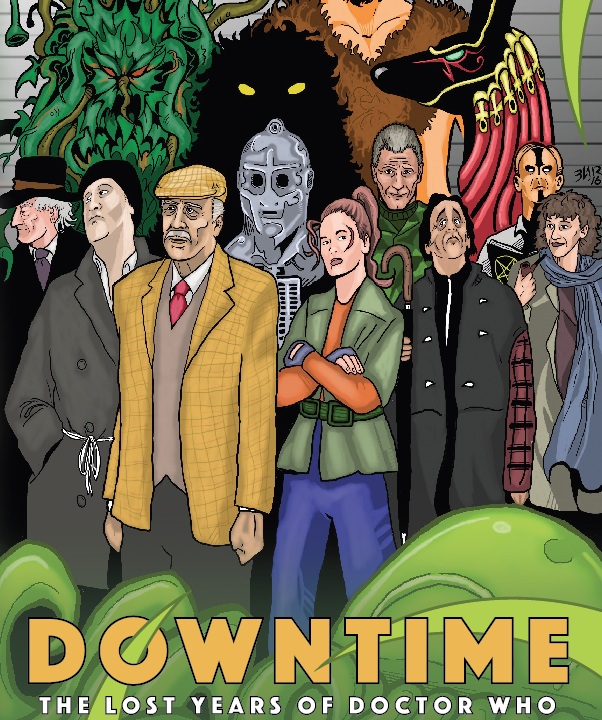
Last year I did an email interview about my times with BBV and writing three Doctor Who spin-offs, for a chap called Dylan Rees. Dylan is writing a book about the vibrant audio and video spin-off market which arose from the final years of the show’s original run and filled in the so-called “wilderness years” between the original and the revived versions of Doctor Who. It will be published later this year by Obverse Books. I’m looking forward to it, not just as a contributor but as a fan of that era. The cover has been already been released:

Downtimefrontcover-602x720

Notice Sylvester as The Foot Doctor on the cover too! You can pre-order it from Obverse Books now. I’ll review once it is out.

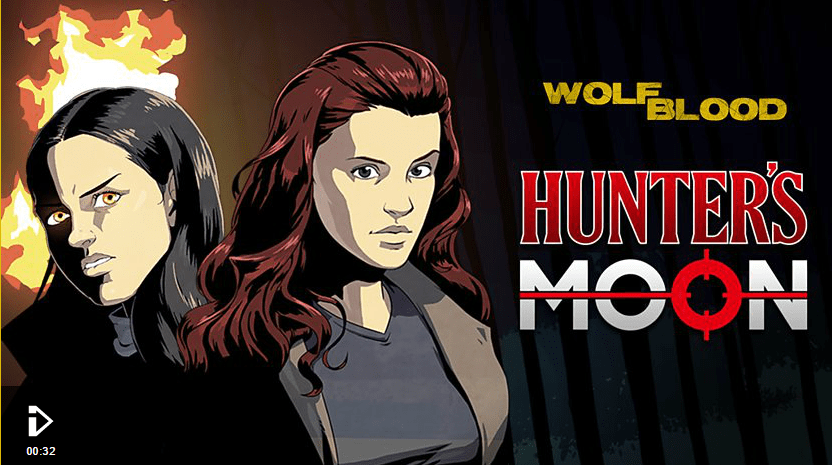
My ever busy mate Rik Hoskin has had several projects out recently, including the first of a new range e-books based on 90’s cult TV show Hercules – The Legendary Journeys. I enjoyed Storming Paradise enormously. It captures the feel of the show very well. You can try a sample and order it from Amazon. He’s also written a second motion comic episode of Wolfblood, the hit BBC children’s series about werewolves. You can watch a trailer of it here at the BBC website.

Finally I recently made a new trailer for the next Bolton Little Theatre production. Taking Sides by Ronald Harwood is an excellent drama based on real events surrounding a US army investigation into suspected Nazi party members, following Germany’s surrender in WWII. Was famous conductor Wilhelm Furtwangler just a patriot on the losing side of the war, or an active member of the Nazi party? Colonel Arnold, traumatised by witnessing the aftermath of Auschwitz, is determined to find some culprits. For this trailer I decided to create a movie style one which sold the story, rather than a behind the scenes talking head piece. The results I think are pretty successful and I intend to make all subsequent BLT trailers story based too.

Level 7

Young couple in futuristic control room

by Mordecai Roshwald
Adapted by J B Priestley

The Bomb and the Cold War cast a long shadow over post-war science fiction, especially in film and television. It gave an atmosphere of suspicion and a down-beat feeling about our future and our endeavours to many a story, whether the subject matter directly addressed nuclear war or not. Just like Dr Strangelove, Level 7 is satirically concerned with the minds behind the military, government and armageddon, but finds that mentality considerably less amusing.

It was an audacious plan. Take the brightest and best young members of the armed forces, screen them for suitability and seal them 4500 feet beneath the ground in a secret underground world, the lowest level of a vast bunker. Here they would control the nuclear arsenal of the country and be able to retaliate against the enemy in complete safety from any nuclear reprisal. Level 7 was now their whole world for the rest of their lives, computer designed to be perfect, where the 50/50 split of men and women would eventually marry and raise the next generation of dedicated operators and Level 7 citizens. Everything has been planned for, nothing can possibly go wrong…

At first it seems this episode is going to be another story of an enclosed artificial society going off the rails because of its internal flaws. For a while it follows that pattern, with X127 (Keith Buckley) discovering that he and his eventual wife R747 (Michelle Dotrice) have very little room to be individuals or experience much of what humanises us. Then World War Three begins and a new story takes its place, the arrogance of military leaders who value winning and jingoism over human life, learning too late that the fallout of a nuclear war does not care about sides, and it is far too powerful to be safely managed.

Level 7 works better as an allegory about the horror of nuclear war and the fact that no side can win, rather than a realistic story, since it never really deals with all the practicalities of such a scheme. In Roshwald’s original novel, we start inside the bunker when it has been running successfully for years and protagonist is indoctrinated to this odd society thus skipping some awkward questions. The television episode by contrast deals with the beginning of the plan, when the inhabitants arrive having been told they are going on a training exercise for the weekend. Abruptly the doors are locked and they are told they are never going to return to surface again or have any contact with their old lives. Furthermore their names are changed to numbers and they are told never to use their own or other’s names again. This is pretty extreme and yet not one of the volunteers protests or panics. Granted some seem to have volunteered, but it is clear many of the soldiers had no idea when they arrived. It is explained that one of the criteria is that none of them are married or have children, but it seems incredible that they are all prepared to go along with an plan that they have been deceived into. Even the most rebellious character we meet, X117 (David Collings) merely grumbles about the situation as if it was a delayed flight. Furthermore surely some of their families would start to ask questions when their sons and daughters disappeared on a top secret mission without warning?

The way the planners have assumed that a 50/50 mix of men and women will simply pair up may seem naïve but I regard that more as a satirical joke on the ridiculous attitude of military mind, rather than a mistake of the writers. Another clever plot device is the two man safety protection for the launching of the missiles. Initially the General (Anthony Bate) explains that the two operators who must simultaneously press their buttons to launch the missiles, are there to ensure human judgement takes precedent over that of the strategy computer. The simulated drills quickly prove that the opinions of the operators are immaterial. The system in fact depends of them obeying like robots. When X117 refuses to press his button during a drill, the button is pushed anyway by the General and  X117 is punished ultimately with a lobotomy for disloyalty.

When the nuclear contamination inevitably seeps into the bunker, despite the confident predictions of the military experts, rather than weeks of vomiting, sores and cancer, it arrives as a rather poetic paralysing death. Again this fits an allegorical story rather than a hard science one. Aside from saving the production a lot time consuming make-up, it does create some chilling scenes of rooms filled with frozen bodies.

Watching these episodes in order, perhaps the biggest problem with Level 7 is that is echoes several earlier stories in content and message. So it does not have as much impact as it might have had, having already seen Some Lapse in Time, Thirteen to Centaurus and The Machine Stops. It is handsomely made with some effective sets by Norman James and good direction from Rudolph Cartier, the director behind those earlier SF television touchstones Quatermass and 1984. An intelligent, inevitably depressing, argument against anyone who believed that a nuclear war could be anything other than mutually assured destruction.