“Democracy is a form of collective suicide.” The Guardians – Very British Futures

We’re getting political this week in the latest episode of Very British Futures as we examine little known near-future dystopian drama The Guardians.

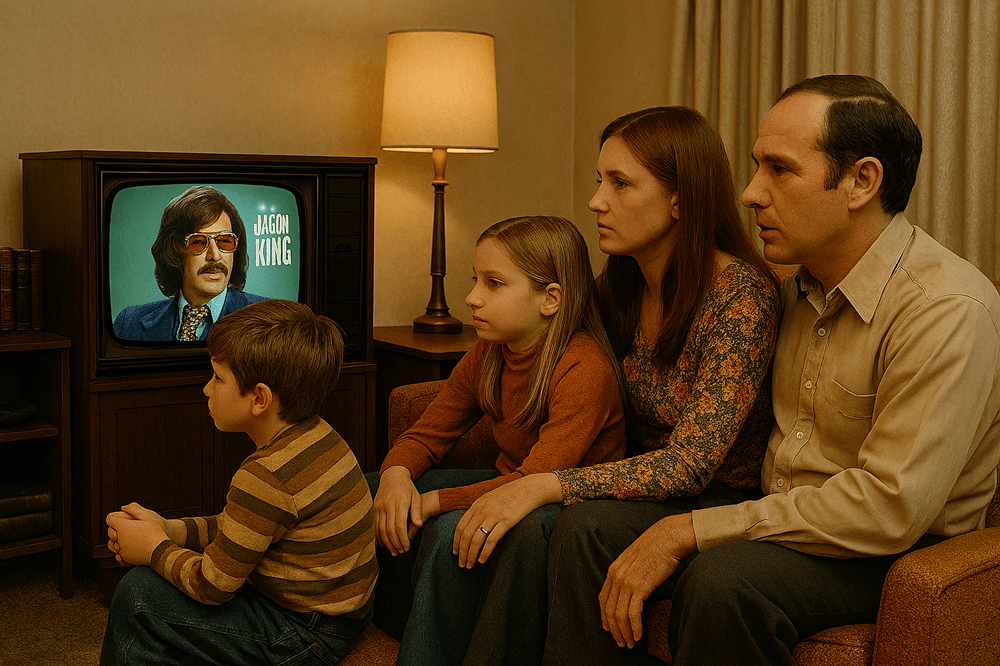
The Guardians, a 13-episode political drama produced by London Weekend Television in 1971, stands as one of British television’s most thoughtful dystopian works. Created by Rex Firkin and Vincent Tilsley, with important contributions from John Bowen, the series imagines a near-future Britain that has slid quietly into authoritarianism, ruled not by a charismatic dictator but a gentlemanly, patrician businessman and fear of the G’s – the Guardians of the Realm.

In the world of The Guardians, Britain is governed by a unified party, elections have been cancelled indefinitely — and their rule is protected by a militarised police force known as the Guardians. Ostensibly created to maintain stability after a national crisis, the Guardians operate with sweeping powers, often outside the boundaries of legality or morality. The regime maintains the outward trappings of democracy, but freedom of expression, political opposition, and civil liberties have been quietly eroded.

The series explored themes that feel remarkably contemporary: surveillance, media manipulation, the fragility of democratic institutions, and the ease with which a population can be persuaded to accept authoritarian measures in the name of security. It also looks honestly at how a resistance movement works, which can be just as ruthless and morally questionable. Its tone is nuanced rather than sensational. The plot weaves together the lives of characters both in power and those seemingly without. Nobody turns out to quite what they appear at first.

Though praised in some quarters for its ambition and intelligence, The Guardians was not repeated after its original broadcast. For decades, it existed mostly in the memories of viewers and television archivists, until Network Video released it on DVD for a new audience to find.

Joining me for this episode is an old friend of the show – Stephen Hatcher – who has previously shared his expertise on Out of the Unknown and Play for Tomorrow. His love for the series is infectious. I hope you find this edition as fascinating as I did recording it.

You can listen to episode here on Spotify or any of the major podcast platforms.

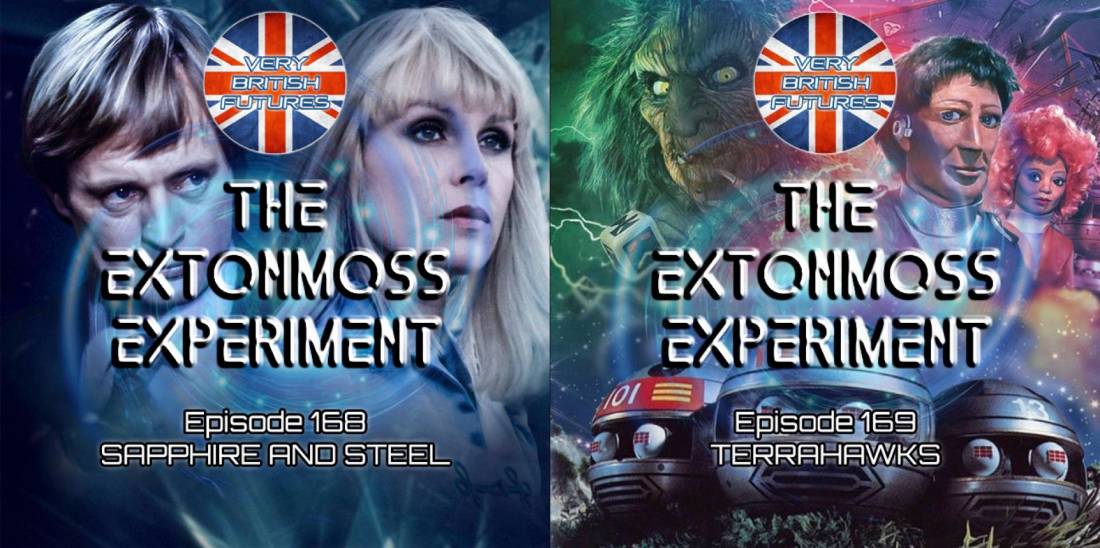
Now, Sapphire, take time back! Sapphire and Steel – Very British Futures

There’s a brand new episode of Very British Futures out there now, tackling another of British TV most famous SF series – Sapphire and Steel.

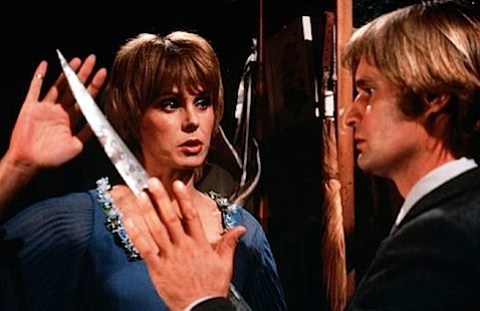
When Sapphire & Steel first aired on ITV in July 1979, it didn’t so much arrive as materialize—mysterious, minimalist, and utterly unlike anything else on television. Created by Peter J. Hammond, who had written for Ace of Wands and Shadows but had mostly worked on conventional fare like Z-Cars and Crossroads, the series was born from a desire to explore the fragility of time and the eerie consequences of its disruption. Originally titled The Time Menders, the show was inspired by Hammond’s stay in a supposedly haunted castle, and that ghostly DNA runs deep through every frame.

The premise? Two interdimensional operatives—Sapphire (Joanna Lumley) and Steel (David McCallum)—are dispatched to locations where time has gone awry. Their mission: to repair temporal anomalies caused by emotional trauma, historical residue, or supernatural interference. Sapphire & Steel thrived on atmosphere, ambiguity, and a creeping sense of dread. Its low-budget sets and sparse exposition only heightened the sense of unease, making it feel more like a stage play trapped in a dream.

Over the course of its 34 episodes, spread across six “assignments,” the series built a cult following. Viewers were captivated by its refusal to explain itself. Who were Sapphire and Steel, really? Were they aliens? Angels? Elements? The show never said. And that was the point. It trusted its audience to lean into the mystery.

Hammond wrote all but one of the stories (Assignment Five was written by Don Houghton and Anthony Read) maintaining a consistent tone of surrealism and existential horror. The show’s stirring theme music by Cyril Ornadel and its stark visual style added to its otherworldly feel. Despite—or perhaps because of—its cryptic nature, Sapphire & Steel left a lasting impression on British sci-fi, influencing later works like Torchwood and Inside No. 9.

In my latest episode of Very British Futures, I’m joined by Dr Steve Exton (The Extonmoss Experiment) and Mark Stalker to revisit this haunting classic. We explore its legacy, its most chilling moments, and why it still resonates decades later. They are both highly educated and knowledgeable and great fans like myself and had some fascinating ideas. Our conversation went on for nearly two and half hours and editing it has been a real challenge. Maybe if this episode is popular enough I’ll released an extended cut? Whether you’re a longtime fan or a curious newcomer, this episode is your invitation to step into the time corridor.

You can listen to the episode on Spotify, Apple, Goodpods, Audible, Youtube and most good podcast apps. Or listen to it here.

With thanks to:
Sapphire & Steel – Wikipedia
Temporal Echoes – Horkan

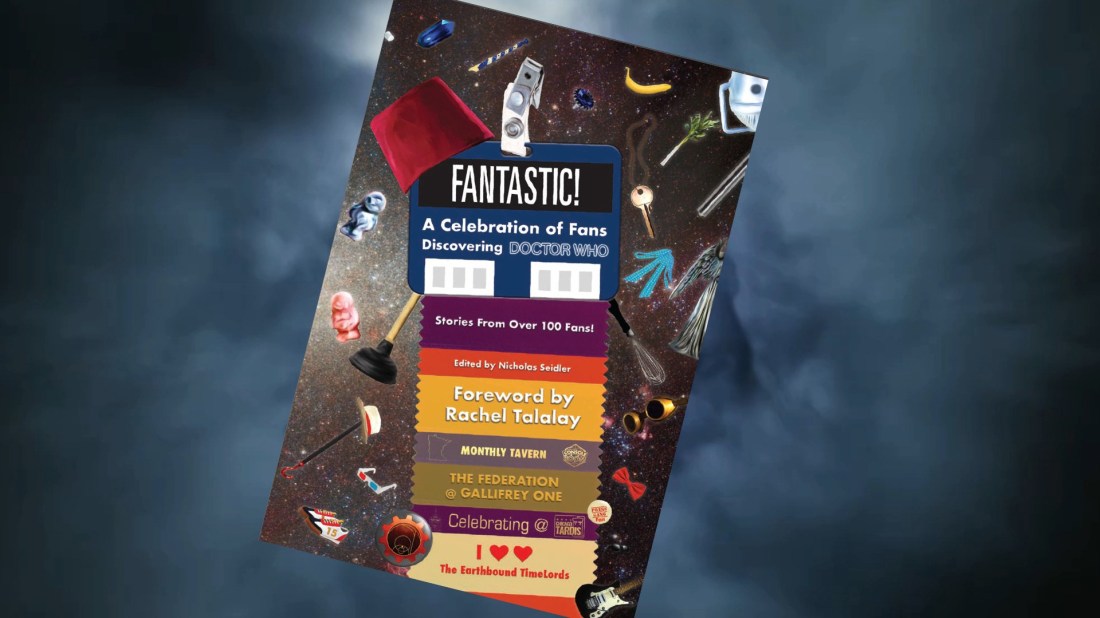
Fantastic! A Celebration of Fans Discovering Doctor Who

Book cover for Fantastic! flying down a time tunnel for Series 5 of Doctor Who

This week sees the release by Zepo Publishing of a brand new book about Doctor Who and specifically its fanbase around the world – Fantastic! A Celebration of Fans Discovering Doctor Who. Editor Nicholas Seidler sent out a questionnaire earlier this year asking Doctor Who fans to contribute memories and thoughts prompted by four questions:

  • When did they first start watching?
  • How did they become a fan?
  • What is their favourite fan related memory?
  • What story would they recommend to a new viewer?

Over a hundred replies are collected together in this book, including my own. I can honestly say its fascinating reading and at a time when so many fandoms seem to have been infected with negativity and toxicity, it is a useful reminder that the majority of people involved in this world are kind and funny individuals. There is a charming forward by the gifted film and television director Rachel Talalay, who directed several episodes of the series, including the highly rated Peter Capaldi one-hander Heaven Sent.

You can order the book through major booksellers as a hardback or paperback. Find out more about the book by visiting its publishing page. You can also find out about the author’s signing tour at several forthcoming USA conventions and read a preview.


Friend and Very British Futures recurring guest Kara Dennison has an article in the latest edition of Celestial Toyroom Issue 554, the official magazine of the Doctor Who Appreciation Society, reviewing The Story and the Engine. You can download the magazine as a PDF.

Codename Icarus – Very British Futures

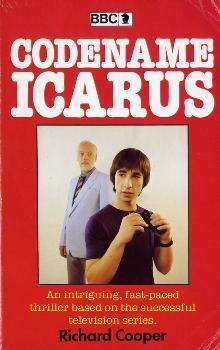
Watch out, the latest episode of Very British Futures is available now and this time we are delving into obscurity again to analyze Codename Icarus, what would now be called a techno-thriller, and aimed at teenagers. Joining me on the journey are my old friends, writer Kara Dennsion and Nicky Smalley.

Among the many children’s dramas produced by the BBC in the Eighties, Codename Icarus stands out as one of the more sophisticated. First broadcast in 1981 as a five-part serial, it was written by Richard Cooper, directed by Marilyn Fox, and produced by Paul Stone. It quickly earned a reputation amongst those who watched it for intelligence and a willingness to treat young audiences with respect. Far from being a lightweight adventure, Codename Icarus explored weighty themes of power, manipulation, and the exploitation of genius. Paul Stone would go on to produce some of the best BBC children’s fantasy drama of the decade, including The Box of Delights and The Chronicles of Narnia. While Richard Cooper would create Knights of God for ITV.

At its heart, the drama told the story of Martin Smith, an isolated teenage mathematical prodigy whose brilliance is unrecognised and un-nurtured. His alienation at school and at home makes him vulnerable to recruitment by a mysterious organisation known Icarus. Little does he know that behind a series of private academies is a shadowy group orchestrating a global arms race, and their founder is particularly interested in using Martin’s talents to advance his own ends.

The narrative unfolds on two levels: Martin’s personal journey, as he begins to realise the sinister uses to which his gifts are being put, and the parallel investigation by intelligence agent Andy Rutherford, who uncovers Icarus’ machinations.

Gordon Kaye as science journalist Broadhurst.

The show is notable for how it blended the thrills of a spy drama with a deeply unsettling commentary on the militarisation of science and the pressures faced by gifted children. Rather than offering simple heroes and villains, Codename Icarus painted a morally complex world where adults exploit youth for power, and where intelligence itself becomes both a gift and a curse.

Stylistically, the series was atmospheric and serious, eschewing flashy effects in favour of taut direction, naturalistic performances, and a mounting sense of dread. Barry Angel’s portrayal of Martin Smith was particularly haunting, capturing the vulnerability and quiet anguish of a boy caught in forces far beyond his control. Its willingness to ask difficult questions made it stand apart from much of BBC children’s drama at the time, and it remains a great example of the BBC’s tradition of challenging young audiences.

You can listen on your preferred podcast app or here online.

It was good fun to record this podcast with old friends Kara and Nicky and hear their analysis and enthusiasm. Hope you enjoy this episode too.

A Jaunt with The Tomorrow People – Very British Futures

This week sees the launch of the latest episode of the Very British Futures podcast, an epic length appreciation of The Tomorrow People, one ITV’s most successful family science fiction programmes. I did consider splitting this into two parts but after editing I found it came to about the same length as the Out of this World episode from earlier this year. Not only that, but I am looking at the whole 8 year run of the show, in the company of my friends Tim Reid and Charles Auchterlonie. They’re the hosts of the Doctor Who-centric Randomiser podcast and had been gradually reviewing the series of the last few years.

Even though it’s become a cliched observation, ITV’s children’s fantasy dramas had a golden age in the 70’s. Whilst BBC children’s television tended to adapt classic books and look to the past, the ITV regions produced a string of imaginative contemporary stories including Children of the Stones, Sky and Raven. Made by Thames Television, Roger Price’s bold, ambitious creation The Tomorrow People ran on ITV from 1973 to 1979. A show brimming with imagination, optimism, and youthful energy, it carved out a distinctive niche and left an indelible mark on a generation of viewers.

At its core, The Tomorrow People was about evolution and possibility. It introduced audiences to a group of young people who represented the “next step” in human development—homo superior—equipped with extraordinary abilities like telepathy, teleportation (“jaunting”), and telekinesis. These weren’t superheroes in tights or grim antiheroes in dystopias, but relatable young characters navigating their own growth, relationships, and responsibilities while using their powers to defend humanity. They were also incapable of killing. This gave the series a refreshing tone of hope and inclusivity, at a time when much 70’s science fiction leaned toward bleak futures especially pre-Star Wars.

What made the show so enduring was its fusion of big ideas with a strong sense of fun. Roger Price never shied away from tackling issues of morality, prejudice, and power, but always through adventurous plots that whisked viewers from alien worlds to sinister conspiracies and futuristic technologies. Its use of cliffhangers and serial storytelling kept young audiences glued to their sets, eagerly awaiting the next installment.

Visually, it bore all the hallmarks of 1970s British sci-fi charm—psychedelic effects, imaginative (if sometimes endearingly low-budget) alien designs, and that iconic teleportation shimmer. But rather than being a drawback, these quirks only enhanced its cult appeal, making the show feel daring and inventive, produced with enthusiasm that more than compensated for limited resources.

Whilst Doctor Who had a comforting authority figure, the series put teenagers at the center of the narrative, giving them agency and positioning them as the future—literally. For many young viewers in the 1970s, it was a encouraging recognition of their own potential, wrapped up in a sci-fi adventure.

Simply put, The Tomorrow People wasn’t just a children’s sci-fi show—it was a celebration of human potential, a call to believe in better futures, and a shining example of how bold ideas and youthful spirit can create something timeless.

You can listen to Very British Futures on your favourite podcast app or here.

“I’m ready to come up” Blake’s 7 – Very British Futures

I wasn’t going to do a Blake’s 7 episode when I conceived my podcast Very British Futures. I felt that show already had several excellent podcasts covering it and my series was about the less celebrated UK shows. In time however, I found that listeners want to hear about the shows they had watched, as well as ones they’d never heard of, and besides which, Blake’s 7 has got so much in it to enjoy and discuss.

For such a significant episode I needed first rate guests and I was fortunate that my invitations was accepted by actor and old friend Amy Elizabeth, not to mention author, presenter, academic Dr Una McCormack. They were both great company.

Does Blake’s 7 need much of an introduction? Here’s the quick version: Created by Terry Nation and running for 4 seasons in the slipstream of Star Wars, the drama followed the adventures of a group of criminals turned reluctant resistance fighters in a space-faring future. Humanity is ruled by the bleak tyranny of The Federation. Blake and his recruits have stolen an advanced alien warship rechristened Liberator. The show was famous in British pop culture largely for two factors, the characters who were much more complex and witty than most SF heroes, and a BBC budget stretched to breaking point.

But as we reveal in our talk, Blake’s 7 was made by people who cared, who wanted to make this show as rich as they could. Terry Nation and Chris Boucher did fantastic worldbuilding and in many ways the programme is an early example of the kind of story arc which is now expected in modern television drama.

You can listen to the episode on your favourite podcast app and right here on Spotify.

The list of shows influenced by the series included Babylon 5, Firefly, Dark Matter and Intergalactic.

You can watch Blake’s 7 on ITVX.

Easter 2016 – Play for Tomorrow – Very British Futures

This week’s episode of Very British Futures features something brand new – a short history lesson. Because this week we look at a fairly unique meeting of Northern Ireland politics and science fiction in the Play for Tomorrow – Easter 2016 and I felt I needed to give listeners a bit of context for the significance of that date, since it was the centenary of the Irish Easter Uprising of 1916. The history of Northern Ireland is far too big a subject for a personal blog about science fiction. There is plenty I still do not know about it that I should, which is why I was adamant that I needed a guest from Northern Ireland to talk about this television play. So big thanks to Carolyn Arnold, who’s comes from the country and is also a cult TV fan.

The story takes place in Northern Ireland’s one and only integrated teacher training college. As Easter approaches, a struggle develops between Cyril Brown (Principal of the college) and Lennie North (Security Director), whose belief is that firm security as a means of prevention is more effective than liberal ideas about education and integration. The focus of their conflict is Catholic lecturer Connor Mullan and his plans to turn an exhibition about the uprising into a protest against the current Northern Ireland assembly. As all three men take extreme positions and compromise becomes impossible, a tragedy unfolds.

Easter 2016 was written by Graham Reid and broadcast on BBC1 on 18th May 1982. It starred Derrick O’Connor, Bill Nighy and Denys Hawthorne.

You can listen to the episode on your favourite podcast app or from this Spotify link.

As it turned out, in 2016 the biggest talking point in Northern Ireland and the rest of the UK was Brexit. As far as I can tell from my brief research, what centenary ceremonies took place were wholly peaceful affairs. This is the final part of the Play for Tomorrow season and I hope you’ve enjoyed this deep dive into an obscure bit of British science fiction. Next week by extreme contrast we are discussing one of the most famous BBC SF shows – Blake’s 7!

To find out more about Carolyn Arnold and her “time travel” business, visit her Facebook page.

Shades – Play for Tomorrow – Very British Futures

Kids! Back in 1999 you couldn’t get them to take off their VR shades for love or money. Not to mention their shiny metallic jumpsuits and their all-night parties in their government provided luxury accomodation! Well Shades may seem amusingly off-target in its predictions but its themes about political protest, apathy and the line between peer pressure and being part of a friendship group are still relevant concerns for drama.

You listen to now on your favourite podcast app or following this link to Spotify.

Welcome to a city tower block converted into a government-run ‘Youth Unit’. The youths, at an age when they might be studying, training, working or protesting, have been ‘ bought off by the government -this being paid for by the ‘ New Wealth’ created by the development of new microchip technology. The shades of the title are dark glasses, the donning of which enables the youths to pursue his or her own dream, career or obsession. But when Sheena starts to research a young CND protestor from 1982, her curiosity starts making her ask uncomfortable questions about their seemingly idyllic life.

Shades was shown on BBC1 on 11th May 1982 at 9.25pm, written by Stephen Lowe, and stars Tracy Childs, Stuart Mackenzie and Neil Pearson.

It was a pleasure to be joined once more by my old friend John Isles to discuss this, the most obviously science fictional of the six plays. It takes its cue both from Eighties fears about the bomb and the example of the Greenham Common protests, and Aldus Huxley’s influential novel Brave New World.


Great news from Rik Hoskin. He has been nominated for a Scribe Award for The Wheel of Time graphic novel. Wishing him the best.
https://www.facebook.com/groups/TheWritersCoffeehouse/posts/24126273807012148/

The Nuclear Family – Very British Futures

This week on the Very British Futures podcast, we’re turning back the clock to the shadow of the Cold War, as we examine the fourth Play for TomorrowThe Nuclear Family – a blackly comic TV play that aired in 1982. A blend of domestic drama and speculation about the future of work in a seemingly post-industrial Scotland, it imagines a society not just living with the threat of nuclear war, but adjusting to life without manual labour and all the community which goes with it.

You can listen to the episode here or on your favourite podcast platform. For this installment I was lucky enough to be joined by Mark Donaldson, writer and podcaster, including Doctor Who podcast On the Timelash.

The Brown Family consists of Joe (father), Agnes (mother) and two teenage children, Gary and Ann. Joe was made redundant in the mid-80s, like so many other men, and in 1999 – the year in which the play is set – it is the children who are the breadwinners, working in the spare room on their computers. Joe decides that the family needs a break, the first since Gary was a baby so makes plans to visit ‘Sea Bed 6’ military base to spend two weeks on a working holiday. However, the Browns discover a lot more than just honest labour.

It’s an engaging play with a welcome sense of humour and two excellent turns from Jimmy Hanley as Joe Brown and Russell Hunter as Sgt Smellie (pronounced Smiley).


Also out this week is the latest episode of the Doctor Who – Too Hot for TV podcast. This time Dylan Rees and guest Paul Griggs are taking a look at two Sontaran stories, including my own audio adventure Conduct Unbecoming. You can find out what they thought of it by listening on your podcast app or following this link.

Slaine: The Horned God – Live on Stage

Slaine, a barbarian warrior standing bare-chested.

My friend Rik Hoskin has told me about an intriguing new UK theatre event that might be of interest to readers:

Professional storyteller Jason Buck will deliver an official adaptation of 2000AD‘s Slaine: The Horned God, based on the story written by Pat Mills, as a theatrical performance at Oxford Playhouse on 19th September. Tickets are available to buy now.

The Oxford performance is a preview show for a tour later this year; a show adapting a tale of Celtic heroes, villains, monsters, magic, dragons, demons, goddesses and gods for the stage, it’s been created by Jason in partnership with 2000AD and Rebellion.

Originally created by Pat Mills, “the godfather of British comics”, and his wife Angie Kincaid, Sláine has captured the imagination of comics readers for generations.

Set in a “time which is not a time” when Britain was rife with magic and mischief, this one-man production of Slaine: The Horned God brings together the epic heroic exploits and divine transformation of the one who would be High King of the Tribes of the Earth Goddess.

This production reimagines ancient mythologies and brings to life the traditional art of storytelling for modern audiences.

Jason Buck has been a performer most of his adult life, including gurning, comedy and sword swallowing, but his passion lies in stories.

“There’s nothing like getting lost in a story, the pictures in your head are better than film,” the prize winning storyteller says.

Jason has also written and published seven illustrated collections of stories, including Stories from the Towers of Stone and Steel and Jack in the Blood, the latter inspired by testing on Jason’s ancestral DNA.

 A teller of tall tales, a weaver of whimsies and a fashioner of fables, Jason draws on traditional favourites and new ideas. His stories are told in the oldest and best ways – as live performances for modern audiences. 

Based in the West Midlands of England, as well as a global online audience, Jason has performed across the UK and mainland Europe, blending traditional and contemporary motifs, vocal sound effects and pure, unadulterated fantasy.

• Book your tickets for Jason Buck’s interpretation of Slaine: The Horned God at Oxford Playhouse on Friday 19th September 2025 here

• Jason Buck is online at jasonbuckstoryteller.co.uk | Facebook | Instagram | Threads