Out now on your favourite podcast platform, the latest episode of Very British Futures, covering Bright Eyes, the second Play for Tomorrow from the makers of Play for Today. Broadcast in 1982. Written by Peter Prince and directed by Peter Duffell.
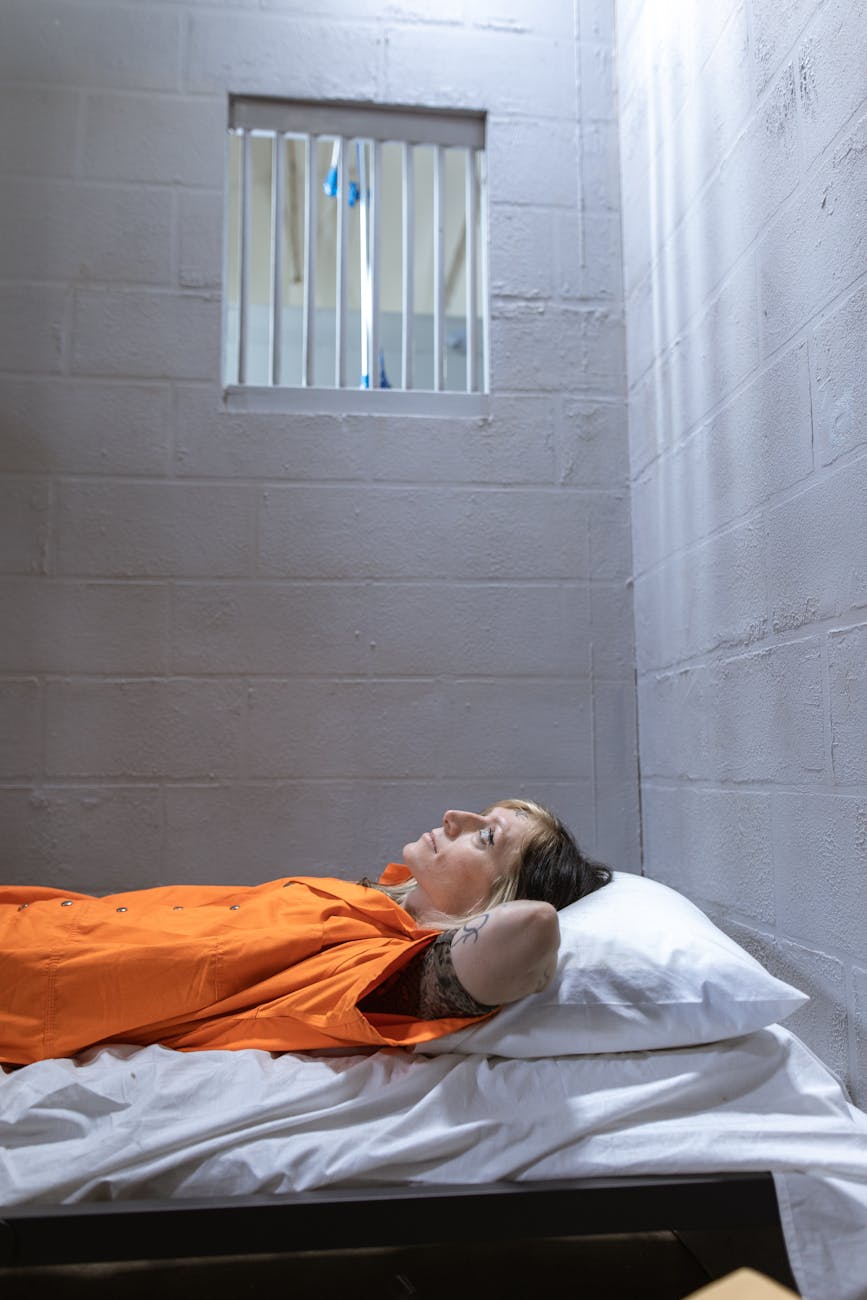
New Year’s Eve 1999. Great Britain is part of the European State. The Euro army is in the midst of a controversial war in the Middle East. Wealthy businessman Sam Howard has come to a French prison to see his daughter Cathy, who has been arrested for being part of a conspiracy to assassinate a pro-war politician, and is now facing execution. The authorities hope he can persuade her to issue an apology regretting her actions, allowing them to commute her sentence to prison time. Waiting outside her cell, Sam’s memory flashes back to earlier New Year’s Eves. 1979 when she was six years old and left with him overnight by his ex-wife. 1989, when she was sixteen and he criticised her 60’s themed party as disrespectful to the genuine struggles of that decade. When she said didn’t care about politics, he told her to start taking an interest and challenge to official line about the coming war. Now a crowd of journalists wait outside the prison, his ex and her legal team are helpless and he must decide whether to ask her to betray her principles to save her life.
One of the good things about making this series is when a guest helps me see a programme in a new, usually better light. This was the case with Bright Eyes and my friend Jon Arnold. An experienced writer and commentator, Jon’s enthusiasm for this play about the generation gap, activism and pragmatic politics was infectious. Hope you find this an interesting episode.
You can find the episode on all major podcast platforms, including Spotify.
To coin a phrase “Good news everybody!” There’s been a hiatus with the Very British Futures podcast for a few months, although I have been recording several conversations. The reason was that I am presenting a mini-series about 1982 BBC anthology Play for Tomorrow and I wanted it to be hitting your ears on a weekly basis. So I couldn’t release the first one until they were all ready to go.
But today is the day and you can hear what Rod Brown (host of Nostalgia Tours podcast) and myself made of the first entry – Crimes by Caryl Churchill.
Play for Tomorrow was a short-lived experiment by television producer Neil Zeiger, who was already in charge of the well-regarded Play for Today strand of one-off plays which ultimately ran for 15 seasons between 1970 and 1984. Amongst its wide variety of original stories were modern classics like Blue Remembered Hills, Abigail’s Party and Edna the Inebriate Woman. Whilst most of its plays were realist, it occasionally ventured into science fiction, most notably in The Flipside of Dominic Hyde. It was the success of that time travel comedy that encouraged Zeiger to propose a mini-season of plays set in the near future UK, based on realistic scientific and social science predictions.
Crimes is not so much as story as a think piece, a collection of linked monologues. building a picture of a more regimented Britain in the shadow of a continued Cold War. A group of prisoners are attending a mandatory therapy session under the chairmanship of Melvyn, a successful criminal psychologist. But is Melvyn himself really in a good place to be deciding on other’s sanity?
I deliberately wanted to have some fresh voices in this mini-season, as well as some old friends. Rod Brown is a fairly recent podcaster on the seen but his Doctor Who podcast Nostalgia Tours is already building a rep for itself. He’s an excellent guest as you’ll find out in this episode. Hope you enjoy this special set of Very British Futures episodes, available on your favourite podcast app.
I’m pleased to share with you that I am the guest on the latest episode of the podcast Doctor Who – Too Hot for TV, hosted by Dylan Rees. Together we are looking back at two unmade stories from the 1960’s – Farewell, Great Macedon and The Queen of Time. Both have been recreated as dramatised audiobooks by Big Finish. I’m particularly happy with the way this one has turned out. In fact I think it’s the best of my three guest spot so far because I sound more confident and fluid and there’s a lot of interesting Doctor Who behind the scenes details to talk about.. You can listen to the episode here https://www.buzzsprout.com/864883/episodes/17368333-s5-e33-just-a-bit-of-tea-with-a-wee-lassie and all the major podcast apps.
Farewell, Great Macedon was submitted by Moris Farhi to the show’s script editor David Whittaker during the first season in 1964. It features the First Doctor as played by William Hartnell. Unusually amongst the so called “lost stories” of Doctor Who, it exists as a fully written script rather than just an outline, which helps make this adaptation feel just a bit more legitimate. Nigel Robinson, a skilled adapter of early Doctor Who stories, wrote the audio version and Big Finish mainstay Lisa Bowerman directed William Russell and Carol Ann Ford, who played two of the Doctor’s first companions. John Dorney guested as Alexander.
The TARDIS lands in the Hanging Gardens of Babylon, where the travellers meet Alexander the Great who welcomes them with hospitality. But history teacher Barbara realises that they have landed a few days before Alexander’s death and with the TARDIS needing to recharge before it can leave, the four friends find themselves caught up in court treachery. It’s a splendid story and for me one of the high points of Big Finish’s Doctor Who range.
The Queen of Time features the Second Doctor, as played by Patrick Troughton and was written by Brian Hayles. Hayles had written several stories for the series and this proposed adventure owed a large debt to one of them, The Celestial Toymaker. This time Catherine Harvey adapted the detailed plot outline and Lisa Bowerman once again directed. Former companion actors Frazer Hines and Wendy Padbury performed it, with Caroline Faber as Hecuba.
The Doctor and his companions are mysteriously invited to meet Hecuba, the Queen of Time and sister of the Toymaker. Trapped in her realm, the Doctor must ward off Hecuba’s romantic overtures, whilst Jamie and Zoe face a series of deadly puzzles. This is something of a misfire for me and I enjoyed getting into why I don’t like it.
As well as recommending Too Hot for TV as a great podcast anytime, I’ll take a moment to remind you that Dylan’s second book Myths and Legends, a deep cut into independent filmmakers Reeltime Pictures, will be out soon. You can find out more here.
Before I go, my friend Rik Hoskin has had a new short story published in the premiere issue of Goblins and Galaxies Magazine called “Tournament in Frow” and you can find out more below:
Hope you are well. Apologies for it being a bit quiet around the blog this year, but I’ve been working on a few projects so that I can have a bit of a podcast event in the not too distant future. It’s a mini-season of Play for Tomorrow and I want all six episodes in the can, to guarantee I can release them weekly. In addition, I’ve recorded two further installments on Codename: Icarus and The Tomorrow People, which hopefully follow soon after. Meanwhile at work I’ve been working on my first authored VR projects, as opposed to just being a consumer of other people’s apps. And there’s some other activity that I can’t talk too much about yet. So there’s going to be more regular posting soon. I also thinking of releasing some old reviews which have never been in print before but which I think have some value. Speaking of reviews, I talk about Boris Karloff: The Man Behind the Monster in the latest episode of the Official Talking Pictures TV podcast.
Rik Hoskin is as busy as ever. Amongst his output are two short stories, one for an anthology and another for a fiction magazine.
Behind the Revolving Door: An Anthology of Choices is a forthcoming book from Celestial Echo Press.
Each of us makes a multitude of choices daily, some minor and some with major consequences. Do you eat cereal or oatmeal for breakfast? Skip it entirely? Do you or don’t you wear your lucky shirt to the sports event? What do you think the consequences would be if you didn’t wear your lucky shirt?
This anthology will be a collection of stories that will take you on a journey with the author’s protagonist as they make a decision. We will ask for stories that take them through a trial and force them to take an action, to make a choice. For example, the character comes to a fork in the road. Do they take the right path or do they take the left? Does the character find a wallet on the ground? Do they open it? Return it to the owner, or keep it? What are the consequences? Do they encounter a second choice, going back through the revolving door? Do they find classified information, implicating a family member in a coup? What do they do with it? What happens next? Is the character hiking through the woods, and finding a portal, not knowing where it will take them if they enter? What happens? Is it so bad that they try to return, hence going through the revolving door? There are many, many ways this theme can be interpreted.
They have invited five authors, some award-winning and some award-nominated, including Rik. The remainder of the stories will come via open submissions and they anticipate a September release.
Meanwhile the publishers of Cosmic Horror Magazine are launching a new title that promises to be a spiritual successor to Weird Tales – Goblins & Galaxies Magazine. Rik will have a story in the premiere issue which is currently launching on Kickstarter: https://www.kickstarter.com/projects/crtyra/goblins-and-galaxies-magazine
We are passionate about turn-of-the-century pulp magazines like Weird Tales and have tried with each issue to pay homage while also amplifying modern story-telling techniques and diverse voices. We want to bring that same approach to a brand-new magazine emphasizing Sword & Sorcery, Dark Fantasy, and Science Fiction.
The marvellous Dylan Rees has guested on two episodes of Very British Futures and I’ve been a guest on three episodes of his Doctor Who Too Hot for TV podcast. A few years ago he published a book about the so-called “Wilderness Years” of Doctor Who called Downtime. Now he’s shortly to release a brand new book in a similar vein – Myths and Legends: The Reeltime Pictures Story.
This is the inside story of Reeltime Pictures, from the earliest days of its acclaimed Myth Makers VHS tapes, through the production of its ambitious dramas and documentaries. Boasting a wealth of quotes from many of those involved, the book tells the story of one man’s passion and dedication to develop a valuable archive of material chronicling the complete production history of classic Doctor Who.
Chatri Art, the man behind the marvellous music for my podcast has been in a productive phase recently and releasing several new songs on bandcamp.com I can recommend the following:
THE VOLCANOS / SESSIONS 1972-3 by Chatri Ahpornsiri and Maybin Marwell and Tony Harris, check it out here. “Unreleased and improved sound of the music from the early 70’s with added sound, until now. I hope you will enjoy the noise we make.”
When I started the Very British Futures podcast I wanted to shine a light on programmes that didn’t have much of a following, that didn’t get talked about much online. Since then I’ve learnt that its good to mix up such programmes with well known titles because listeners like to hear discussions of shows they’ve seen as well as discover old series.
Out of this World is exactly the kind of series I designed this podcast for, and researching it myself I’ve come to be sorry that more it hasn’t survived. It was the first anthology of serious, adult orientated science fiction on UK television. Although both BBC and ITV companies had produced one-off adult dramas SF dramas, such as The Time Machine (1949) and The Ship That Couldn’t Stop (1961), a fully fledged evening series of upfront SF stories was a risky proposition. As it is, Out of this World was a well-received success and would have undoubtedly have had a second season if producer Sydney Newman and story editor Irene Shubik had not left ABC to work for the BBC. But the series was reborn on BBC2 as Out of the Unknown and you can find out more about that marvelous anthology in this podcast episode.
Most of the plots were based on existing stories from the golden age of science fiction, with a couple original scripts in the mix, including an early work about body snatching invaders from Terry Nation – “Botany Bay”. Each episode was introduced by cinema legend Boris Karloff, in the urbane uncle kind of role he often played in his later career. Tragically only one episode has survived – “Little Lost Robot” but that and the other surviving material suggests a very watchable series made with love and care.
See if you agree by listening to the latest episode, in which I am fortunate to be joined by Dylan Rees, host of the Doctor Who – Too Hot for TV podcast and writer Peter Grehen. They had the challenge of listening to me describing missing stories and then reacting to them, and they had some fun insights. You can get the episode on your favourite podcast app or on Youtube.
Whilst I’m here, I glad to tell you that my friend Chatri Art, who wrote the music for Very British Futures has a new album out – The Underdogs. To listen to it, try the player below or visit his Bandcamp page.
SF conventions have been making appearances in comedy films for decades. It’s not hard to understand why, as the exotic fantasy worlds of science fiction meeting the mundanity and compromises of the present day and its fallible inhabitants creates a gap that is ripe for observation and storytelling. Then there’s the glamour of celebrity and the shared contract of delusion that exists between artists and their fans. Fandom is a place that build marvellous communities, but also be tawdry and hurtful.
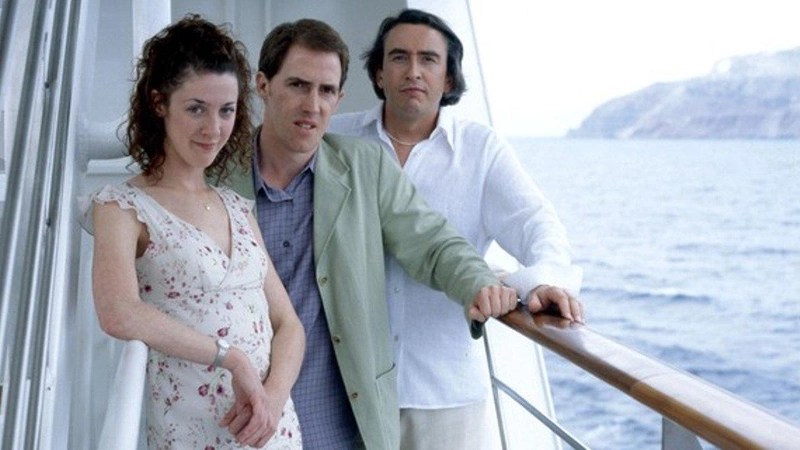
Amongst films and television that have depicted this are Staggered, G.B.H, Paul, Free Enterprise, Frasier, Community, The Big Bang Theory and most famously Galaxy Quest. Less well known but a marvelous example of this sub-genre is the 2002 TV movie Cruise of the Gods. Made by Baby Cow Productions for the BBC, it stars Rob Brydon and Steve Coogan as actors Andy Van Allen and Nick Lees. Both were the stars of an imaginary 80’s tv show Children of Castor. The show was set on a post-apocalyptic Earth, minus the USA (“America is Pollux!”) and featured a New Wave pop group who survived to become the inheritors of humanity. Now in 2002, Nick is globally famous for the US show Sherlock Holmes in Miami, whilst Andy is a barely working actor, supporting himself as a hotel porter. We learn that Andy has been a self-centred jerk most of his life. His lack of success and his resentful reliance on his cult fame has left him lonely and bitter. Most of the film takes place on a cruise ship taking holidaymakers, including a SF convention, around the Greek islands. Andy is the guest of honour, along with the show’s writer and a former actor who played a mutant in the opening credits. But his minor celebrity is overshadowed when Nick turns up completely by chance, filming the latest episode of his series. Andy is initially furious, but when Nick offers him a chance to appear in his programme, Andy sees an opportunity to finally become a star again.
SF conventions on cruise ships are regular events, but there is an extra nostalgia for me in seeing this manner of grassroots event, with guest panels, discussions and competitions, in an era where many conventions have largely become merchandise markets. The film features several actors who would become famous in the Noughties, including David Walliams and James Corden. As well as amusing guest appearances playing themselves from Jack Jones and Brian Conley. It’s a funny, feelgood drama that gently pokes fun at fans but without cruelty.
Cruise of the Gods is the subject of the latest episode of Very British Futures. You can listen to the podcast on Goodpods or any of the major podcast platforms. My guests, actor Cliff Chapman and podcaster Dani Wray, had originally recorded an entirely different episode about The Comic Strip Presents, but due to my clumsiness I lost the recording. So they very generously offered to record a new episode. I had toyed with the idea of covering Cruise of the Gods for a while. Whilst it is not science fiction, it is definitely about British cult television. Hope you enjoy it as much as we enjoyed recording it.
A large part of my role as a Technical Officer in Higher Education is developing and investigating Virtual Reality headsets. One of the main challenges for integrating virtual reality technology into degree education is making it relevant. Finding apps which demonstrate the strength of immersive tech in providing something which flat screens and videos cannot. So as part of my job I am always on the lookout for new VR apps which achieve this, and in the last few months I have come across three excellent titles which I am currently advocating to academics at Brooks. Goliath: Playing with Reality, Impulse: Playing with Reality, and Emperor. I ran them all on a Meta Quest2 or Quest3.
Goliath: Playing with Reality
A man with the gaming nickname of Goliath, tells his life story and his struggles with schizophrenia and depression. His story is depicted as a series of games, beginning in the 8bit era and moving to fully 3D worlds and eventually reality. Following an unhappy childhood, Goliath becomes a DJ in the dance scene before his self-medication of alcohol and recreational drugs leads to psychosis and hospitalisation. Here his climb back to independence begins, in which online gaming provides a community.
Goliath sounds as if it will be alienating for non-gamers but I’ve seen several people who’ve never worn a headset before, pick it up and play it intuitively. A lot of game is fairly passive, just to be watched, but there are some nice interactive ideas, such as passing the controller over a stream of lights to turn it into sound and a simple game of “shoot the negative thoughts” which appear as wasp-like sprites. Goliath’s monologue is engrossing, augmented by Tilda Swinton as the narrator. The only downside is that to get the full effect you need to set aside 30 minutes for the whole story.
Available for Quest 2, Pro 3, 3S & Steam VR Price £4.99 Website https://goliathvr.io/
Impulse: Playing with Reality
What is Attention Deficit Hyperactivity Disorder and what is happening in the brain? This app follows four stories of real young people whose lives have been affected by ADHD and how they have learned to cope with it by understanding the patterns of their behaviour.
After an initial game which helps visualise the neurological theory behind ADHD, the four stories play out in parallel, with the characters and surroundings appearing in your room as puppets moving around 3D sets. Key thoughts must be turned into graffiti on the walls of your room. This app uses the Quest3’s spatial awareness and mixed reality capability to the fullest. From Anagram, the makers of “Goliath”, it is a more active, game like experience. Tilda Swinton again provides the narration. Again, perhaps its only drawback for classroom use is that it is 40 minutes long.
Following a heart attack, a father suffers both from aphasia and partial paralysis. You take on his role and occasionally that of his adult daughter as she tries to help him with his therapy and learn more about his past. Seeing through his eyes, we travel through his memories, seeing surreal combinations created by his disrupted language processing.
Part story, part disability simulation, the therapy sections are the best part of this app, giving an insight into what it is like to be in a body that will not respond as you remember it used to. The drawn art animation is beautiful and the commitment to the whole app using hand tracking means it is intuitive to use for beginners and experienced VR users alike. The full experience is 45 minutes long. Has English, French and German options. Olivia Cooke is the voice of the daughter in the English version. Created by Astrea.
After the success of his first BBC Audiobook, Will Hadcroft is back with a new Doctor Who short story, this time featuring the Fifth Doctor, Tegan, Nyssa and Adric, and read by Matthew Waterhouse. He’s delivered an entertaining little SF adventure with a subtext about human exploitation by both other humans and extraterrestrials.
Cover artwork
Still trying to return Tegan to Heathrow airport, the Doctor instead lands the TARDIS in 1830s London. Happily the air hostess turns out to be something of a Charles Dickens fan, so her disappointment is mollified by a chance to explore the setting of most of his novels. The Doctor warns his companions that the real London is much more squalid and dangerous world than is usually shown in the movies. In fact he’s so cautious he even insists they all change into appropriate period clothes for once, which is a fun idea and leads to an entertaining reveal sequence when they step out of the Ship. But the listener already knows that sinister forces are at work. A retired admiral has become an investigator into the odd and inexplicable. He has heard of unexplained disappearances around the workhouses, and desiccated bodies being discovered, killed in a manner beyond human capabilities. Before the Doctor and his friends can begin properly investigating, all four of them are abducted and separated by different parties.
In his first Doctor Who audiobook The Resurrection Plant, Hadcroft had shown a particular interest in darker, exploitative side of the Industrial Revolution and he continues the theme in this story, arguably to even greater effect since much of the unpleasantness he describes is historical fact. Splitting the team up, he depicts the workhouse, the streets and criminal gangs trading in women’s lives with an interesting but balanced amount of detail, illustrating the harshness and injustice without descending into gory shock value. In fact this story would have worked as a pure historical, with a little reworking. Without giving too much away though, there is an alien antagonist to be faced. Bodies drained of life is something of a staple in Doctor Who adventures, as is beings who regard humans as a resource rather than sentient equals, but ultimate resolution to the main mystery is pleasingly Doctorish and ultimately hopeful.
All the regulars are well-depicted. Tegan and Nyssa get some moments of sisterly banter and later prove to be adept at rescuing themselves for once. Adric is headstrong and feels a bit of an outsider in this decidely messy human enviroment, giving some hints of his growing homesickness. There’s a striking moment where he admits to mourning the ‘death’ of the older Fourth Doctor who fitted the father-shaped hole in his life, replaced by a younger man with whom he struggles to connect with, in same comfortable way Tegan and Nyssa appear to. Meanwhile the Doctor is enthusiastic, a touch rueful and there’s an amusing moment where he is annoyed with the “youthful whine” in his voice when he attempts to assert his authority. Matthew Waterhouse does an pretty credible impersonation of Peter Davison’s voice, can still sound convincingly younger as Adric, but makes Janet Fielding sound like a cockney. His natural reading voice is very listenable to though and he does a good job with the guest characters. David Roocroft’s sympathetic sound design does a great job of illustrating Victorian London without drowning us in street barkers, steam horns, and clipclopping carriages.
Doctor Who – Dark Contract is an assured, entertaining trip back to Doctor Who circa 1982. Written with intelligence and with something deeper to say both about our fairly recent past and our responsibilities to each other. It can only enhance Will Hadcroft reputation as an author.
Ever since computer games were invented, Doctor Who fans like myself have wanted to see our favourite show to be part of that world. From Doctor Who – The First Adventure on the venerable BBC B Micro, through Dalek Attack on the PC and Spectrum, to more recent attempts such as Lego Dimensions. Then in 2019 a fully fledged VR game arrived The Edge of Time, courtesy of Maze Theory, but never seemed to make the impact such major project should had. After all, this game lets the player travel in the TARDIS and confront Daleks and Weeping Angels face to face. It has a complete story that puts the protagonist centre stage. When I bought myself a Meta Quest 3 headset, it was a game I purchased almost immediately to experience myself. After Beat Sabre.
Recently there seems to have a dizzying explosion of Doctor Who titles in many videogame subgenres, from time-killing smartphone game Lost in Time to online card game Worlds Apart to guest appearances in big hitters like Fortnite and Minecraft. Up until now, I would say the titles closest to capturing the spirit of the programme were the Doctor Who Adventures released initially for free by the BBC, featuring the Eleventh Doctor and Amy. Whilst enjoyable to play these felt less polished than the perfect AAA game of my imagination, something combining the mechanics and look of say the Mass Effect Trilogy or Fallout 4.
The appropriately named game The First Adventure (1983)
The opening story in The Adventure Game ‘season’ – City of the Daleks (2010)
The Edge of Time is definitely one of most ambitious and big budget attempts to date. It promises a great deal, to actually join the Thirteenth Doctor in an adventure as her temporary companion, flying the TARDIS, battling the Daleks, the Weeping Angels and some new enemies in virtual reality. Unfortunately the earliest releases of the game came with game crashing bugs, despite extensive play testing by Maze Theory, and I think that did damage the game’s reputation. However the version available to buy now is much more robust and also comes with 2020’s Time Lord Victorious DLC bundled in for free.
The landing screen placed me in a rocky area with the TARDIS standing to my left, humming with energy, whilst ahead was the menu. Choosing New Game took me to what would be called the “cold open” of the episode. a shabby laundrette where I was the only customer. The lights start to flicker and the voice of the Doctor, voiced by Jodie Whittaker herself, comes through the static of the television. She’s asking for help, and warning me that I’m in trouble. The lights flicker again and the washing machines fill with slime, covered with blinking eyes. The voice of the Doctor warns me that these are embryo Hydrocs, vicious predators who grow very quickly. Reality is breaking down and I need to get out of there. Some searching and clue solving puzzles follow, as I eventually get through the locked door at the back and summon the TARDIS, just as a Dalek saucer appears overhead and tries to exterminate me. Cue 360 degree panoramic version of the Thirteenth Doctor’s title sequence.
Inside the Thirteenth Doctor’s console room (a design I became more resigned to than ever really liked) the Doctor appears as a hologram and explains that she is trapped at the other end of Time and needs my help to find three rare zeiton crystals with which she can create a vortex manipulator to escape and fix the reality virus which is threatening the whole universe. This plot accidentally anticipates the Flux that the Doctor will face in 2022. First she needs to guide me through flying the TARDIS, which involves turning knobs and pulling levers in a sequence repeating memory game, a bit like Bop It!
There was definitely a thrill to stepping out of the TARDIS on to an unknown planet. That worked each time arrived in a new location. Most of the game is puzzle solving, moving objects about, slotting them into holes. Or combing objects to create an effect. Zapping items with the somic screwdriver was a reliable move. Most of the puzzles were an easy to medium challenge, apart from one aboard a spaceliner involving reflecting a laser beam with rotating mirrors to activate doors, that eventually I had to look up the solution on YouTube. As with many VR games at the moment there is a distinct escape room vibe to the majority of the game, even if the locales allowed for a lot more walking and exploring.
Occasionally there is an action sequence. Escaping the Weeping Angels in an old house, with an unreliable torch and a lift which needs recharging at each floor with a dynamo, was genuinely scary, especially knowing that death meant going back to beginning of the sequence again. By contrast a first person shooter section, driving a Dalek around a temple shooting at other Daleks, became quite frustrating, since unless you managed to time every shot and make it count, death meant starting the whole long section over again, which became pretty wearying. I’m not a fan of the whole timing blows precisely in a sequence kind of combat which Dark Souls has popularised.
Along the way, the villain is revealed as The First, a godlike mother of all life in universe, wishing to punish intelligent life for making so many mistakes. To be honest this section was a bit ponderous, especially since she is so powerful, all the player can do at this point is really stand and watch the Doctor sort things out, again solely as a voice. Despite a last minute race to retrieve three more magic items by revisiting some previous destinations, the climax is underwhelming.
Yet the journey there is pretty entertaining. The whole Weeping Angels section uses those antagonists particularly well, with some moments that are more than worthy of the television series. Sneaking past full-scale Daleks is fun and again feels very reminiscent of the series. Dialogue writer and co-storyliner Gavin Collinson gets the feel of modern day Doctor Who. You get your own companion of a kind, Emer, winningly voiced by Jennifer Saayeng, who has also appeared in a few Big Finish stories. Wielding the sonic screwdriver to scan and manipulate item is satisfying too.
Graphically the style is fairly cartoonish, an acceptable compromise between accurate detail and the speed and size of the game. The two TARDIS console rooms of the Thirteenth and the Tenth’s (for the Time Lord Victorious add-on) are pleasingly recreated, whilst the new locations are colourful and well lit.
Away from the main story, there’s the Time Lord Victorious collectible game, which tries to extend gameplay by adding hidden collectible items in all the locations of the story. These are related to the stories in the BBC’s 2020 multi-platform campaign. Discover all eight and you can play a quiz game. There’s also an Arcade section where the player can replay the title sequence, flying the TARDIS, escaping the Weeping Angels, or battling the Daleks.
In 2021 Maze Theory released a reimagined version of the game for flat screen consoles. Doctor Who – The Edge of Reality replaced the god-like First with the Cybermen as the principle villain and also featured a cameo from the Tenth Doctor. I have not played it but I believe it too was plagued with bugs and seems to have had even less impact than the VR original.
I’ve enjoyed playing this game and think it deserves to be better known. It’s a sincere attempt to put the player inside a Doctor Who adventure and translates a fair amount of the feel of the Thirteenth Doctor’s era. It’s an accessible game for both experience VR players and first timers. Hopefully it will remain in the Steam, MetaQuest and Playstation libraries for the foreseeable future.
Another of my early experiments with my new Meta Quest 3 headset was to watch the 360 degree Doctor Who short animated film which the BBC released in January 2019, featuring the voice of Jodie Whittaker. The Runaway begins with the viewer being accidentally teleported aboard the TARDIS by the Thirteenth Doctor. Apologising, the Doctor explains she is trying to help a young energy being from another dimension return home. The being is a glowing sphere with eyes and the Timelord explains that if it becomes too agitated it will blow up, taking the TARDIS with it. As a story its typical of the kind of mini-episodes which were usually made for Comic Relief, based entirely on the standing set of the console room. The animation is similar to Edge of Time although this cartoon was made by the BBC VR Hub.
It works excellently in the Quest 3, I can see it would function equally well in any 360 viewer, including Google’s Cardboard VR. It’s a sweet little disposable tale, although I missed having any interactivity. If you have a chance to watch it as its meant to be seen, its worth your time though.
I am delighted to announce a new episode of my podcast Very British Futures. The first hopefully of a revived run of the show, after several months of concentrating my time on Bolton Little Theatre and my job at the university.
A for Andromeda and The Andromeda Breakthrough are fairly obscure today, compared to programmes like Quatermass or Doctor Who, but during 1961-62 they were popular successes for the BBC. It seems appropriate to talk about them now, at a time when Netflix has had a success with 3 Body Problem, another serious SF show about alien contact being conducted through radio communication. Written by noted astronomer Sir Fred Hoyle and TV producer John Elliot, the series begins with radio astronomers detected a message from an alien intelligence. That would be profound enough, but the message turns out to be a blueprint for a new kind of computer, more powerful than anything on Earth. Building the computer in turn creates new life, first an octopus like being, then a beautiful woman they christen Andromeda, based on the body of a murdered female technician. As politics, the military, and a ruthless tech company called Intel (no relation) become involved, maverick scientist John Fleming fights against the alien AI, whilst falling in love with Andromeda. The sequel takes the surviving characters to the Middle East, where a new computer has been built and Intel intend to dominate the world with its technology. But Earth’s weather is running out of control, thanks to Fleming’s interference and only the computer can save us, if it wants to.
Joined by Nigel Anderson and Brian Clark, friends I had worked with on the very first episode covering Pathfinders in Space, this has been a very interesting production to research and produce. After recently covering several high-profile shows, it was good to tackle something a bit more off the beaten track. You can listen to the results on all the major platforms, including YouTube, and find out more about the series, plus the BBC4 remake and the 70’s Italian version by visiting the podcast’s website at: https://westlakefilms.uk/verybritishfutures/
Rik Hoskin has been in touch to tell me about his involvement in a new PC computer game. He is the script editor and consultant on a live-action comedy dating game Forgetting Emily. To quote the blurb on its Steam store page: “When is it time to move on? Before your ex gets married to someone else… right? You play as Alex, a struggling musician invited to his ex-girlfriend Emily’s wedding. It’s in Turkey. It’s in one month. You said you’d bring a plus-one… so the countdown’s on, because you don’t have one. Filmed in live action, you see through Alex’s eyes as he makes decisions that can land him just about anywhere as he tries to find his ideal date for the wedding. The trouble is, Alex doesn’t have much money, and it seems like everyone who offers to help is also conspiring against him … which is to say, YOU!”
Congratulations to Rik as he adds even more strings to his creative bow. If you would like to find out more, check out the game’s website https://www.forgettingemily.com/