A large part of my role as a Technical Officer in Higher Education is developing and investigating Virtual Reality headsets. One of the main challenges for integrating virtual reality technology into degree education is making it relevant. Finding apps which demonstrate the strength of immersive tech in providing something which flat screens and videos cannot. So as part of my job I am always on the lookout for new VR apps which achieve this, and in the last few months I have come across three excellent titles which I am currently advocating to academics at Brooks. Goliath: Playing with Reality, Impulse: Playing with Reality, and Emperor. I ran them all on a Meta Quest2 or Quest3.
Goliath: Playing with Reality
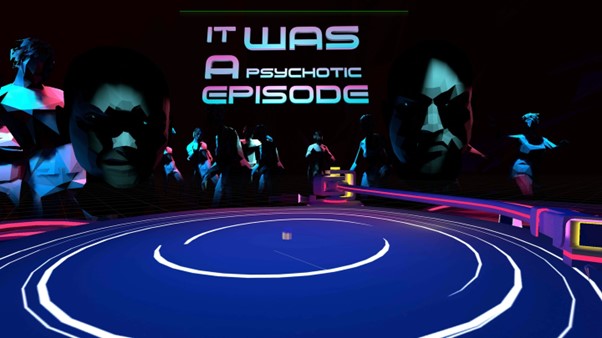
A man with the gaming nickname of Goliath, tells his life story and his struggles with schizophrenia and depression. His story is depicted as a series of games, beginning in the 8bit era and moving to fully 3D worlds and eventually reality. Following an unhappy childhood, Goliath becomes a DJ in the dance scene before his self-medication of alcohol and recreational drugs leads to psychosis and hospitalisation. Here his climb back to independence begins, in which online gaming provides a community.
Goliath sounds as if it will be alienating for non-gamers but I’ve seen several people who’ve never worn a headset before, pick it up and play it intuitively. A lot of game is fairly passive, just to be watched, but there are some nice interactive ideas, such as passing the controller over a stream of lights to turn it into sound and a simple game of “shoot the negative thoughts” which appear as wasp-like sprites. Goliath’s monologue is engrossing, augmented by Tilda Swinton as the narrator. The only downside is that to get the full effect you need to set aside 30 minutes for the whole story.
Available for Quest 2, Pro 3, 3S & Steam VR Price £4.99 Website https://goliathvr.io/
Impulse: Playing with Reality
What is Attention Deficit Hyperactivity Disorder and what is happening in the brain? This app follows four stories of real young people whose lives have been affected by ADHD and how they have learned to cope with it by understanding the patterns of their behaviour.
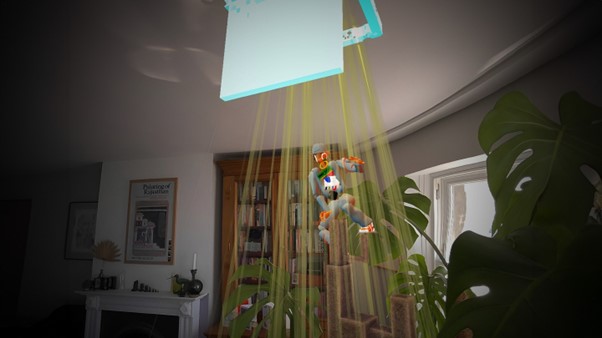
After an initial game which helps visualise the neurological theory behind ADHD, the four stories play out in parallel, with the characters and surroundings appearing in your room as puppets moving around 3D sets. Key thoughts must be turned into graffiti on the walls of your room. This app uses the Quest3’s spatial awareness and mixed reality capability to the fullest. From Anagram, the makers of “Goliath”, it is a more active, game like experience. Tilda Swinton again provides the narration. Again, perhaps its only drawback for classroom use is that it is 40 minutes long.
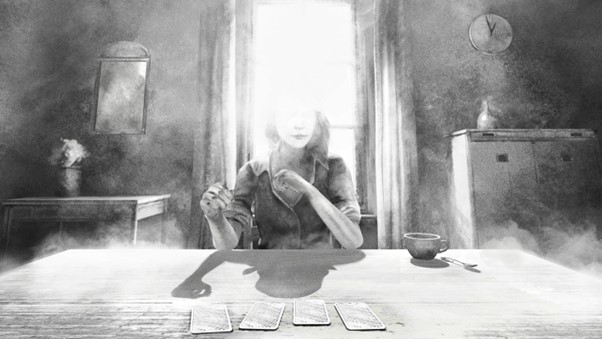
Following a heart attack, a father suffers both from aphasia and partial paralysis. You take on his role and occasionally that of his adult daughter as she tries to help him with his therapy and learn more about his past. Seeing through his eyes, we travel through his memories, seeing surreal combinations created by his disrupted language processing.
Part story, part disability simulation, the therapy sections are the best part of this app, giving an insight into what it is like to be in a body that will not respond as you remember it used to. The drawn art animation is beautiful and the commitment to the whole app using hand tracking means it is intuitive to use for beginners and experienced VR users alike. The full experience is 45 minutes long. Has English, French and German options. Olivia Cooke is the voice of the daughter in the English version. Created by Astrea.
After the success of his first BBC Audiobook, Will Hadcroft is back with a new Doctor Who short story, this time featuring the Fifth Doctor, Tegan, Nyssa and Adric, and read by Matthew Waterhouse. He’s delivered an entertaining little SF adventure with a subtext about human exploitation by both other humans and extraterrestrials.
Cover artwork
Still trying to return Tegan to Heathrow airport, the Doctor instead lands the TARDIS in 1830s London. Happily the air hostess turns out to be something of a Charles Dickens fan, so her disappointment is mollified by a chance to explore the setting of most of his novels. The Doctor warns his companions that the real London is much more squalid and dangerous world than is usually shown in the movies. In fact he’s so cautious he even insists they all change into appropriate period clothes for once, which is a fun idea and leads to an entertaining reveal sequence when they step out of the Ship. But the listener already knows that sinister forces are at work. A retired admiral has become an investigator into the odd and inexplicable. He has heard of unexplained disappearances around the workhouses, and desiccated bodies being discovered, killed in a manner beyond human capabilities. Before the Doctor and his friends can begin properly investigating, all four of them are abducted and separated by different parties.
In his first Doctor Who audiobook The Resurrection Plant, Hadcroft had shown a particular interest in darker, exploitative side of the Industrial Revolution and he continues the theme in this story, arguably to even greater effect since much of the unpleasantness he describes is historical fact. Splitting the team up, he depicts the workhouse, the streets and criminal gangs trading in women’s lives with an interesting but balanced amount of detail, illustrating the harshness and injustice without descending into gory shock value. In fact this story would have worked as a pure historical, with a little reworking. Without giving too much away though, there is an alien antagonist to be faced. Bodies drained of life is something of a staple in Doctor Who adventures, as is beings who regard humans as a resource rather than sentient equals, but ultimate resolution to the main mystery is pleasingly Doctorish and ultimately hopeful.
All the regulars are well-depicted. Tegan and Nyssa get some moments of sisterly banter and later prove to be adept at rescuing themselves for once. Adric is headstrong and feels a bit of an outsider in this decidely messy human enviroment, giving some hints of his growing homesickness. There’s a striking moment where he admits to mourning the ‘death’ of the older Fourth Doctor who fitted the father-shaped hole in his life, replaced by a younger man with whom he struggles to connect with, in same comfortable way Tegan and Nyssa appear to. Meanwhile the Doctor is enthusiastic, a touch rueful and there’s an amusing moment where he is annoyed with the “youthful whine” in his voice when he attempts to assert his authority. Matthew Waterhouse does an pretty credible impersonation of Peter Davison’s voice, can still sound convincingly younger as Adric, but makes Janet Fielding sound like a cockney. His natural reading voice is very listenable to though and he does a good job with the guest characters. David Roocroft’s sympathetic sound design does a great job of illustrating Victorian London without drowning us in street barkers, steam horns, and clipclopping carriages.
Doctor Who – Dark Contract is an assured, entertaining trip back to Doctor Who circa 1982. Written with intelligence and with something deeper to say both about our fairly recent past and our responsibilities to each other. It can only enhance Will Hadcroft reputation as an author.
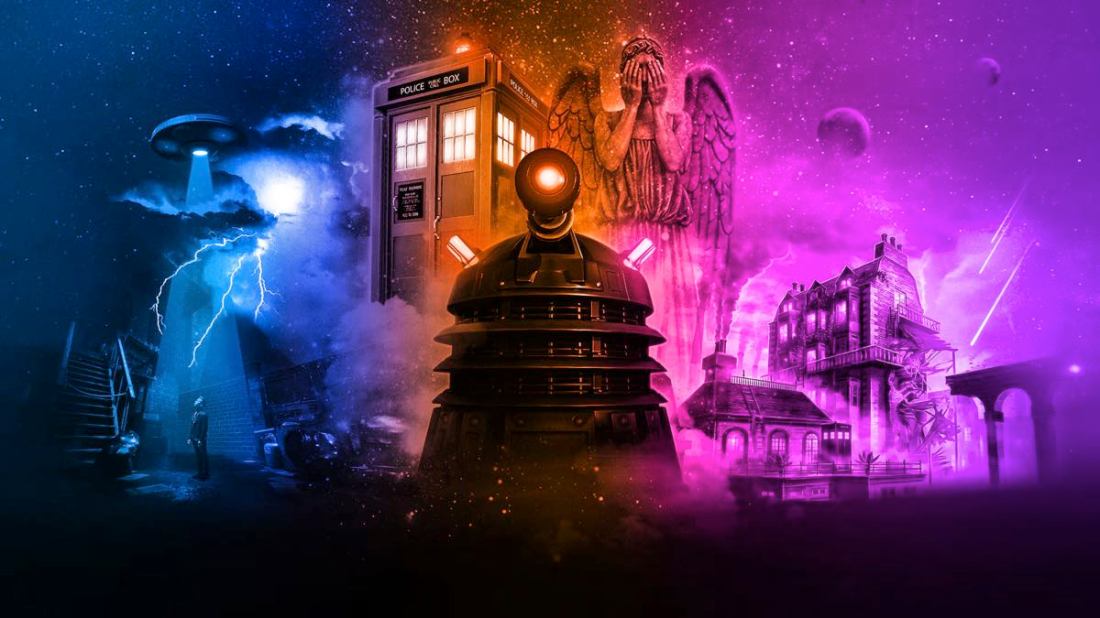
Ever since computer games were invented, Doctor Who fans like myself have wanted to see our favourite show to be part of that world. From Doctor Who – The First Adventure on the venerable BBC B Micro, through Dalek Attack on the PC and Spectrum, to more recent attempts such as Lego Dimensions. Then in 2019 a fully fledged VR game arrived The Edge of Time, courtesy of Maze Theory, but never seemed to make the impact such major project should had. After all, this game lets the player travel in the TARDIS and confront Daleks and Weeping Angels face to face. It has a complete story that puts the protagonist centre stage. When I bought myself a Meta Quest 3 headset, it was a game I purchased almost immediately to experience myself. After Beat Sabre.
Recently there seems to have a dizzying explosion of Doctor Who titles in many videogame subgenres, from time-killing smartphone game Lost in Time to online card game Worlds Apart to guest appearances in big hitters like Fortnite and Minecraft. Up until now, I would say the titles closest to capturing the spirit of the programme were the Doctor Who Adventures released initially for free by the BBC, featuring the Eleventh Doctor and Amy. Whilst enjoyable to play these felt less polished than the perfect AAA game of my imagination, something combining the mechanics and look of say the Mass Effect Trilogy or Fallout 4.
The appropriately named game The First Adventure (1983)
The opening story in The Adventure Game ‘season’ – City of the Daleks (2010)
The Edge of Time is definitely one of most ambitious and big budget attempts to date. It promises a great deal, to actually join the Thirteenth Doctor in an adventure as her temporary companion, flying the TARDIS, battling the Daleks, the Weeping Angels and some new enemies in virtual reality. Unfortunately the earliest releases of the game came with game crashing bugs, despite extensive play testing by Maze Theory, and I think that did damage the game’s reputation. However the version available to buy now is much more robust and also comes with 2020’s Time Lord Victorious DLC bundled in for free.
The landing screen placed me in a rocky area with the TARDIS standing to my left, humming with energy, whilst ahead was the menu. Choosing New Game took me to what would be called the “cold open” of the episode. a shabby laundrette where I was the only customer. The lights start to flicker and the voice of the Doctor, voiced by Jodie Whittaker herself, comes through the static of the television. She’s asking for help, and warning me that I’m in trouble. The lights flicker again and the washing machines fill with slime, covered with blinking eyes. The voice of the Doctor warns me that these are embryo Hydrocs, vicious predators who grow very quickly. Reality is breaking down and I need to get out of there. Some searching and clue solving puzzles follow, as I eventually get through the locked door at the back and summon the TARDIS, just as a Dalek saucer appears overhead and tries to exterminate me. Cue 360 degree panoramic version of the Thirteenth Doctor’s title sequence.
Inside the Thirteenth Doctor’s console room (a design I became more resigned to than ever really liked) the Doctor appears as a hologram and explains that she is trapped at the other end of Time and needs my help to find three rare zeiton crystals with which she can create a vortex manipulator to escape and fix the reality virus which is threatening the whole universe. This plot accidentally anticipates the Flux that the Doctor will face in 2022. First she needs to guide me through flying the TARDIS, which involves turning knobs and pulling levers in a sequence repeating memory game, a bit like Bop It!
There was definitely a thrill to stepping out of the TARDIS on to an unknown planet. That worked each time arrived in a new location. Most of the game is puzzle solving, moving objects about, slotting them into holes. Or combing objects to create an effect. Zapping items with the somic screwdriver was a reliable move. Most of the puzzles were an easy to medium challenge, apart from one aboard a spaceliner involving reflecting a laser beam with rotating mirrors to activate doors, that eventually I had to look up the solution on YouTube. As with many VR games at the moment there is a distinct escape room vibe to the majority of the game, even if the locales allowed for a lot more walking and exploring.
Occasionally there is an action sequence. Escaping the Weeping Angels in an old house, with an unreliable torch and a lift which needs recharging at each floor with a dynamo, was genuinely scary, especially knowing that death meant going back to beginning of the sequence again. By contrast a first person shooter section, driving a Dalek around a temple shooting at other Daleks, became quite frustrating, since unless you managed to time every shot and make it count, death meant starting the whole long section over again, which became pretty wearying. I’m not a fan of the whole timing blows precisely in a sequence kind of combat which Dark Souls has popularised.
Along the way, the villain is revealed as The First, a godlike mother of all life in universe, wishing to punish intelligent life for making so many mistakes. To be honest this section was a bit ponderous, especially since she is so powerful, all the player can do at this point is really stand and watch the Doctor sort things out, again solely as a voice. Despite a last minute race to retrieve three more magic items by revisiting some previous destinations, the climax is underwhelming.
Yet the journey there is pretty entertaining. The whole Weeping Angels section uses those antagonists particularly well, with some moments that are more than worthy of the television series. Sneaking past full-scale Daleks is fun and again feels very reminiscent of the series. Dialogue writer and co-storyliner Gavin Collinson gets the feel of modern day Doctor Who. You get your own companion of a kind, Emer, winningly voiced by Jennifer Saayeng, who has also appeared in a few Big Finish stories. Wielding the sonic screwdriver to scan and manipulate item is satisfying too.
Graphically the style is fairly cartoonish, an acceptable compromise between accurate detail and the speed and size of the game. The two TARDIS console rooms of the Thirteenth and the Tenth’s (for the Time Lord Victorious add-on) are pleasingly recreated, whilst the new locations are colourful and well lit.
Away from the main story, there’s the Time Lord Victorious collectible game, which tries to extend gameplay by adding hidden collectible items in all the locations of the story. These are related to the stories in the BBC’s 2020 multi-platform campaign. Discover all eight and you can play a quiz game. There’s also an Arcade section where the player can replay the title sequence, flying the TARDIS, escaping the Weeping Angels, or battling the Daleks.
In 2021 Maze Theory released a reimagined version of the game for flat screen consoles. Doctor Who – The Edge of Reality replaced the god-like First with the Cybermen as the principle villain and also featured a cameo from the Tenth Doctor. I have not played it but I believe it too was plagued with bugs and seems to have had even less impact than the VR original.
I’ve enjoyed playing this game and think it deserves to be better known. It’s a sincere attempt to put the player inside a Doctor Who adventure and translates a fair amount of the feel of the Thirteenth Doctor’s era. It’s an accessible game for both experience VR players and first timers. Hopefully it will remain in the Steam, MetaQuest and Playstation libraries for the foreseeable future.
Another of my early experiments with my new Meta Quest 3 headset was to watch the 360 degree Doctor Who short animated film which the BBC released in January 2019, featuring the voice of Jodie Whittaker. The Runaway begins with the viewer being accidentally teleported aboard the TARDIS by the Thirteenth Doctor. Apologising, the Doctor explains she is trying to help a young energy being from another dimension return home. The being is a glowing sphere with eyes and the Timelord explains that if it becomes too agitated it will blow up, taking the TARDIS with it. As a story its typical of the kind of mini-episodes which were usually made for Comic Relief, based entirely on the standing set of the console room. The animation is similar to Edge of Time although this cartoon was made by the BBC VR Hub.
It works excellently in the Quest 3, I can see it would function equally well in any 360 viewer, including Google’s Cardboard VR. It’s a sweet little disposable tale, although I missed having any interactivity. If you have a chance to watch it as its meant to be seen, its worth your time though.
Ciara, a teenage girl, discovers she has a remarkable inheritance in her DNA, one that propels her into a globe-trotting adventure which involves biotechnology, an enigmatic Maori legend, and the famous voyages of eighteenth century explorer Captain James Cook. Before this entertaining novel is finished, the future of the human race will be in the hands of her and her small group of friends.
This is the debut novel of Terrance McAdams, and I should say upfront that he’s also my cousin. He has written this exciting Young Adult novel, the first in a series, Biocode: Endeavour and he has done an impressive job of mixing real history, recent scientific developments in human physiology, and his own foreign travel experiences into this science fiction adventure.
True, at first I was a little concerned that the book was following the weary trope of the ‘chosen one’ protagonist, for whom all obstacles are solved by their destined specialness, which make others bend rules and give her advantages. Ciara is boarding at the private Sanjung Academy in South Korea, set up by tech billionaire Dr Sanjung Kim next to the government’s Global Education City. It is a kind of super-science Hogwarts. Naturally this means she is surrounded by the best and brightest, whose talents in martial arts, computer hacking, science, and international contacts will come useful later. She’s being troubled by intense dreams, mostly ones where she is Midshipman William Hartley, aboard First Lieutenant James Cook’s ship HMS Endeavour as it discovers New Zealand. She also learns that the real reason she was invited to the academy is that there is alien DNA in her genes. Her dreams and an invitation to an archaeological dig organised by Dr Kim leads Ciara to learn about a race of beautiful blonde people called the Patupaiarehe who had supernatural powers. The truth turns out to be stranger.
Frustratingly for this review I cannot talk much about my favourite element of this story without spoiling it for other readers. Suffice to say that the initial ‘hero with a destiny’ plotline which takes up the first half of the narrative becomes subverted and a very different and a better story emerges.
The author is a teacher who currently lives in South Korea and that local knowledge certainly comes through in the way he conjures up both that country’s culture and describes the environs of New Zealand. He also has a good ear for teenage dialogue and the scenes and relationships between this set of smart, pro-active young heroes rings true without going into tiresome quip-heavy sub-Buffy material. He has a particular interest in encouraging more girls into science, so its not surprise that most of the group are female and generally are the drivers of the story, but they still feel realistic rather than superheroes.
When the true nature of the antagonists does emerge they are excellently depicted and for a while I was wondering how such a powerful enemy could realistically be defeated. There’s plenty of incidents along the way, including a shark attack, kidnappings, battles with Maoris and a even James Bond style mountain base to be infiltrated.
I think Terrance McAdams’ writing will only become richer in future instalments. He’s created an engaging set of leading young characters and brought something fresh to the YA scene with this combination of cutting edge science and traditional adventuring. Although the start of a series, this is perfectly self-contained novel and I can recommend to readers of all ages.
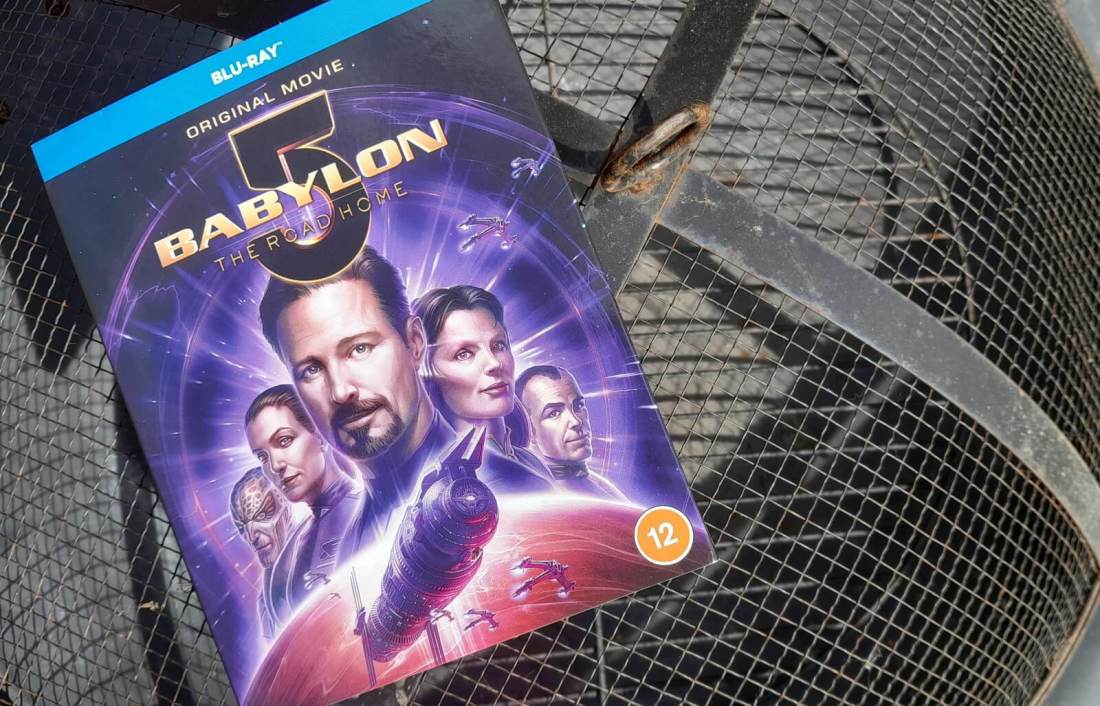
Sixteen years since the last straight to DVD revival, twenty-five years since the original television series gave its last bow, Babylon 5 returns polished up as an animated special The Road Home. Is it the beginning of a new era, or a nostalgic curio for the die-hards?
Time has been kind to Babylon 5. It was never a series which relied on the quality of its effects and a movie quality production. It’s strengths was its unashamed respect of literary SF and the power of a good story well told. Matched with rich characterisation that allowed its flawed protagonists to both fail hard and triumph satisfyingly over the years, spending most of the intervening time in stories that were often imaginative and morally grey. After years of only being accessible on VHS and DVD, recent years have seen it return to wide syndication, availability on streaming services and after a long campaign by fans, a HD remastering, all of which has enabled it to be enjoyed by new generations of fans, some of whom were not even born when its final story Sleeping in Light went out on TNT.
Babylon 5 was influential in several ways. It was one of the first SF series to embrace CGI, using the groundbreaking NewTek Video Toaster, which made computer graphics feasible on a cable television budget. It popularised the concept of the story arc. Instead of self-contained, almost interchangeable episodes where the status quo would always be reset after an hour, creator and chief writer J Michael Straczynski (known as JMS to fans) planned a “novel for television” to be told over five seasons. The idea was mocked as vainglorious by many, yet the programme proved that there was an audience who would commit to the journey. Now it would be hard to find a TV series which doesn’t have ongoing threads. Finally there was the way JMS embraced the fledgling internet, specifically Usenet to communicate directly with watchers in a way that hadn’t been possible before. He gave us an insight into the writing and production process of an ongoing, often struggling TV series that was fascinating and educational, as well as building up a whole community around the show.
It’s that ongoing community and the recent revived interest which has allowed The Road Home to exist. That and apparently a new willingness at Warner Bros to exploit a franchise which it was previously content to sit on.
The plot of The Road Home taps into Hollywood’s current love of multiverses and alternative worlds. On his first official engagement off-station, President John Sheridan becomes unstuck in time as the result of a malfunction in the new tachyon-based power generator he is supposed to be inaugurating. Teleporting into the future and the past, he then finds himself travelling sideways in alternate versions of the Shadow War, where the Shadows or the Vorlons win, both with cataclysmic results for humanity and its allies. Worse, if he cannot jaunt home, the multiverse itself might collapse.
Rather like a wedding, how much the viewer gets out The Road Home depends a lot on how many faces you recognise. If the above synopsis seems confusing, then this animated movie will be a lot of sound and fury, signifying not much. As an introduction to Babylon 5, it’s too reliant on pre-knowledge for the vast majority. Yet thanks to JMS’ script and the obvious affection of the production team, at the same time it’s a film that contains everything that made Babylon 5 what it was, good and bad. Action and big SF concepts like quantum physics, nestle with pulp staples like ancient alien cities being discovered, powerful aliens being reawakened, and passionate declarations of undying love. Smart jokes like a galactic vista being interrupted by a search of socks, share time with clunky one-liners. B5 could be moving but it could be amusingly pretentious too and there’s some windy philosophy at “the Rim” of the universe, delivered with deathly, if mellifluous, tones, which could have come straight from an obscure prog rock album sleeve notes.
Tragically, the series has lost more than the usual percentage of cast members. The voice cast contains all the surviving regulars, led energetically by Bruce Boxleitner returning to the role of John Sheridan. It’s great to hear Patricia Tallman, Peter Jurasik, Claudia Christian, Bill Mumy and Tracy Scroggins in character once more. They are joined by a cast of creditable actors taking on other beloved characters and thanks to good casting and direction from casting director Liz Carroll and Matt Peters respectively, none of them jar in the ear. Sadly the episodic nature of the story means that few of the regulars get much time to shine, apart from Sheridan and Delenn, but there’s a lot of fun to be had with the return of fan favourite, the gnomic alien Zathras and most of the funniest moments belong to him.
Visually the film looks marvellous, enjoyably opening out and subtly updating the old locations on the space station and Epsilon 3. It has that recognisable Warner Bros look that’s been seen in many of their recent superhero cartoon movies, tall figures with great cheekbones. Just about everyone is instantly recognisable, although it took me a few moments to recognise Elizabeth Lochley. The production team cleverly incorporate several iconic visual scenes from the series, such as the launching of the Starfurys or the reveal of The Great Machine.
I’m reviewing the bluray release, which comes in a slipcase and has two extras, an enthusiastic commentary by Boxleitner, JMS and supervising producer Rick Morales, and an appreciative making of documentary B5 Forever with some interesting behind footage of the cast recording their parts.
During the documentary, JMS says he has ideas for future animated stories and I certainly hope this special is successful enough for more. As a victory lap and a celebration for long time fans, The Road Home is a treat that doesn’t disappoint. For newcomers, the pilot film The Gathering or the TV movie In the Beginning is still the place to start.
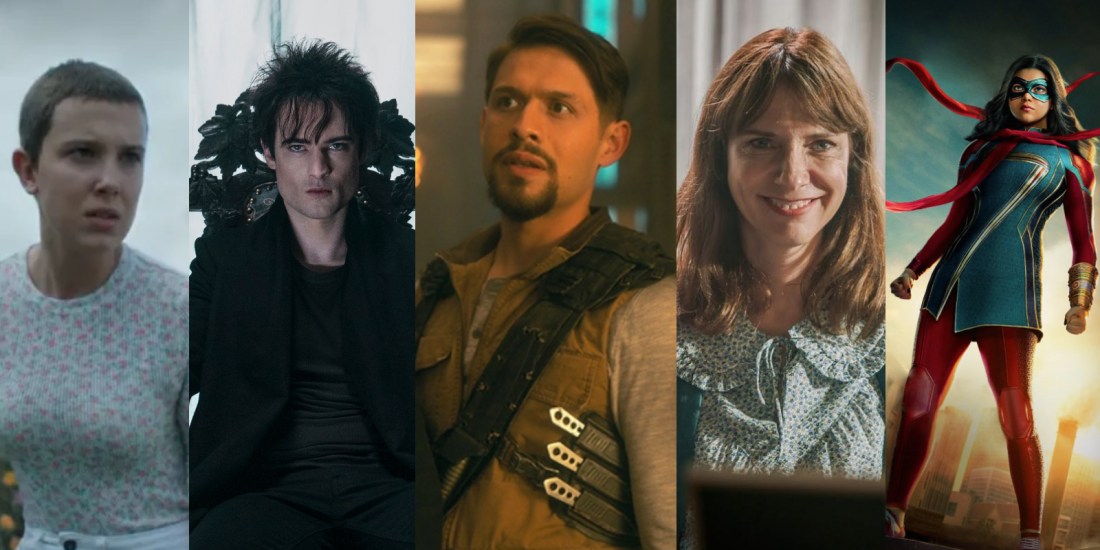
Coming to its fourth season, after a third which seemed to have reached a natural conclusion for most of the characters, I did wonder if Stranger Things could possibly live up to its own hype. There had been some worrying signs of indulgence creeping in, when this was a Netflix series defined by its tight focus on exactly what it was – a pulp horror love letter to Stephen King, John Carpenter and 80’s pop culture. Despite its feature length episodes, the fourth season triumphantly improved on its last season with memorable horror set pieces, great new characters like Eddie and Yuri, some logical yet still unexpected depths being added to the young heroes and most importantly, pace and energy. To be hitting these highs in a fourth series is pretty rare.
The Sandman
Neil Gaiman’s groundbreaking 80’s comic series looked like an impossible adaptation. The hero and his stories were so intrinsically linked to the comic medium of art and dialogue. Surely trying to make this gothic fantasy into a physical piece of television would only make it seem at best pompous and ridiculous, or just deeply compromised. But thanks to Neil Gaiman’s stewardship and a talented team of makers and actors, Netflix’s series captured all the strengths of the comic and added some well chosen translations of the problems. Fan favourites like “Dream of a Thousand Cats” and “The Sound of Her Wings” became new highlights. David Thewlis gave one of the best performances of the years as the malignant but pathetic would be messiah Doctor Destiny.
Inside Man
Stephen Moffat most satisfying work since “The Doctor Falls”, this contained four-part thriller was essentially a farce with the timing aimed at tragedy rather than hilarity. Embracing his misanthropy, he and director Paul McGuigan played with time and the audience. Cleverly challenging our own unconscious prejudices with a story where the murderers and would-be murderers were more sympathetic than the victims. As with many of these locked room murder mysteries, the cleverness might unravel if examined too closely and it relies on certain contrivances disguised as glib jokes. Mary’s apologetic “We’re not the sort of people who break windows,” for example. But at a time when too many prestige series are content to spread out as far as possible, this tight four-parter was short sharp pleasure.
The Umbrella Academy
In recent years, there’s been a fair few deconstructive superhero series and films. For me, The Umbrella Academy became the best of this sub-genre with its third series. The plot was propulsive without being cluttered, giving the characters room to breathe, the humour was often genuinely funny rather than self-consciously wacky and most importantly its damaged family of characters cared about each other, even if there were a lot of pain along the way. It was celebrating different kinds of love, between impossible people that gave this often eccentric saga its heft. Some of it dialogues were memorably acerbic too. Five to Elliot: “Wait a minute. You were actually waiting in your room for someone to come and persuade you to come downstairs again? That is pathetic.”
Ms Marvel
Disney+ has settled into a steady production line of polished, big budget fantasy series, but Ms Marvel stood out amongst them with its smart writing and a winning lead performance from Iman Vellani as the young superhero. The Khan family dynamics were a pleasure to watch, whilst the series took a fairly standard “young person discovers superpowers and tries to balance school, family and adventures” Marvel fomula and made it feel fresh again. Plus it brought a significant piece of history, the India partition to a wider audience too.
Two older series which I discovered this year and devoured were Ted Lasso and Bob’s Burgers. The former was an old fashioned sentimental comedy that once upon a time would starred James Stewart as the eccentric man challenging the mean system with his decency and kindness. As it is, it featured a superb ensemble of characters and a heart warming belief in the power of compassion and understanding that somehow was invigorating instead of sickly. The latter is a near perfect animated sitcom with a family of five characters who work in many combinations. The one-liners keep coming fast and funny, whilst it manages to have flights of screwball fancy whilst portraying a poor working family constantly having to think about money.
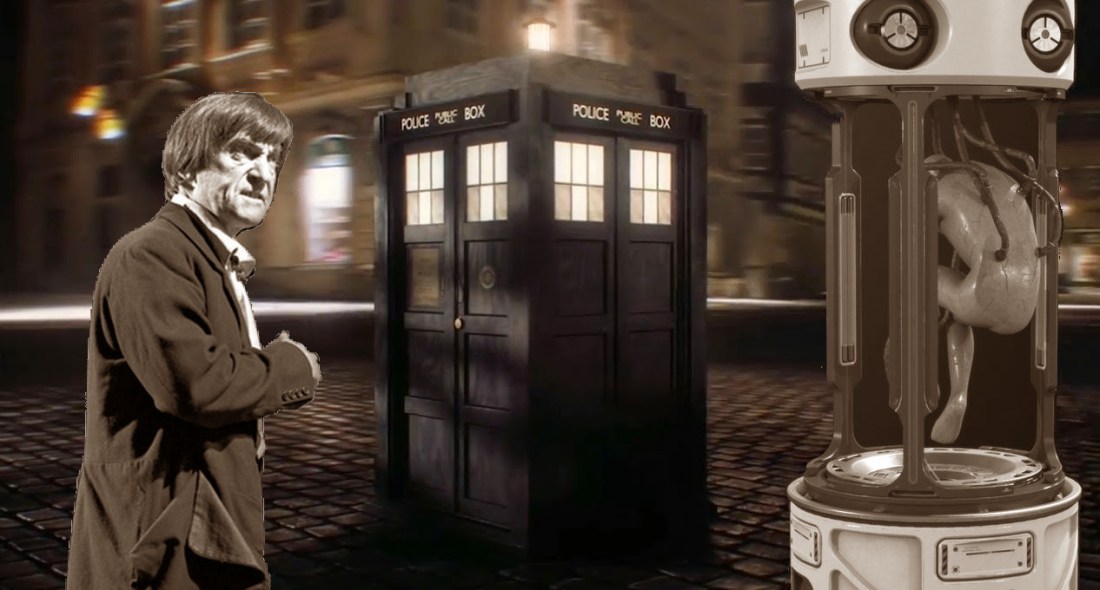
It’s surprising to realise that Doctor Who has rarely used the Industrial North as a setting. We have seen adventures set in futuristic factories and warehouses, visited the beginnings of the Industrial Revolution in Mark of the Rani and had a few romps into Steampunk. Big Finish has touched on it in The Peterloo Massacre and Industrial Evolution but that landscape of terraced houses, looming smoke-belching factories and municipal buildings that could be found from Birmingham to Newcastle has remained the province of Coronation Street and contemporary drama. So having the Second Doctor, Jamie and Zoe land on the corner of a cobbled street in Will Hadcroft’s The Resurrection Plant feels quite fresh.
Not that this is the actual North of England. In fact the TARDIS has brought our friends to Calico Three, a small habitable planet where the rural colony the Doctor remembers is in the grip of an unexpected mechanisation. What’s more the factories are capitalism run wild, with human workers mere expendable cogs in the machine. But nobody minds because on this planet everyone can be brought back to life thanks to the Resurrection Plant, even if occasionally they change gender along the way. The travellers investigate but are soon captured, just in time for a factory accident to lead to the creation of a terrifying mutation in the newly grown humans.
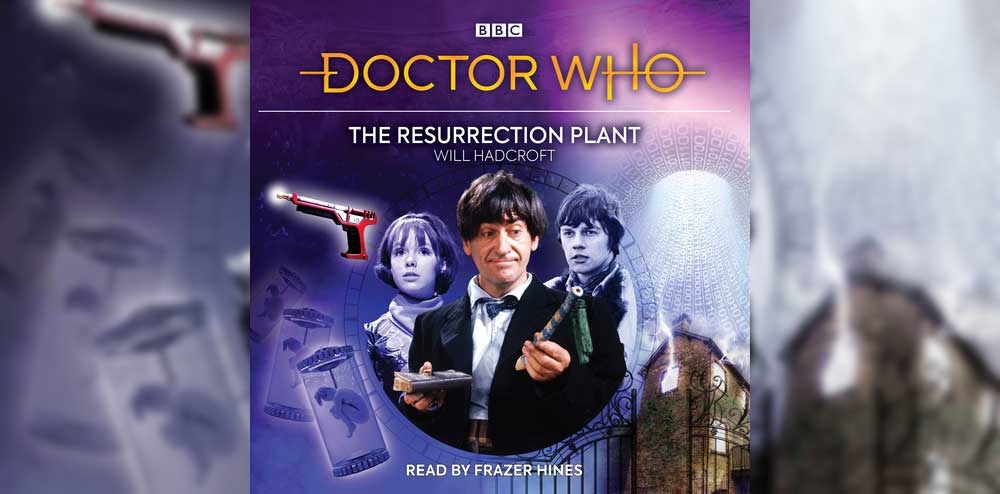
The author captures the the characters of the regulars extremely well. Patrick Troughton’s Doctor can be hard to capture in print, since so much of his character is in his delivery, but here he’s compassionate, curious, mischievous and has moments of righteous indignation. Jamie and Zoe both get moments to shine on their own too. The story seems to be setting up as a Frankenstein-influenced piece about Ren, a technocrat facing up to consequences of treating his workforce as commodities, together with a fearsome but misunderstood monster, but there’s a second act twist which takes us into another kind of drama, one that I was worried was going to ruin the authentic Sixties atmosphere that Will had recreated. Thankfully he skilfully avoids this.
Fraser Hines has been sharing his enjoyable Troughton impersonation for a while in Big Finish audio plays and books. It’s great to hear it again. Elsewhere he is an excellent reader in general and tells the story with animation and a good pace. Similarly impressive is the soundscape.
There are echoes of The Rebel Flesh and The Quatermass Experiment, but ultimately this is a great original adventure. It tells a story probably too difficult for the television series of the time to realise well, and instead takes advantage of the freedom of prose. An excellent addition to this year’s mini-Troughton celebration, along with the recently released animated recreation of The Abominable Snowmen.
CD cover
Will Hadcroft of course is a friend of mine and its been marvellous to see him achieve the ambition of writing an official Doctor Who story. He’s previously written several novels and many moons ago an adventure for my old fan audios Fine Line, called The Chattath Factor, which has recently been re-released on Youtube. It was a marvellous story to end my fan series on.
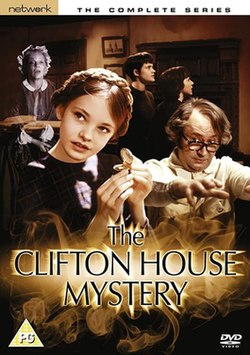
Network continue their quest to release the obscurest shows from British television’s past. I’m fairly knowledgeable about cult TV but I’ll admit I had never heard of The Clifton House Mystery until I received it as a Christmas present. One of a series of children’s supernatural dramas produced by HTV in the Seventies and it would seem the most obscure. Is it a lost gem or a forgettable turkey?
Conductor Timothy Clare, his wife Sheila and his three children Jenny, Steven and Ben move into a large detached house in Bristol. They briefly meet its previous inhabitants, the elderly Mrs Betterton and her granddaughter Emily, but she seems oddly anxious to leave a house she has lived in most of her life. Emily meanwhile tells Jenny in secret to look out for “the Grey Lady”. Steven is inexplicably drawn to buy an old Victorian soldier’s helmet being sold at the house auction. As the family being to settle in, a series of supernatural events afflict them. Objects fly out of their hands, Steven sees a screaming man’s face in the helmet and Jenny does indeed meet a ghostly elderly woman. After a dinner party for Timothy’s prospective American agent goes frighteningly wrong, the family turn to an amateur ghost hunter Milton Guest for help.
Watching The Clifton House Mystery today, the first aspect that struck me was the almost complete lack of any emotional sub-plot for the protagonists. If this was being made today, there would definitely be a link between the emotional health of the family and the hauntings. Perhaps friction between the parents who seem rather caught up in Timothy Clare’s career and their neglected children? Or teenage growing pains for Jenny being linked to poltergeist activity. Or generally the lack of any obvious affectionate behaviour between anyone. Then there is Milton Guest, a middle-aged apparent bachelor, who admits he’s never seen a ghost, even though he lectures on them. Here’s a character who could have been portrayed as a rather tragic or suspicious, like George Tully in Sapphire and Steel, but instead is almost immediately taken at face value after a few polite protests. But all that is left deep down in sub-text in favour of plot exposition and the most straightforward of reactions to everything from the haunting to the state of the house.
Simply because this is a children’s drama does not automatically prevent it from being scary. Executive producer Patrick Dromgoole had previously overseen such memorable teatime chillers as Children of the Stones and King of the Castle, and would go on to produce Robin of Sherwood in the Eighties. All these programmes had great atmosphere and memorable moments of fear. But here is a series that seems to actively pull back from anything genuinely scary. It’s two best horror moments, the ghostly screaming face, and later a moment when Jenny walks into her brothers’ bedroom to find the Grey Lady standing watching them, who then turns to look directly at her, are cliffhangers which are promptly cut away from, with no real follow-up. Mostly the story plods through its six episodes, steadily building up its story with no real urgency. The family might be disturbed and inconvenienced by the haunting, but there’s little real threat.
This series belongs to that sub-genre where the ghosts act as a window into history, rather than being malevolent creatures. In this case the children and the audience learn about the Bristol riots of 1831, when 4th and 13th Dragoons were summoned by the mayor to quell a mob which had laid siege to the city hall whilst protesting about their lack of representation in parliament. The Dragoons had eventually charged the crowd resulting in 4 deaths and over 80 wounded.
Playing ghost hunter Milton Guest, Peter Sallis is the only really recognisable face in the cast, and he delivers another one of his affable Yorkshireman performances. The four children all give those kind of stage school performances that you often find in children’s television, competent but not very naturalistic. Probably the best scenes of the series are actually in the first episode before the hauntings start, as a group of nosy, gossipy locals and the family pour over the contents of the house auction. At this point the show feels as though it could go into Jack Rosenthal territory, before the main fantasy thread appears.
The Clifton House Mystery was co-written by Harry Moore, a writer and producer often associated with Sherlock Holmes related dramas, as well as another children’s ghost series The Georgian House. His co-writer was Daniel Farson, a great-nephew of Bram Stoker, the creator of Dracula, and best remembered as British television’s first onscreen investigative journalist.
The only extra on the DVD is a gallery of some publicity and set photos of the cast. I love the way Network are releasing so much vintage television on DVD, obscure discoveries as well as series which already have a fandom. But not everything vintage is automatically great and The Clifton House Mystery is nowhere near as interesting or stylish as other supernatural titles as Sky, Shadows, or Sapphire and Steel. Give this one a miss unless you are a completest like me.
When I started thinking about Outcasts, in my mind it was a series just a few years old, and I was shocked to find out it was actually broadcast in 2011. Nevertheless its striking how little impact this expensive primetime BBC1 science fiction series seems to have made. A quick google search reveals no dedicated fan sites, only a few reviews on newspapers and general purpose geek TV review sites. In the comments section underneath them, a mixture of short thoughts evenly divided between bouchets and brickbats. Creator Ben Richards tried to generate some excitement with teasing a few things which might have happened in season two but to no avail. No streaming company was rushing to Kudos’ door for more stories from Carpathia and it seemed there was no one campaigning for more. And revival campaigns are surely one of the defining factors of SF fandom?
Looking back there hasn’t been a really successful show about colonising a planet, despite the apparent strengths of such an idea. Neither Earth 2, or Terra Nova lasted more than a season and Outcasts continued the trend. Distant space colonies of explorers and farmers it seems, are more a place we like our heroes to visit, have an adventure, then blast off again to somewhere new. Post-apocalyptic survival tales seem to fare better. The Walking Dead and Survivors have both tackled themes about setting up a new society from the ground up and hooked us into the characters and their plight, yet both had more than their share of soapy storylines. Maybe when we go into space we’re always looking for new worlds to explore, preferably with interesting lifeforms to fight or fall in love with.
Perhaps another lesson to learn from Outcasts is that a great episode one is still important. Maybe a Netflix series can afford a slow burn when all the episodes are simultaneously online, although I wish they didn’t indulge in them quite so often, A weekly series however needs to grip from the first night. Most of the really negative, virulent reviews of Outcasts are based on the first episode. Watching the whole series I agree with some of my guests that the series does improve but the drag factor of the first two slow episodes sets a gloomy tone that later episodes never really shook off, even as the plot picks up momentum. At the same time some of the reviews themselves are weirdly hysterical. For example one newspaper asked if Ed Wood Jr (the notorious low-budget director) was in charge. Whatever else can be leveled at the programme, the production values are first class.
In this episode, I’m joined by Nicky Smalley, Dr Rebecca Wray and John Isles to talk about our rewatch of Outcasts and what we think worked and what didn’t. There’s some interesting discoveries along the way.
Essential facts
Cast Hermione Norris – Stella Isen Daniel Mays – Cass Cromwell Amy Manson – Fleur Morgan Ashley Walters – Jack Holt Eric Mabius – Julius Berger Michael Legge – Tipper Malone Liam Cunningham – Richard Tate Langley Kirkwood – Rudi Jeanné Kietzmann – Lily Isen
Production Created by Ben Richards
Written by Ben Richards, David Farr, Simon Block, Jimmy Gardner, Jack Lothian
Produced by Radford Neville Co-produced by Jörg Westerkamp, Thomas Becker, Vlokkie Gordon, David Wicht Executive Produced by Jane Featherstone, Faith Penhale, Matthew Read, Simon Crawford-Collins, Ben Richards Directed by Andy Goddard, Omar Madha, Bharat Nalluri, Jamie Payne
Production companies Kudos Film and Television ApolloMovie Beteiligungs BBC America BBC Wales Film Afrika Worldwide
You can now follow Very British Futures on Audible, as well as Spotify, Apple Podcasts, Google Podcasts and most other major platforms. If they don’t work for you, you can also listen or download it from here:
Very British Futures – Outcasts
As I explain at the end of the episode, this show marks the end of season one. The podcast will be taking a hiatus until Summer 2022, whilst I concentrate on other work. But it will be back. Thanks for reading.
It’s tempting to describe Kinvig as an artistic imperfection, there to make the rest of Nigel Kneale’s television work look even better in comparison. That would be nonsense of course. Nobody involved in this 1982 ITV sitcom wanted it to be anything other than a great success. However, it is a fact that Kinvig was not a successful programme in terms of ratings or on the Audience Appreciation Index. The debate lies in whether Kinvig is an unappreciated rough diamond, a textbook disaster, or something in-between.
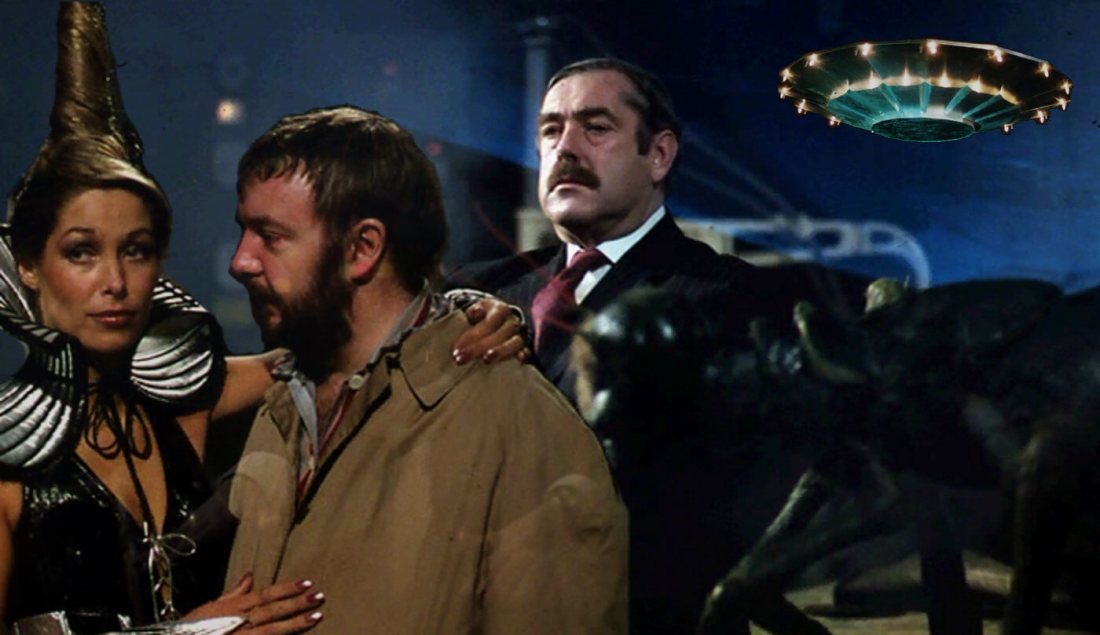
Kinvig concerns a lazy repairman called Des whose life is permanently stuck in neutral. Apart from his good-natured twittering wife Netta, his only friend is Jim Piper. Des indulges Jim in his obsession with unknown mysteries – UFO’s, Atlantis, psychic powers etc. He’s shaken out of his lethargy when beautiful Miss Griffin enters his life, during the day as an angry customer, then at night as a seductive alien who tells him he is the only man who can save Earth from the evil Xux. Or is it all in his mind? (Answer: Yes it is)
If it wasn’t written by Nigel Kneale, the writer of classics like Quatermassand the Pit, 1984 , Beasts and The Woman in Black, it’s doubtful that Kinvig would ever have been released on DVD or enjoy any cult status at all. Who remembers SF sitcoms The Adventures of Don Quick, or Luna for example? Of my two guests for this episode, only Charles Auchterlonie had seen it before, whilst Tim Reid came to it completely fresh. Chas and Tim already have an excellent podcast of their own – The Randomiser where they discuss Doctor Who and Red Dwarf. I’m a big fan of it, as well as knowing them as friends from way back in early noughties of Doctor Who internet fandom. In fact I’ll be guesting on a future edition of their show.
I must take a moment to praise Andy Murray’s excellent production notes and his definitive book on Nigel Kneale’s career Into the Unknown which came in very useful when researching the programme.
Overall, most episodes in this series end up championing the show of the week, but I’ll confess that this episode is a bit of demolition job. Hopefully you will think it is an entertaining deconstruction.
Production Details
Cast
Dennis Kinvig – Tony Haygarth Netta Kinvig – Patsy Rowlands Jim Piper – Colin Jeavons Miss Griffin – Prunella Gee Buddo – Simon Williams Mr Horsley – Patrick Newell
Production Design – Michael Oxley Costume Design – Sue Formston Written by Nigel Kneale Produced & Directed by Les Chatfield
You can download Very British Futures from your favourite podcast app. In fact if my podcast is not on your favourite podcast app, let me know and I’ll make sure it gets put there. Or you can listen or download from this very page.








 The Phantom Frame