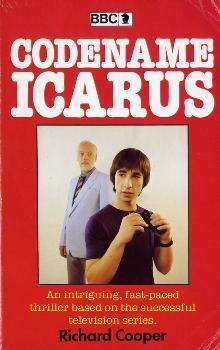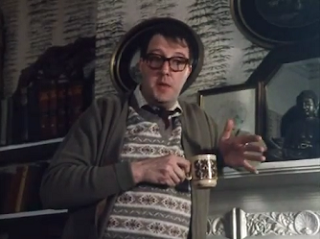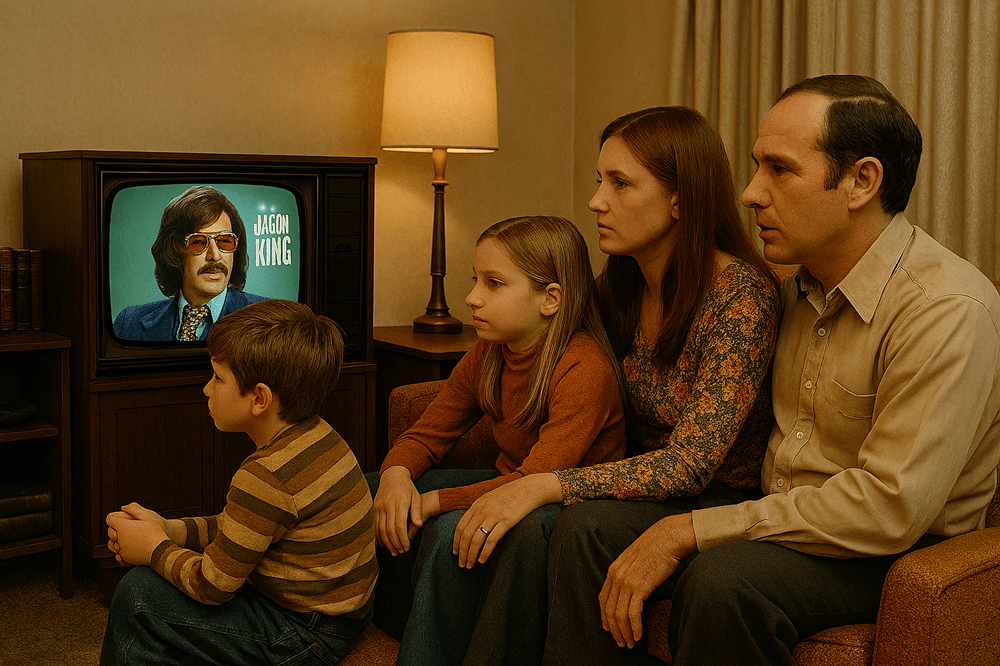
Watch out, the latest episode of Very British Futures is available now and this time we are delving into obscurity again to analyze Codename Icarus, what would now be called a techno-thriller, and aimed at teenagers. Joining me on the journey are my old friends, writer Kara Dennsion and Nicky Smalley.
Among the many children’s dramas produced by the BBC in the Eighties, Codename Icarus stands out as one of the more sophisticated. First broadcast in 1981 as a five-part serial, it was written by Richard Cooper, directed by Marilyn Fox, and produced by Paul Stone. It quickly earned a reputation amongst those who watched it for intelligence and a willingness to treat young audiences with respect. Far from being a lightweight adventure, Codename Icarus explored weighty themes of power, manipulation, and the exploitation of genius. Paul Stone would go on to produce some of the best BBC children’s fantasy drama of the decade, including The Box of Delights and The Chronicles of Narnia. While Richard Cooper would create Knights of God for ITV.
At its heart, the drama told the story of Martin Smith, an isolated teenage mathematical prodigy whose brilliance is unrecognised and un-nurtured. His alienation at school and at home makes him vulnerable to recruitment by a mysterious organisation known Icarus. Little does he know that behind a series of private academies is a shadowy group orchestrating a global arms race, and their founder is particularly interested in using Martin’s talents to advance his own ends.
The narrative unfolds on two levels: Martin’s personal journey, as he begins to realise the sinister uses to which his gifts are being put, and the parallel investigation by intelligence agent Andy Rutherford, who uncovers Icarus’ machinations.
The show is notable for how it blended the thrills of a spy drama with a deeply unsettling commentary on the militarisation of science and the pressures faced by gifted children. Rather than offering simple heroes and villains, Codename Icarus painted a morally complex world where adults exploit youth for power, and where intelligence itself becomes both a gift and a curse.
Stylistically, the series was atmospheric and serious, eschewing flashy effects in favour of taut direction, naturalistic performances, and a mounting sense of dread. Barry Angel’s portrayal of Martin Smith was particularly haunting, capturing the vulnerability and quiet anguish of a boy caught in forces far beyond his control. Its willingness to ask difficult questions made it stand apart from much of BBC children’s drama at the time, and it remains a great example of the BBC’s tradition of challenging young audiences.
You can listen on your preferred podcast app or here online.
It was good fun to record this podcast with old friends Kara and Nicky and hear their analysis and enthusiasm. Hope you enjoy this episode too.
I wasn’t going to do a Blake’s 7 episode when I conceived my podcast Very British Futures. I felt that show already had several excellent podcasts covering it and my series was about the less celebrated UK shows. In time however, I found that listeners want to hear about the shows they had watched, as well as ones they’d never heard of, and besides which, Blake’s 7 has got so much in it to enjoy and discuss.
For such a significant episode I needed first rate guests and I was fortunate that my invitations was accepted by actor and old friend Amy Elizabeth, not to mention author, presenter, academic Dr Una McCormack. They were both great company.
Does Blake’s 7 need much of an introduction? Here’s the quick version: Created by Terry Nation and running for 4 seasons in the slipstream of Star Wars, the drama followed the adventures of a group of criminals turned reluctant resistance fighters in a space-faring future. Humanity is ruled by the bleak tyranny of The Federation. Blake and his recruits have stolen an advanced alien warship rechristened Liberator. The show was famous in British pop culture largely for two factors, the characters who were much more complex and witty than most SF heroes, and a BBC budget stretched to breaking point.
But as we reveal in our talk, Blake’s 7 was made by people who cared, who wanted to make this show as rich as they could. Terry Nation and Chris Boucher did fantastic worldbuilding and in many ways the programme is an early example of the kind of story arc which is now expected in modern television drama.
This week’s episode of Very British Futures features something brand new – a short history lesson. Because this week we look at a fairly unique meeting of Northern Ireland politics and science fiction in the Play for Tomorrow – Easter 2016 and I felt I needed to give listeners a bit of context for the significance of that date, since it was the centenary of the Irish Easter Uprising of 1916. The history of Northern Ireland is far too big a subject for a personal blog about science fiction. There is plenty I still do not know about it that I should, which is why I was adamant that I needed a guest from Northern Ireland to talk about this television play. So big thanks to Carolyn Arnold, who’s comes from the country and is also a cult TV fan.
The story takes place in Northern Ireland’s one and only integrated teacher training college. As Easter approaches, a struggle develops between Cyril Brown (Principal of the college) and Lennie North (Security Director), whose belief is that firm security as a means of prevention is more effective than liberal ideas about education and integration. The focus of their conflict is Catholic lecturer Connor Mullan and his plans to turn an exhibition about the uprising into a protest against the current Northern Ireland assembly. As all three men take extreme positions and compromise becomes impossible, a tragedy unfolds.
Easter 2016 was written by Graham Reid and broadcast on BBC1 on 18th May 1982. It starred Derrick O’Connor, Bill Nighy and Denys Hawthorne.
As it turned out, in 2016 the biggest talking point in Northern Ireland and the rest of the UK was Brexit. As far as I can tell from my brief research, what centenary ceremonies took place were wholly peaceful affairs. This is the final part of the Play for Tomorrow season and I hope you’ve enjoyed this deep dive into an obscure bit of British science fiction. Next week by extreme contrast we are discussing one of the most famous BBC SF shows – Blake’s 7!
To find out more about Carolyn Arnold and her “time travel” business, visit her Facebook page.
Kids! Back in 1999 you couldn’t get them to take off their VR shades for love or money. Not to mention their shiny metallic jumpsuits and their all-night parties in their government provided luxury accomodation! Well Shades may seem amusingly off-target in its predictions but its themes about political protest, apathy and the line between peer pressure and being part of a friendship group are still relevant concerns for drama.
Welcome to a city tower block converted into a government-run ‘Youth Unit’. The youths, at an age when they might be studying, training, working or protesting, have been ‘ bought off by the government -this being paid for by the ‘ New Wealth’ created by the development of new microchip technology. The shades of the title are dark glasses, the donning of which enables the youths to pursue his or her own dream, career or obsession. But when Sheena starts to research a young CND protestor from 1982, her curiosity starts making her ask uncomfortable questions about their seemingly idyllic life.
Shades was shown on BBC1 on 11th May 1982 at 9.25pm, written by Stephen Lowe, and stars Tracy Childs, Stuart Mackenzie and Neil Pearson.
It was a pleasure to be joined once more by my old friend John Isles to discuss this, the most obviously science fictional of the six plays. It takes its cue both from Eighties fears about the bomb and the example of the Greenham Common protests, and Aldus Huxley’s influential novel Brave New World.
This week on the Very British Futures podcast, we’re turning back the clock to the shadow of the Cold War, as we examine the fourth Play for Tomorrow –The Nuclear Family – a blackly comic TV play that aired in 1982. A blend of domestic drama and speculation about the future of work in a seemingly post-industrial Scotland, it imagines a society not just living with the threat of nuclear war, but adjusting to life without manual labour and all the community which goes with it.
You can listen to the episode here or on your favourite podcast platform. For this installment I was lucky enough to be joined by Mark Donaldson, writer and podcaster, including Doctor Who podcast On the Timelash.
The Brown Family consists of Joe (father), Agnes (mother) and two teenage children, Gary and Ann. Joe was made redundant in the mid-80s, like so many other men, and in 1999 – the year in which the play is set – it is the children who are the breadwinners, working in the spare room on their computers. Joe decides that the family needs a break, the first since Gary was a baby so makes plans to visit ‘Sea Bed 6’ military base to spend two weeks on a working holiday. However, the Browns discover a lot more than just honest labour.
It’s an engaging play with a welcome sense of humour and two excellent turns from Jimmy Hanley as Joe Brown and Russell Hunter as Sgt Smellie (pronounced Smiley).
Also out this week is the latest episode of the Doctor Who – Too Hot for TV podcast. This time Dylan Rees and guest Paul Griggs are taking a look at two Sontaran stories, including my own audio adventure Conduct Unbecoming. You can find out what they thought of it by listening on your podcast app or following this link.
Out now on your favourite podcast platform, the latest episode of Very British Futures, covering Bright Eyes, the second Play for Tomorrow from the makers of Play for Today. Broadcast in 1982. Written by Peter Prince and directed by Peter Duffell.
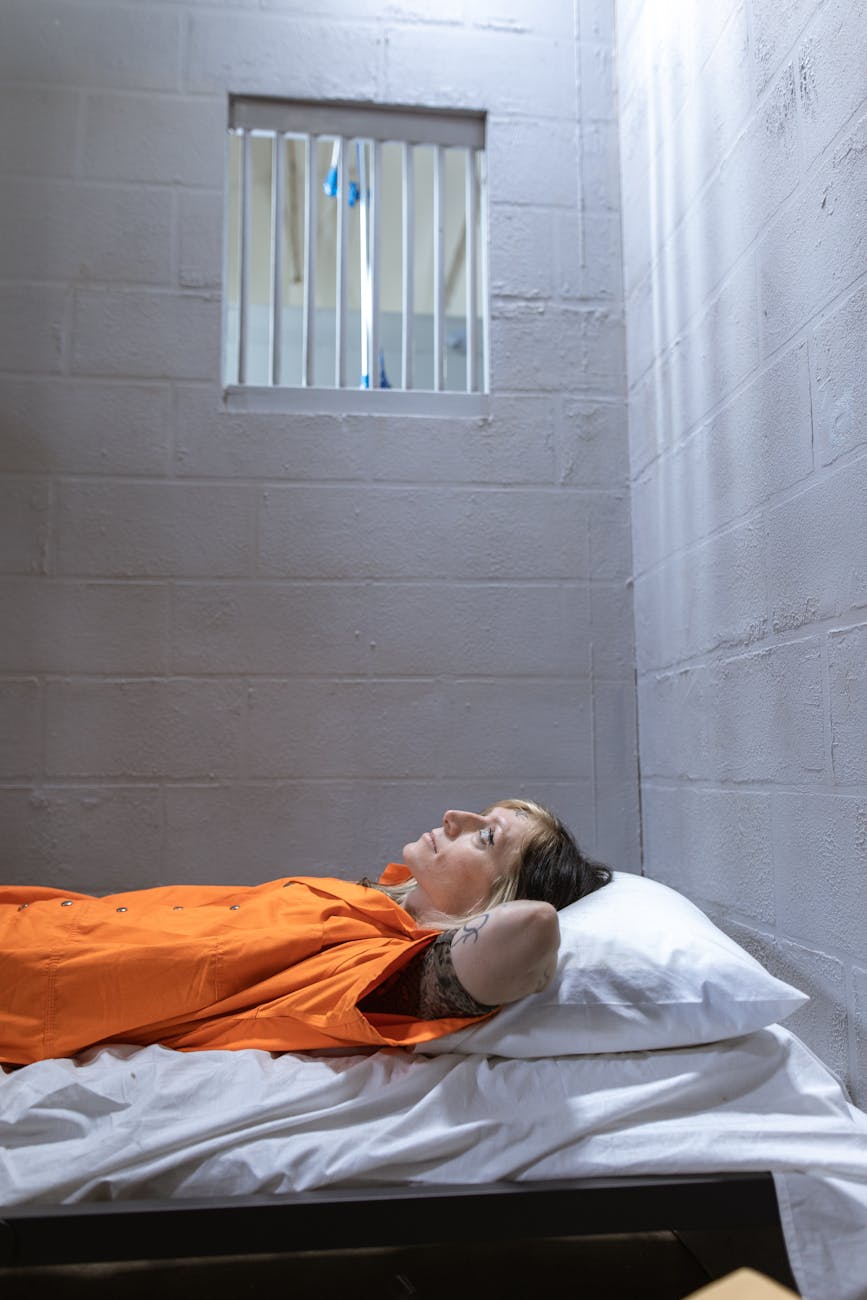
New Year’s Eve 1999. Great Britain is part of the European State. The Euro army is in the midst of a controversial war in the Middle East. Wealthy businessman Sam Howard has come to a French prison to see his daughter Cathy, who has been arrested for being part of a conspiracy to assassinate a pro-war politician, and is now facing execution. The authorities hope he can persuade her to issue an apology regretting her actions, allowing them to commute her sentence to prison time. Waiting outside her cell, Sam’s memory flashes back to earlier New Year’s Eves. 1979 when she was six years old and left with him overnight by his ex-wife. 1989, when she was sixteen and he criticised her 60’s themed party as disrespectful to the genuine struggles of that decade. When she said didn’t care about politics, he told her to start taking an interest and challenge to official line about the coming war. Now a crowd of journalists wait outside the prison, his ex and her legal team are helpless and he must decide whether to ask her to betray her principles to save her life.
One of the good things about making this series is when a guest helps me see a programme in a new, usually better light. This was the case with Bright Eyes and my friend Jon Arnold. An experienced writer and commentator, Jon’s enthusiasm for this play about the generation gap, activism and pragmatic politics was infectious. Hope you find this an interesting episode.
You can find the episode on all major podcast platforms, including Spotify.
To coin a phrase “Good news everybody!” There’s been a hiatus with the Very British Futures podcast for a few months, although I have been recording several conversations. The reason was that I am presenting a mini-series about 1982 BBC anthology Play for Tomorrow and I wanted it to be hitting your ears on a weekly basis. So I couldn’t release the first one until they were all ready to go.
But today is the day and you can hear what Rod Brown (host of Nostalgia Tours podcast) and myself made of the first entry – Crimes by Caryl Churchill.
Play for Tomorrow was a short-lived experiment by television producer Neil Zeiger, who was already in charge of the well-regarded Play for Today strand of one-off plays which ultimately ran for 15 seasons between 1970 and 1984. Amongst its wide variety of original stories were modern classics like Blue Remembered Hills, Abigail’s Party and Edna the Inebriate Woman. Whilst most of its plays were realist, it occasionally ventured into science fiction, most notably in The Flipside of Dominic Hyde. It was the success of that time travel comedy that encouraged Zeiger to propose a mini-season of plays set in the near future UK, based on realistic scientific and social science predictions.
Crimes is not so much as story as a think piece, a collection of linked monologues. building a picture of a more regimented Britain in the shadow of a continued Cold War. A group of prisoners are attending a mandatory therapy session under the chairmanship of Melvyn, a successful criminal psychologist. But is Melvyn himself really in a good place to be deciding on other’s sanity?
I deliberately wanted to have some fresh voices in this mini-season, as well as some old friends. Rod Brown is a fairly recent podcaster on the seen but his Doctor Who podcast Nostalgia Tours is already building a rep for itself. He’s an excellent guest as you’ll find out in this episode. Hope you enjoy this special set of Very British Futures episodes, available on your favourite podcast app.
SF conventions have been making appearances in comedy films for decades. It’s not hard to understand why, as the exotic fantasy worlds of science fiction meeting the mundanity and compromises of the present day and its fallible inhabitants creates a gap that is ripe for observation and storytelling. Then there’s the glamour of celebrity and the shared contract of delusion that exists between artists and their fans. Fandom is a place that build marvellous communities, but also be tawdry and hurtful.
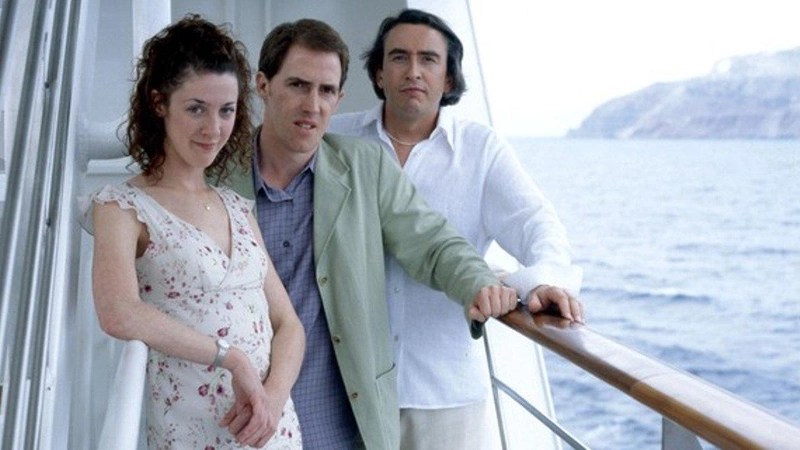
Amongst films and television that have depicted this are Staggered, G.B.H, Paul, Free Enterprise, Frasier, Community, The Big Bang Theory and most famously Galaxy Quest. Less well known but a marvelous example of this sub-genre is the 2002 TV movie Cruise of the Gods. Made by Baby Cow Productions for the BBC, it stars Rob Brydon and Steve Coogan as actors Andy Van Allen and Nick Lees. Both were the stars of an imaginary 80’s tv show Children of Castor. The show was set on a post-apocalyptic Earth, minus the USA (“America is Pollux!”) and featured a New Wave pop group who survived to become the inheritors of humanity. Now in 2002, Nick is globally famous for the US show Sherlock Holmes in Miami, whilst Andy is a barely working actor, supporting himself as a hotel porter. We learn that Andy has been a self-centred jerk most of his life. His lack of success and his resentful reliance on his cult fame has left him lonely and bitter. Most of the film takes place on a cruise ship taking holidaymakers, including a SF convention, around the Greek islands. Andy is the guest of honour, along with the show’s writer and a former actor who played a mutant in the opening credits. But his minor celebrity is overshadowed when Nick turns up completely by chance, filming the latest episode of his series. Andy is initially furious, but when Nick offers him a chance to appear in his programme, Andy sees an opportunity to finally become a star again.
SF conventions on cruise ships are regular events, but there is an extra nostalgia for me in seeing this manner of grassroots event, with guest panels, discussions and competitions, in an era where many conventions have largely become merchandise markets. The film features several actors who would become famous in the Noughties, including David Walliams and James Corden. As well as amusing guest appearances playing themselves from Jack Jones and Brian Conley. It’s a funny, feelgood drama that gently pokes fun at fans but without cruelty.
Cruise of the Gods is the subject of the latest episode of Very British Futures. You can listen to the podcast on Goodpods or any of the major podcast platforms. My guests, actor Cliff Chapman and podcaster Dani Wray, had originally recorded an entirely different episode about The Comic Strip Presents, but due to my clumsiness I lost the recording. So they very generously offered to record a new episode. I had toyed with the idea of covering Cruise of the Gods for a while. Whilst it is not science fiction, it is definitely about British cult television. Hope you enjoy it as much as we enjoyed recording it.
After the success of his first BBC Audiobook, Will Hadcroft is back with a new Doctor Who short story, this time featuring the Fifth Doctor, Tegan, Nyssa and Adric, and read by Matthew Waterhouse. He’s delivered an entertaining little SF adventure with a subtext about human exploitation by both other humans and extraterrestrials.
Cover artwork
Still trying to return Tegan to Heathrow airport, the Doctor instead lands the TARDIS in 1830s London. Happily the air hostess turns out to be something of a Charles Dickens fan, so her disappointment is mollified by a chance to explore the setting of most of his novels. The Doctor warns his companions that the real London is much more squalid and dangerous world than is usually shown in the movies. In fact he’s so cautious he even insists they all change into appropriate period clothes for once, which is a fun idea and leads to an entertaining reveal sequence when they step out of the Ship. But the listener already knows that sinister forces are at work. A retired admiral has become an investigator into the odd and inexplicable. He has heard of unexplained disappearances around the workhouses, and desiccated bodies being discovered, killed in a manner beyond human capabilities. Before the Doctor and his friends can begin properly investigating, all four of them are abducted and separated by different parties.
In his first Doctor Who audiobook The Resurrection Plant, Hadcroft had shown a particular interest in darker, exploitative side of the Industrial Revolution and he continues the theme in this story, arguably to even greater effect since much of the unpleasantness he describes is historical fact. Splitting the team up, he depicts the workhouse, the streets and criminal gangs trading in women’s lives with an interesting but balanced amount of detail, illustrating the harshness and injustice without descending into gory shock value. In fact this story would have worked as a pure historical, with a little reworking. Without giving too much away though, there is an alien antagonist to be faced. Bodies drained of life is something of a staple in Doctor Who adventures, as is beings who regard humans as a resource rather than sentient equals, but ultimate resolution to the main mystery is pleasingly Doctorish and ultimately hopeful.
All the regulars are well-depicted. Tegan and Nyssa get some moments of sisterly banter and later prove to be adept at rescuing themselves for once. Adric is headstrong and feels a bit of an outsider in this decidely messy human enviroment, giving some hints of his growing homesickness. There’s a striking moment where he admits to mourning the ‘death’ of the older Fourth Doctor who fitted the father-shaped hole in his life, replaced by a younger man with whom he struggles to connect with, in same comfortable way Tegan and Nyssa appear to. Meanwhile the Doctor is enthusiastic, a touch rueful and there’s an amusing moment where he is annoyed with the “youthful whine” in his voice when he attempts to assert his authority. Matthew Waterhouse does an pretty credible impersonation of Peter Davison’s voice, can still sound convincingly younger as Adric, but makes Janet Fielding sound like a cockney. His natural reading voice is very listenable to though and he does a good job with the guest characters. David Roocroft’s sympathetic sound design does a great job of illustrating Victorian London without drowning us in street barkers, steam horns, and clipclopping carriages.
Doctor Who – Dark Contract is an assured, entertaining trip back to Doctor Who circa 1982. Written with intelligence and with something deeper to say both about our fairly recent past and our responsibilities to each other. It can only enhance Will Hadcroft reputation as an author.
Ever since computer games were invented, Doctor Who fans like myself have wanted to see our favourite show to be part of that world. From Doctor Who – The First Adventure on the venerable BBC B Micro, through Dalek Attack on the PC and Spectrum, to more recent attempts such as Lego Dimensions. Then in 2019 a fully fledged VR game arrived The Edge of Time, courtesy of Maze Theory, but never seemed to make the impact such major project should had. After all, this game lets the player travel in the TARDIS and confront Daleks and Weeping Angels face to face. It has a complete story that puts the protagonist centre stage. When I bought myself a Meta Quest 3 headset, it was a game I purchased almost immediately to experience myself. After Beat Sabre.
Recently there seems to have a dizzying explosion of Doctor Who titles in many videogame subgenres, from time-killing smartphone game Lost in Time to online card game Worlds Apart to guest appearances in big hitters like Fortnite and Minecraft. Up until now, I would say the titles closest to capturing the spirit of the programme were the Doctor Who Adventures released initially for free by the BBC, featuring the Eleventh Doctor and Amy. Whilst enjoyable to play these felt less polished than the perfect AAA game of my imagination, something combining the mechanics and look of say the Mass Effect Trilogy or Fallout 4.
The appropriately named game The First Adventure (1983)
The opening story in The Adventure Game ‘season’ – City of the Daleks (2010)
The Edge of Time is definitely one of most ambitious and big budget attempts to date. It promises a great deal, to actually join the Thirteenth Doctor in an adventure as her temporary companion, flying the TARDIS, battling the Daleks, the Weeping Angels and some new enemies in virtual reality. Unfortunately the earliest releases of the game came with game crashing bugs, despite extensive play testing by Maze Theory, and I think that did damage the game’s reputation. However the version available to buy now is much more robust and also comes with 2020’s Time Lord Victorious DLC bundled in for free.
The landing screen placed me in a rocky area with the TARDIS standing to my left, humming with energy, whilst ahead was the menu. Choosing New Game took me to what would be called the “cold open” of the episode. a shabby laundrette where I was the only customer. The lights start to flicker and the voice of the Doctor, voiced by Jodie Whittaker herself, comes through the static of the television. She’s asking for help, and warning me that I’m in trouble. The lights flicker again and the washing machines fill with slime, covered with blinking eyes. The voice of the Doctor warns me that these are embryo Hydrocs, vicious predators who grow very quickly. Reality is breaking down and I need to get out of there. Some searching and clue solving puzzles follow, as I eventually get through the locked door at the back and summon the TARDIS, just as a Dalek saucer appears overhead and tries to exterminate me. Cue 360 degree panoramic version of the Thirteenth Doctor’s title sequence.
Inside the Thirteenth Doctor’s console room (a design I became more resigned to than ever really liked) the Doctor appears as a hologram and explains that she is trapped at the other end of Time and needs my help to find three rare zeiton crystals with which she can create a vortex manipulator to escape and fix the reality virus which is threatening the whole universe. This plot accidentally anticipates the Flux that the Doctor will face in 2022. First she needs to guide me through flying the TARDIS, which involves turning knobs and pulling levers in a sequence repeating memory game, a bit like Bop It!
There was definitely a thrill to stepping out of the TARDIS on to an unknown planet. That worked each time arrived in a new location. Most of the game is puzzle solving, moving objects about, slotting them into holes. Or combing objects to create an effect. Zapping items with the somic screwdriver was a reliable move. Most of the puzzles were an easy to medium challenge, apart from one aboard a spaceliner involving reflecting a laser beam with rotating mirrors to activate doors, that eventually I had to look up the solution on YouTube. As with many VR games at the moment there is a distinct escape room vibe to the majority of the game, even if the locales allowed for a lot more walking and exploring.
Occasionally there is an action sequence. Escaping the Weeping Angels in an old house, with an unreliable torch and a lift which needs recharging at each floor with a dynamo, was genuinely scary, especially knowing that death meant going back to beginning of the sequence again. By contrast a first person shooter section, driving a Dalek around a temple shooting at other Daleks, became quite frustrating, since unless you managed to time every shot and make it count, death meant starting the whole long section over again, which became pretty wearying. I’m not a fan of the whole timing blows precisely in a sequence kind of combat which Dark Souls has popularised.
Along the way, the villain is revealed as The First, a godlike mother of all life in universe, wishing to punish intelligent life for making so many mistakes. To be honest this section was a bit ponderous, especially since she is so powerful, all the player can do at this point is really stand and watch the Doctor sort things out, again solely as a voice. Despite a last minute race to retrieve three more magic items by revisiting some previous destinations, the climax is underwhelming.
Yet the journey there is pretty entertaining. The whole Weeping Angels section uses those antagonists particularly well, with some moments that are more than worthy of the television series. Sneaking past full-scale Daleks is fun and again feels very reminiscent of the series. Dialogue writer and co-storyliner Gavin Collinson gets the feel of modern day Doctor Who. You get your own companion of a kind, Emer, winningly voiced by Jennifer Saayeng, who has also appeared in a few Big Finish stories. Wielding the sonic screwdriver to scan and manipulate item is satisfying too.
Graphically the style is fairly cartoonish, an acceptable compromise between accurate detail and the speed and size of the game. The two TARDIS console rooms of the Thirteenth and the Tenth’s (for the Time Lord Victorious add-on) are pleasingly recreated, whilst the new locations are colourful and well lit.
Away from the main story, there’s the Time Lord Victorious collectible game, which tries to extend gameplay by adding hidden collectible items in all the locations of the story. These are related to the stories in the BBC’s 2020 multi-platform campaign. Discover all eight and you can play a quiz game. There’s also an Arcade section where the player can replay the title sequence, flying the TARDIS, escaping the Weeping Angels, or battling the Daleks.
In 2021 Maze Theory released a reimagined version of the game for flat screen consoles. Doctor Who – The Edge of Reality replaced the god-like First with the Cybermen as the principle villain and also featured a cameo from the Tenth Doctor. I have not played it but I believe it too was plagued with bugs and seems to have had even less impact than the VR original.
I’ve enjoyed playing this game and think it deserves to be better known. It’s a sincere attempt to put the player inside a Doctor Who adventure and translates a fair amount of the feel of the Thirteenth Doctor’s era. It’s an accessible game for both experience VR players and first timers. Hopefully it will remain in the Steam, MetaQuest and Playstation libraries for the foreseeable future.
Another of my early experiments with my new Meta Quest 3 headset was to watch the 360 degree Doctor Who short animated film which the BBC released in January 2019, featuring the voice of Jodie Whittaker. The Runaway begins with the viewer being accidentally teleported aboard the TARDIS by the Thirteenth Doctor. Apologising, the Doctor explains she is trying to help a young energy being from another dimension return home. The being is a glowing sphere with eyes and the Timelord explains that if it becomes too agitated it will blow up, taking the TARDIS with it. As a story its typical of the kind of mini-episodes which were usually made for Comic Relief, based entirely on the standing set of the console room. The animation is similar to Edge of Time although this cartoon was made by the BBC VR Hub.
It works excellently in the Quest 3, I can see it would function equally well in any 360 viewer, including Google’s Cardboard VR. It’s a sweet little disposable tale, although I missed having any interactivity. If you have a chance to watch it as its meant to be seen, its worth your time though.