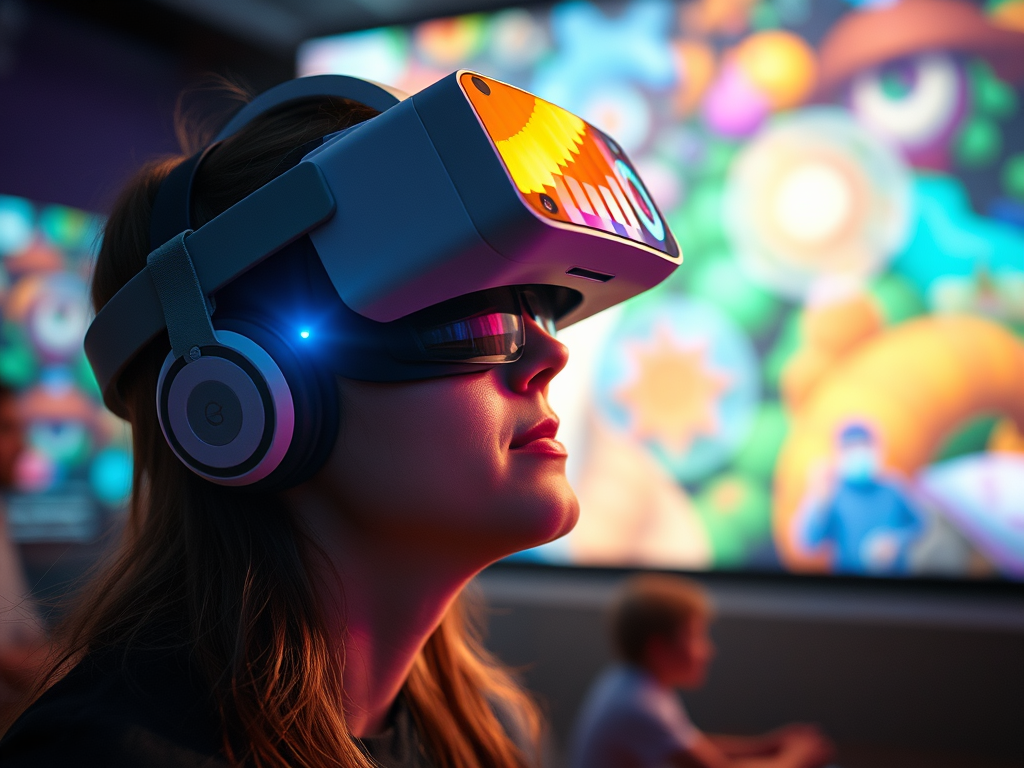
A large part of my role as a Technical Officer in Higher Education is developing and investigating Virtual Reality headsets. One of the main challenges for integrating virtual reality technology into degree education is making it relevant. Finding apps which demonstrate the strength of immersive tech in providing something which flat screens and videos cannot. So as part of my job I am always on the lookout for new VR apps which achieve this, and in the last few months I have come across three excellent titles which I am currently advocating to academics at Brooks. Goliath: Playing with Reality, Impulse: Playing with Reality, and Emperor. I ran them all on a Meta Quest2 or Quest3.
Goliath: Playing with Reality
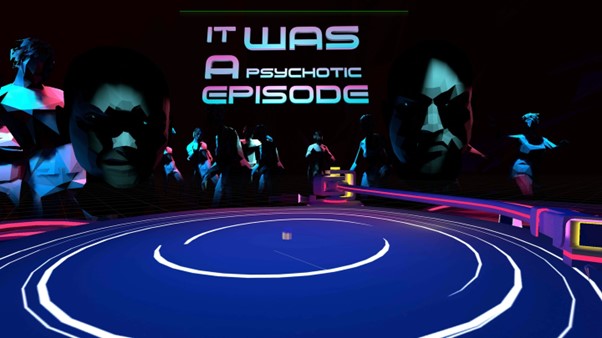
A man with the gaming nickname of Goliath, tells his life story and his struggles with schizophrenia and depression. His story is depicted as a series of games, beginning in the 8bit era and moving to fully 3D worlds and eventually reality. Following an unhappy childhood, Goliath becomes a DJ in the dance scene before his self-medication of alcohol and recreational drugs leads to psychosis and hospitalisation. Here his climb back to independence begins, in which online gaming provides a community.
Goliath sounds as if it will be alienating for non-gamers but I’ve seen several people who’ve never worn a headset before, pick it up and play it intuitively. A lot of game is fairly passive, just to be watched, but there are some nice interactive ideas, such as passing the controller over a stream of lights to turn it into sound and a simple game of “shoot the negative thoughts” which appear as wasp-like sprites. Goliath’s monologue is engrossing, augmented by Tilda Swinton as the narrator. The only downside is that to get the full effect you need to set aside 30 minutes for the whole story.
Available for Quest 2, Pro 3, 3S & Steam VR
Price £4.99
Website https://goliathvr.io/
Impulse: Playing with Reality
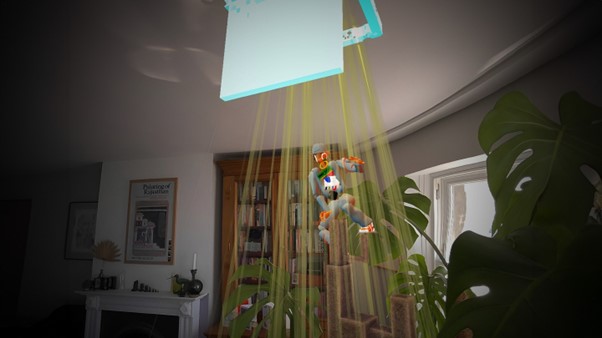
What is Attention Deficit Hyperactivity Disorder and what is happening in the brain? This app follows four stories of real young people whose lives have been affected by ADHD and how they have learned to cope with it by understanding the patterns of their behaviour.
After an initial game which helps visualise the neurological theory behind ADHD, the four stories play out in parallel, with the characters and surroundings appearing in your room as puppets moving around 3D sets. Key thoughts must be turned into graffiti on the walls of your room. This app uses the Quest3’s spatial awareness and mixed reality capability to the fullest. From Anagram, the makers of “Goliath”, it is a more active, game like experience. Tilda Swinton again provides the narration. Again, perhaps its only drawback for classroom use is that it is 40 minutes long.
Available for Quest 3, 3S
Price: £5.99
Website: https://weareanagram.co.uk/project/impulse
Emperor

Following a heart attack, a father suffers both from aphasia and partial paralysis. You take on his role and occasionally that of his adult daughter as she tries to help him with his therapy and learn more about his past. Seeing through his eyes, we travel through his memories, seeing surreal combinations created by his disrupted language processing.
Part story, part disability simulation, the therapy sections are the best part of this app, giving an insight into what it is like to be in a body that will not respond as you remember it used to. The drawn art animation is beautiful and the commitment to the whole app using hand tracking means it is intuitive to use for beginners and experienced VR users alike. The full experience is 45 minutes long. Has English, French and German options. Olivia Cooke is the voice of the daughter in the English version. Created by Astrea.
Available for Quest 2, Pro, 3, 3S
Price: FREE
Website https://astreaimmersive.io/full-line-up/emperor/
I am keen to find any more examples of these kind of apps. If you know of one, please let me know in the comments.


 The Phantom Frame