Terrahawks – Very British Futures

One of the hazards of nostalgia for old children’s television is that fans sometimes forget they’ve done a lot of maturing since they watched their favourite programmes as youngsters. It became a problem for Terrahawks, Gerry Anderson’s comeback to puppet adventures in the Eighties, only to face criticisms from the viewers who’d grown up on Thunderbirds in the Sixties who found these new stringless stories somewhat lacking. Nevertheless plenty of their children did enjoy it, and not just in the UK but in countries such as the United States and Japan too.

Terrahawks could be the strangest, boldest, most Eighties Anderson show you’ve (probably) never seen. If you grew up on Thunderbirds, Captain Scarlet, or Space: 1999, you might think you know what to expect from a Gerry Anderson production: sleek vehicles, heroic pilots, and a tone that balances earnestness with spectacle. But in 1983, Anderson and script editor Tony Barwick created was something far stranger, cheekier, and more anarchic than anything that came before.

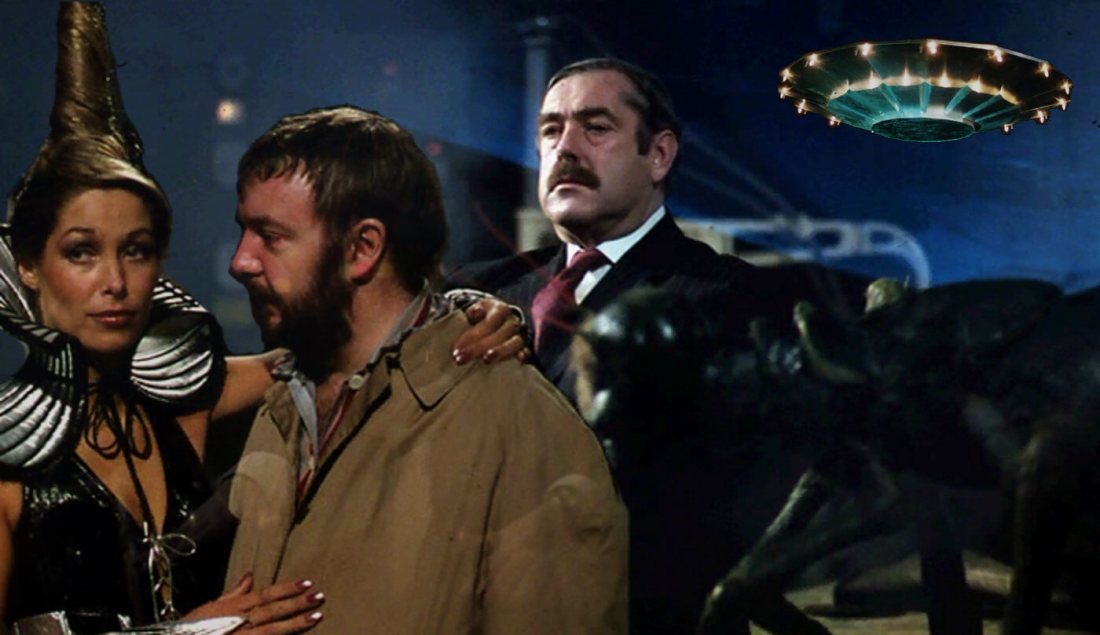
Terrahawks is a British science‑fiction series created by Gerry Anderson and Christopher Burr, originally airing on ITV from 1983 to 1986. It marked Anderson’s first new puppet‑driven show since the 1960s, but this time he ditched the iconic Supermarionation look for a new technique dubbed “Supermacromation”— hand and rod puppets more akin to The Muppets or Spitting Image giving the characters a rubbery, cartoonish energy.

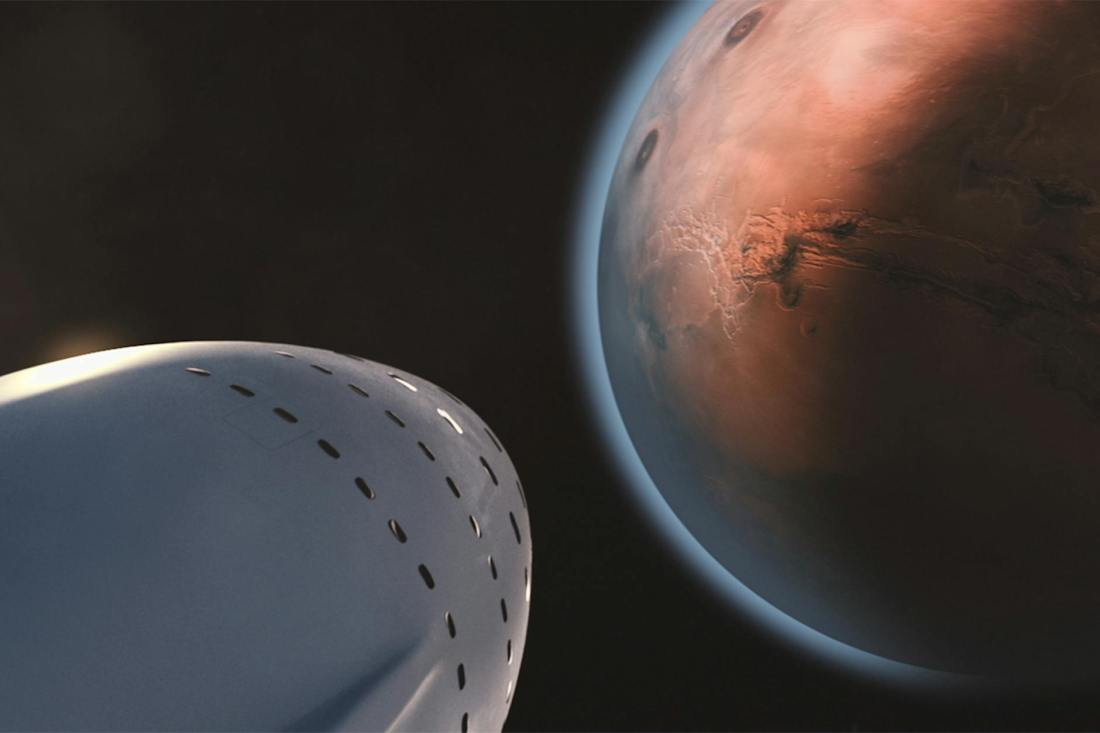
Set in the year 2020, the series follows an elite defence force—the Terrahawks—as they protect Earth from a bizarre and theatrical Martian menace led by Zelda, an android witch with a cackling laugh and a flair for psychological warfare. Rumour has it that Anderson encouraged the sculptor to base her face on his ex-wife Sylvia. Her monstrous creations, from cube‑headed robots to grotesque alien offspring, gave the show a surreal edge that set it apart from Anderson’s earlier, more polished worlds.

Even among Anderson’s eclectic catalogue, Terrahawks is an oddity. It mixes slapstick humour with genuine peril, Saturday‑morning colour with unsettling villain designs, and high‑concept sci‑fi with eccentricity only British television could produce.

A few things that make it uniquely memorable are Zelda and her brood – Some of the most distinctive antagonists in Anderson’s universe, equal parts creepy and comedic. The Zeroids – Spherical robot soldiers whose bickering and bravery became a highlight of the show. A playful tone – Less stiff than Thunderbirds, less grim than Captain Scarlet, and far more willing to be weird. Inventive model work – Even with a smaller budget than Anderson’s 60s heyday, the effects team delivered imaginative vehicles and miniature action sequences.

On the Very British Futures podcast, we love exploring the corners of British sci‑fi that deserve a second look—or a first one for the uninitiated. Terrahawks is a perfect fit: ambitious, eccentric, and bursting with ideas that reflect both the legacy of Anderson’s earlier work and the experimental spirit of 1980s television.

In our episode, we dive into why its tone is so different from his 60s classics, the show’s most memorable characters and episodes, and its cult legacy and why it still sparks debate among fans.

You can listen to the episode on Spotify and other major podcast platforms.

Whether you’re nostalgic for the original broadcasts or discovering the series for the first time, the episode offers a fresh, affectionate, and occasionally cheeky look at this odd slice of British sci‑fi history. I was lucky to be joined by regular guest Andrew Roe-Crines and Ken Moss from the Extonmoss Experiment podcast. We’re the perfect companions to your viewing, and Very British Futures is right there to guide you through the model scale madness.

An Evening of Seventies Television – I Don’t Do Sci-Fi

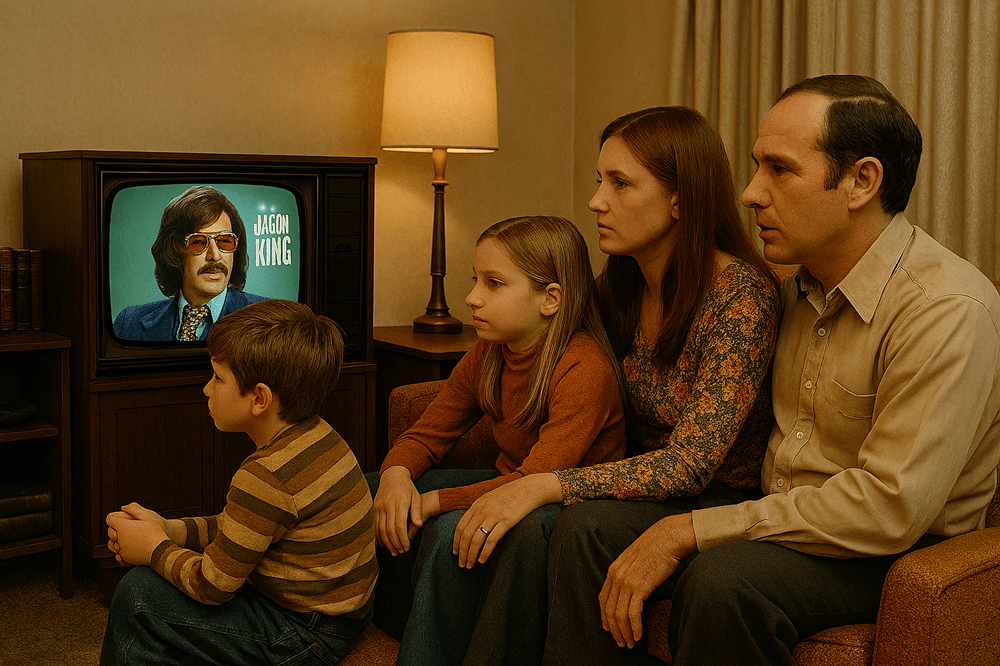
If you listen to my podcast Very British Futures than chances are you know about I Don’t Do Sci-Fi, the podcast produced by good friends of mine. This Christmas, Kevin Hiley and Rebecca Wray produced a two-hour special episode for YouTube featuring clips from Dani Wray’s least favourite decade – The Seventies. Joining her and Rebecca to watch this smorgasbord of vintage television was myself and John Isles.

Despite the title of their podcast, the one genre this night did not cover was science fiction. Instead we commented on a wide range of mainstream, mostly peak-time television, interspersed with period adverts. It was a fun night and the team have tracked down some fascinating moments of pop culture. From farming soap Emmerdale, to a music special from Lena Zavaroni and Bonnie Langford, to period drama Affairs of the Heart, to the classic Blue Peter lineup of Purves, Noakes and Singleton and much more. I hope our commentary is as entertaining if you watch it.

More from their website: “There are lots of common phobias: Heights, snakes, spiders, Mr Tumble. Regular listeners of the podcast will know that Dani has a phobia of a whole decade! Her face scrunches up in uncontrollable disgust whenever films and TV from the 1970s come up! So for this festive episode, we’ve sat her down (contrary to popular belief, body restraints were mostly unnecessary) to watch a bumper selection of 1970s British television!

“We wanted Dani to have an authentic, ordinary 1970s viewing experience so instead we’re watching chunks of soap operas, sit-coms, prestige drama, variety shows, science programmes, adverts, and more! So come with us back to that distant land of monster sideburns, flares, polluting cars, three day weeks, casual sexism, and a whole lot of brown! Joining Dani, Rebecca and John for this holiday special is returning guest Gareth Preston, who actually lived through the 1970s, and almost came out of it sane!”

Watch it on YouTube now!

“Democracy is a form of collective suicide.” The Guardians – Very British Futures

We’re getting political this week in the latest episode of Very British Futures as we examine little known near-future dystopian drama The Guardians.

The Guardians, a 13-episode political drama produced by London Weekend Television in 1971, stands as one of British television’s most thoughtful dystopian works. Created by Rex Firkin and Vincent Tilsley, with important contributions from John Bowen, the series imagines a near-future Britain that has slid quietly into authoritarianism, ruled not by a charismatic dictator but a gentlemanly, patrician businessman and fear of the G’s – the Guardians of the Realm.

In the world of The Guardians, Britain is governed by a unified party, elections have been cancelled indefinitely — and their rule is protected by a militarised police force known as the Guardians. Ostensibly created to maintain stability after a national crisis, the Guardians operate with sweeping powers, often outside the boundaries of legality or morality. The regime maintains the outward trappings of democracy, but freedom of expression, political opposition, and civil liberties have been quietly eroded.

The series explored themes that feel remarkably contemporary: surveillance, media manipulation, the fragility of democratic institutions, and the ease with which a population can be persuaded to accept authoritarian measures in the name of security. It also looks honestly at how a resistance movement works, which can be just as ruthless and morally questionable. Its tone is nuanced rather than sensational. The plot weaves together the lives of characters both in power and those seemingly without. Nobody turns out to quite what they appear at first.

Though praised in some quarters for its ambition and intelligence, The Guardians was not repeated after its original broadcast. For decades, it existed mostly in the memories of viewers and television archivists, until Network Video released it on DVD for a new audience to find.

Joining me for this episode is an old friend of the show – Stephen Hatcher – who has previously shared his expertise on Out of the Unknown and Play for Tomorrow. His love for the series is infectious. I hope you find this edition as fascinating as I did recording it.

You can listen to episode here on Spotify or any of the major podcast platforms.

Now, Sapphire, take time back! Sapphire and Steel – Very British Futures

There’s a brand new episode of Very British Futures out there now, tackling another of British TV most famous SF series – Sapphire and Steel.

When Sapphire & Steel first aired on ITV in July 1979, it didn’t so much arrive as materialize—mysterious, minimalist, and utterly unlike anything else on television. Created by Peter J. Hammond, who had written for Ace of Wands and Shadows but had mostly worked on conventional fare like Z-Cars and Crossroads, the series was born from a desire to explore the fragility of time and the eerie consequences of its disruption. Originally titled The Time Menders, the show was inspired by Hammond’s stay in a supposedly haunted castle, and that ghostly DNA runs deep through every frame.

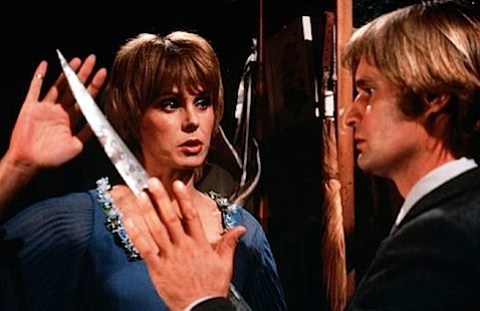
The premise? Two interdimensional operatives—Sapphire (Joanna Lumley) and Steel (David McCallum)—are dispatched to locations where time has gone awry. Their mission: to repair temporal anomalies caused by emotional trauma, historical residue, or supernatural interference. Sapphire & Steel thrived on atmosphere, ambiguity, and a creeping sense of dread. Its low-budget sets and sparse exposition only heightened the sense of unease, making it feel more like a stage play trapped in a dream.

Over the course of its 34 episodes, spread across six “assignments,” the series built a cult following. Viewers were captivated by its refusal to explain itself. Who were Sapphire and Steel, really? Were they aliens? Angels? Elements? The show never said. And that was the point. It trusted its audience to lean into the mystery.

Hammond wrote all but one of the stories (Assignment Five was written by Don Houghton and Anthony Read) maintaining a consistent tone of surrealism and existential horror. The show’s stirring theme music by Cyril Ornadel and its stark visual style added to its otherworldly feel. Despite—or perhaps because of—its cryptic nature, Sapphire & Steel left a lasting impression on British sci-fi, influencing later works like Torchwood and Inside No. 9.

In my latest episode of Very British Futures, I’m joined by Dr Steve Exton (The Extonmoss Experiment) and Mark Stalker to revisit this haunting classic. We explore its legacy, its most chilling moments, and why it still resonates decades later. They are both highly educated and knowledgeable and great fans like myself and had some fascinating ideas. Our conversation went on for nearly two and half hours and editing it has been a real challenge. Maybe if this episode is popular enough I’ll released an extended cut? Whether you’re a longtime fan or a curious newcomer, this episode is your invitation to step into the time corridor.

You can listen to the episode on Spotify, Apple, Goodpods, Audible, Youtube and most good podcast apps. Or listen to it here.

With thanks to:
Sapphire & Steel – Wikipedia
Temporal Echoes – Horkan

The Chocky Trilogy – Very British Futures

Chocky was a science fiction novel by John Wyndham, the final one published in his lifetime (1968). It tells the story of an 11 year old boy named Matthew, who begins to exhibit strange behavior and abilities that concern his parents. They learn that Matthew has an imaginary friend named Chocky, who is actually a highly advanced alien being with a mission to help humanity. The novel was adapted for radio, but most famously into an ITV television series which led to two original sequels, all written by Anthony Read. In the first series, closely based on the novel, Chocky saves Matthew and his sister’s lives following a boating accident, This leads to press attention and Matthew being kidnapped by a mysterious secret organisation, who hypnotise him to contact Chocky directly. After Matthew is released, Chocky bids him goodbye, not wanting to endanger him more. Chocky’s Children reunites Matthew and Chocky when he discovers he has a psychic link with Albertine, a maths prodigy of similar age but a more fiery temperament. She too, has a connection to the alien and together they discover new powers, including telekenesis and a psychic attack. In the final series, Chocky’s Challenge, Matthew has moved to New York, but Albertine has joined forces with three more of Chocky’s human contacts to create the first cosmic energy generator. Once again the secret organisation tries to control them and even captures Chocky within a prison. This time it is the teenagers who must rescue their extra-terrestrial ally.

Although the novel is narrated from the viewpoint of Matthew’s father, the series are much more from the children’s perspective. Very popular at the time with CITV viewers, the series has been released on VHS and DVD several times and continues to gain new fans.

As part of the research for this episode, I spoke to producer Richard Bates (A Touch of FrostThe Tripods) who originally obtained the rights for a television adaptation of Chocky, and served as both creative consultant and producer of the third and final series. I had intended to include clips from our conversation in the final show but annoyingly I lost the file. Joining me for this edition is my regular guest Dr Rebecca Wray, and author, publisher and old friend Will Hadcroft. Both of them coincidentally have also talked with Richard Bates in the past. We had an excellent conversation and it was hard to edit it down to even the generous 90 minutes I have given this episode. There was also time to talk about Will’s writing career and Rebecca’s new podcast I Don’t Do Sci-Fi.

You can hear the podcast on all major podcast platforms, including YouTube, or you can find it here on the web.

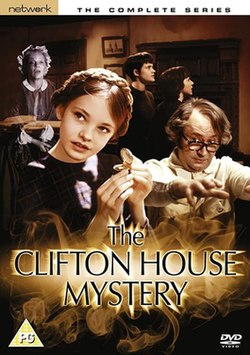
The Clifton House Mystery

Network continue their quest to release the obscurest shows from British television’s past. I’m fairly knowledgeable about cult TV but I’ll admit I had never heard of The Clifton House Mystery until I received it as a Christmas present. One of a series of children’s supernatural dramas produced by HTV in the Seventies and it would seem the most obscure. Is it a lost gem or a forgettable turkey?

Conductor Timothy Clare, his wife Sheila and his three children Jenny, Steven and Ben move into a large detached house in Bristol. They briefly meet its previous inhabitants, the elderly Mrs Betterton and her granddaughter Emily, but she seems oddly anxious to leave a house she has lived in most of her life. Emily meanwhile tells Jenny in secret to look out for “the Grey Lady”. Steven is inexplicably drawn to buy an old Victorian soldier’s helmet being sold at the house auction. As the family being to settle in, a series of supernatural events afflict them. Objects fly out of their hands, Steven sees a screaming man’s face in the helmet and Jenny does indeed meet a ghostly elderly woman. After a dinner party for Timothy’s prospective American agent goes frighteningly wrong, the family turn to an amateur ghost hunter Milton Guest for help.

Watching The Clifton House Mystery today, the first aspect that struck me was the almost complete lack of any emotional sub-plot for the protagonists. If this was being made today, there would definitely be a link between the emotional health of the family and the hauntings. Perhaps friction between the parents who seem rather caught up in Timothy Clare’s career and their neglected children? Or teenage growing pains for Jenny being linked to poltergeist activity. Or generally the lack of any obvious affectionate behaviour between anyone. Then there is Milton Guest, a middle-aged apparent bachelor, who admits he’s never seen a ghost, even though he lectures on them. Here’s a character who could have been portrayed as a rather tragic or suspicious, like George Tully in Sapphire and Steel, but instead is almost immediately taken at face value after a few polite protests. But all that is left deep down in sub-text in favour of plot exposition and the most straightforward of reactions to everything from the haunting to the state of the house.

Simply because this is a children’s drama does not automatically prevent it from being scary. Executive producer Patrick Dromgoole had previously overseen such memorable teatime chillers as Children of the Stones and King of the Castle, and would go on to produce Robin of Sherwood in the Eighties. All these programmes had great atmosphere and memorable moments of fear. But here is a series that seems to actively pull back from anything genuinely scary. It’s two best horror moments, the ghostly screaming face, and later a moment when Jenny walks into her brothers’ bedroom to find the Grey Lady standing watching them, who then turns to look directly at her, are cliffhangers which are promptly cut away from, with no real follow-up. Mostly the story plods through its six episodes, steadily building up its story with no real urgency. The family might be disturbed and inconvenienced by the haunting, but there’s little real threat.

This series belongs to that sub-genre where the ghosts act as a window into history, rather than being malevolent creatures. In this case the children and the audience learn about the Bristol riots of 1831, when 4th and 13th Dragoons were summoned by the mayor to quell a mob which had laid siege to the city hall whilst protesting about their lack of representation in parliament. The Dragoons had eventually charged the crowd resulting in 4 deaths and over 80 wounded.

Playing ghost hunter Milton Guest, Peter Sallis is the only really recognisable face in the cast, and he delivers another one of his affable Yorkshireman performances. The four children all give those kind of stage school performances that you often find in children’s television, competent but not very naturalistic. Probably the best scenes of the series are actually in the first episode before the hauntings start, as a group of nosy, gossipy locals and the family pour over the contents of the house auction. At this point the show feels as though it could go into Jack Rosenthal territory, before the main fantasy thread appears.

The Clifton House Mystery was co-written by Harry Moore, a writer and producer often associated with Sherlock Holmes related dramas, as well as another children’s ghost series The Georgian House. His co-writer was Daniel Farson, a great-nephew of Bram Stoker, the creator of Dracula, and best remembered as British television’s first onscreen investigative journalist.

The only extra on the DVD is a gallery of some publicity and set photos of the cast. I love the way Network are releasing so much vintage television on DVD, obscure discoveries as well as series which already have a fandom. But not everything vintage is automatically great and The Clifton House Mystery is nowhere near as interesting or stylish as other supernatural titles as Sky, Shadows, or Sapphire and Steel. Give this one a miss unless you are a completest like me.

Very British Futures – Kinvig

Characters from show

It’s tempting to describe Kinvig as an artistic imperfection, there to make the rest of Nigel Kneale’s television work look even better in comparison. That would be nonsense of course. Nobody involved in this 1982 ITV sitcom wanted it to be anything other than a great success. However, it is a fact that Kinvig was not a successful programme in terms of ratings or on the Audience Appreciation Index. The debate lies in whether Kinvig is an unappreciated rough diamond, a textbook disaster, or something in-between.

Kinvig concerns a lazy repairman called Des whose life is permanently stuck in neutral. Apart from his good-natured twittering wife Netta, his only friend is Jim Piper. Des indulges Jim in his obsession with unknown mysteries – UFO’s, Atlantis, psychic powers etc. He’s shaken out of his lethargy when beautiful Miss Griffin enters his life, during the day as an angry customer, then at night as a seductive alien who tells him he is the only man who can save Earth from the evil Xux. Or is it all in his mind? (Answer: Yes it is)

If it wasn’t written by Nigel Kneale, the writer of classics like Quatermass and the Pit, 1984 , Beasts and The Woman in Black, it’s doubtful that Kinvig would ever have been released on DVD or enjoy any cult status at all. Who remembers SF sitcoms The Adventures of Don Quick, or Luna for example? Of my two guests for this episode, only Charles Auchterlonie had seen it before, whilst Tim Reid came to it completely fresh. Chas and Tim already have an excellent podcast of their own – The Randomiser where they discuss Doctor Who and Red Dwarf. I’m a big fan of it, as well as knowing them as friends from way back in early noughties of Doctor Who internet fandom. In fact I’ll be guesting on a future edition of their show.

I must take a moment to praise Andy Murray’s excellent production notes and his definitive book on Nigel Kneale’s career Into the Unknown which came in very useful when researching the programme.

Overall, most episodes in this series end up championing the show of the week, but I’ll confess that this episode is a bit of demolition job. Hopefully you will think it is an entertaining deconstruction.

Production Details

Cast

Dennis Kinvig – Tony Haygarth
Netta Kinvig – Patsy Rowlands
Jim Piper – Colin Jeavons
Miss Griffin – Prunella Gee
Buddo – Simon Williams
Mr Horsley – Patrick Newell

Production Design – Michael Oxley
Costume Design – Sue Formston
Written by Nigel Kneale
Produced & Directed by Les Chatfield

You can download Very British Futures from your favourite podcast app. In fact if my podcast is not on your favourite podcast app, let me know and I’ll make sure it gets put there. Or you can listen or download from this very page.

Very British Futures – Kinvig


Very British Futures – The Uninvited

Man in front of a crashed car

The Nineties were a busy time for SF television, just not for British voices. Whilst the success in syndication of Star Trek: The Next Generation ushered in a purple patch for US television – The X-Files, Deep Space Nine, Stargate SG1 and countless short-lived shows with a range of quality, it seemed to me that the UK lost confidence in the genre once Doctor Who was cancelled (bar the one-off 1996 TV Movie). It’s noticeable that a lot of what was produced by TV companies in this decade for peaktime audiences put the emphasis on their ‘realism’ or carried assurances that they were not ‘science fiction’ but drama. Star Cops, Bugs, Space Island One. ITV’s The Uninvited is an interesting example of that. It’s an alien invasion story dressed up as A Ruth Rendell Mystery.

Visit the podcast’s home page at Anchor.fm

I enjoyed rewatching The Uninvited recently and I equally enjoyed talking with my friends John Isles and Nicky Smalley about it a few weeks ago for the next edition of Very British Futures. Turns out like me, John kept it on VHS tape for a long time, simply because it was British SF TV at a time of relative scarcity. I don’t think I quite managed to fit in my appreciation of Leslie Grantham as one of the chief alien bad guys, all intense stares and cool demeanor. This episode might feel a little different to the preceeding ones because I was testing the water by having a more wide-ranging conversation about the Nineties and novelisations too. Here’s some more details about the show for the record.

Principle Cast
Douglas Hodge – Steve Blake
Leslie Grantham – Chief Supt. Philip Gates
Lia Williams – Melissa Gates
Sylvestra Le Touzel – Joanna Ball
David Allister – James Wilson
Caroline Lee-Johnson – Sarah Armstrong

Writer – Peter Broker
Music – Martin Kizsko, Toby Gilks
Cinematography – Doug Hallows
Editor – Colin Goudie
Producers – Ruth Boswell, Leslie Grantham, Laura Julian, Archie Tait
Director – Norman Stone

I’ve been adding the RSS feed for the podcast to more online directories. You can find it at:
Anchor, Spotify, Google Podcasts, Apple Podcasts, RadioPublic, Breaker, Pocket Casts, Spreaker, Blubrry, and Digital Podcasts.

However you can still listen or download the show from the link below too.

Very British Futures Episode 5- The Uninvited

Thanks for reading.

Very British Futures – Knights of God

Response to the first episode of Very British Futures was very warm, and now I am keen to push on and get several more recorded between now and September, when my workload will increase. Next out of the gate is Knights of God, the ITV 1987 family adventure series set in the then future year of 2020. Now 2020 was not a bundle of fun for most of us, but at least the country had not collapsed into ruins and being ruled by a jackbooted religious order. It’s an impressively mounted television series that recalls ITV’s ambitious children’s series from the Seventies such as Sky and Children of the Stones in its scope and grittiness.

I was glad to be joined over Skype by my old Westlake Films muckers Kevin Hiley and Dr Rebecca Wray to remember the show and discuss its themes. They were worried they wouldn’t have enough to say but as you’ll hear we filled an hour nicely.

You can listen to the podcast at Anchor or on one of these platforms: Spotify, Google Podcasts, Breaker, RadioPublic, Acast or PocketCasts. Whilst I’d encourage you to use one of those, to build up my figures, if you need a copy for your MP3 player, you can download it below.

Very British Futures – Knights of God

Thanks for your support and join me next time, as we continue the theme of life under occupation and young resistance fighters with The Tripods.

Proceed… The Strange World of Gurney Slade

Man and dog look at a DVD

This first statement can be read as a symptom of age. My inner dad coming out. But its fair to say that it is quite rare for something genuinely innovative to appear. So much that people think is new and daring has often been done before. Take characters being meta-textual, self aware of the format they inhabit. Long before Fleabag was giving conspiratorial glances to the camera, or Gurney Slade worried about only having 25 minutes of existence left in his final episode, the Marx Brothers were bringing the audience into the artificiality of their adventures. Back in the 18th century, Lawrence Sterne was redefining what a novel could be with the tragicomic diversions of Tristram Shandy, and he in his turn was drawing on the Baroque poets of the previous century. All artists are standing on somebody else’s shoulders.

The Strange World of Gurney Slade has antecedents in The Goons, James Thurber’s humorous stories, Hancock’s Half Hour and Anthony Newley’s previous television shows. Nevertheless, in 1960, when the television sitcom was still inventing itself, there was nothing quite like it on the small screen, a fact that would ultimately doom it to cultdom rather than mainstream success. It’s a lazy cliché to say that some creative endeavour defies description. Besides which, I do have a few adjectives to describe these six episodes: odd, amusing, inconstant, clever, and a little too often – rather smug.

Gurney Slade and a scarecrow

The debut episode opens with the start of an unimpressive domestic sitcom about a working class family: harassed wife, cheeky kids, interfering mother-in-law and boring neighbours inviting themselves in. In the midst of it all and already clearly distancing himself is the man of the house – Gurney Slade (played by Anthony Newley). When it comes to his first banal line of dialogue, Gurney can’t take it anymore and walks off the set, past the floor manager, and out into what seems at first to be the real world but in fact is a fantasy created by his imagination, mixing mundane backgrounds with characters such as talking rubbish bins, conversational dogs and advertising posters which come to life. At this point we could be watching an actor’s nervous breakdown from the inside, but the programme never explores that bleak reading, even if it never contradicts it either. It prefers instead to suggest that we are joining the protagonist in “Gurneyland”, as he describes it in the fifth episode. That’s about it as far as the overall story is concerned. Gurney, virtually free of all commitments, wanders along musing about modern life and going on flights of fancy. The first three episodes are much more free form, almost like an illustrated stand-up routine. However the second half becomes slightly more narrative driven. Gurney is put on trial for producing an unfunny comedy show, has to venture inside his own mind to deal with some squatters, and finally is challenged to take responsibility for the characters he has imagined over the previous episodes.

Anthony Newley created the series alongside Sid Green and Dick Hills, at the time two of the most in-demand comedy writers in British television. It is a definitely a young man’s view of the world. Our hero often runs up against older men who are stuffy, hypocritical or unreliable authority figures. A politician who is only concerned with his young mistress, or a music hall bore of a comedian trading in ancient jokes. Meanwhile women remain resolutely two-dimensional, mostly unobtainable objects of desire, reflecting perhaps Gurney’s admitted failures to make any meaningful connections with girls. Mention ought to be made though of Joy Stewart, who has a reoccurring role as a stereotypical suburban wife/mother, who is involved with some of the most likeable sequences, remaining resolutely domestically minded throughout. In that she is a symptom of what stops this series really striking home. All the characters are cartoonish stereotypes aside from Gurney. What’s more, the show actually congratulates itself on being too clever for the average viewer. So there is a hint of Emperor’s New Clothes. Don’t find this funny? You’re obviously not sophisticated enough.

Man and woman picking flowers

Ostensibly a comedy series, it’s never laugh out loud funny but more endearingly whimsical. Moments that made me smile tend to involve the talking objects, such as the farmyard dog who regards the farmer and his employees as part of the livestock, or a bin which likes the read the newspapers that are thrown into it. Elsewhere in a moment of dark humour, Gurney helps a couple of children to assemble their perfect mother from a collection of female mannequin parts left on a tip. There’s some funny daft jokes too. Examining the control room inside his imagination, Gurney is glad to see “At least it’s a clean mind.” Later on in the same episode there some amusing physical comedy as he is trying to giving a speech whilst fending off an invisible elephant, which eventually picks him up in its trunk.

The monologues are less successful, coming off as sub-Galton and Simpson material. I could imagine Tony Hancock or Harold Steptoe delivering Gurney’s sour comments on an actor fronting an advertising campaign for screws, or imagining how much easier his life could be if he could simply choose his wife from a army style line-up. But in Newley’s hands they become selfish whinges rather than amusingly pompous. I generally enjoyed the show more when a little more storyline comes into it.

There are some fine meta-jokes in the final part, just the kind of comedy which Wandavision is currently being hailed for. The prosecutor from the trial episode returns and complains that all he knows how to do is aggressively prosecute. “Suppose I’m hungry? How do I order a meal in restaurant?” In a self-flagellating moment, the girl of his dreams from episode two, played by Anneke Wills who was 17 and having relationship with Newley in real life, is shocked when she finds out the age gap between them. But too often Gurney’s jokes about his failings seem more design to invite admiration for his clear-sightedness, rather than humility.

Courtroom

Director Alan Tarrant makes a real virtue of the its monochrome production. The photography is crisp, the outdoor filming is mobile and dynamic, the more stagey looking later episodes have been thoughtfully designed too and in places anticipate where Doctor Who and The Prisoner are going to go in a few years time. It was one of Tarrant’s first directing jobs and sadly for us, he never produced anything as unconventional again, but would go on to a long and successful career in ITV light entertainment and sitcoms.

For viewers interested in the more fanciful British comedy of Python, The Goodies and The League of Gentlemen, The Strange World of Gurney Slade is a fascinating artefact. It rarely made me laugh but it does stay in the memory and at six episodes it feels perfectly formed. If Newley, Green and Hills wanted to make a singular show, they did succeed, but they should not have given themselves a round of applause for doing so.

Thanks to Network, The Strange World of Gurney Slade is available on DVD, which also contains trailers and photos, and a limited edition Blu-ray containing many more features and Anthony Newley’s contemporary film The Small World of Sammy Lee.