
Watch out, the latest episode of Very British Futures is available now and this time we are delving into obscurity again to analyze Codename Icarus, what would now be called a techno-thriller, and aimed at teenagers. Joining me on the journey are my old friends, writer Kara Dennsion and Nicky Smalley.
Among the many children’s dramas produced by the BBC in the Eighties, Codename Icarus stands out as one of the more sophisticated. First broadcast in 1981 as a five-part serial, it was written by Richard Cooper, directed by Marilyn Fox, and produced by Paul Stone. It quickly earned a reputation amongst those who watched it for intelligence and a willingness to treat young audiences with respect. Far from being a lightweight adventure, Codename Icarus explored weighty themes of power, manipulation, and the exploitation of genius. Paul Stone would go on to produce some of the best BBC children’s fantasy drama of the decade, including The Box of Delights and The Chronicles of Narnia. While Richard Cooper would create Knights of God for ITV.
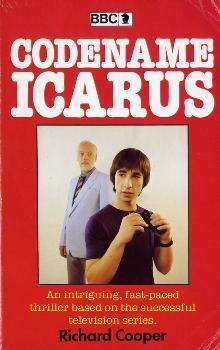
At its heart, the drama told the story of Martin Smith, an isolated teenage mathematical prodigy whose brilliance is unrecognised and un-nurtured. His alienation at school and at home makes him vulnerable to recruitment by a mysterious organisation known Icarus. Little does he know that behind a series of private academies is a shadowy group orchestrating a global arms race, and their founder is particularly interested in using Martin’s talents to advance his own ends.
The narrative unfolds on two levels: Martin’s personal journey, as he begins to realise the sinister uses to which his gifts are being put, and the parallel investigation by intelligence agent Andy Rutherford, who uncovers Icarus’ machinations.
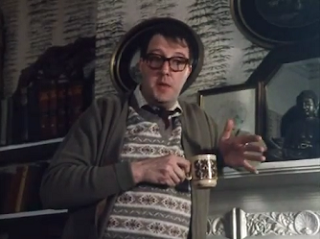
The show is notable for how it blended the thrills of a spy drama with a deeply unsettling commentary on the militarisation of science and the pressures faced by gifted children. Rather than offering simple heroes and villains, Codename Icarus painted a morally complex world where adults exploit youth for power, and where intelligence itself becomes both a gift and a curse.
Stylistically, the series was atmospheric and serious, eschewing flashy effects in favour of taut direction, naturalistic performances, and a mounting sense of dread. Barry Angel’s portrayal of Martin Smith was particularly haunting, capturing the vulnerability and quiet anguish of a boy caught in forces far beyond his control. Its willingness to ask difficult questions made it stand apart from much of BBC children’s drama at the time, and it remains a great example of the BBC’s tradition of challenging young audiences.
You can listen on your preferred podcast app or here online.
It was good fun to record this podcast with old friends Kara and Nicky and hear their analysis and enthusiasm. Hope you enjoy this episode too.

 The Phantom Frame