Very British Futures – The Uninvited

Man in front of a crashed car

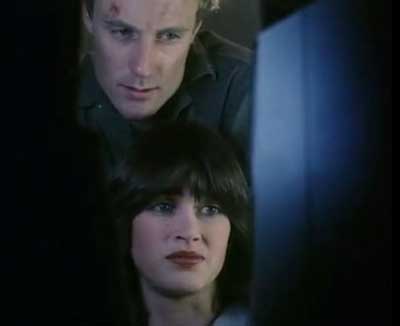
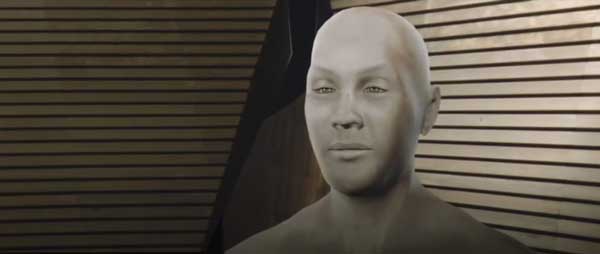
The Nineties were a busy time for SF television, just not for British voices. Whilst the success in syndication of Star Trek: The Next Generation ushered in a purple patch for US television – The X-Files, Deep Space Nine, Stargate SG1 and countless short-lived shows with a range of quality, it seemed to me that the UK lost confidence in the genre once Doctor Who was cancelled (bar the one-off 1996 TV Movie). It’s noticeable that a lot of what was produced by TV companies in this decade for peaktime audiences put the emphasis on their ‘realism’ or carried assurances that they were not ‘science fiction’ but drama. Star Cops, Bugs, Space Island One. ITV’s The Uninvited is an interesting example of that. It’s an alien invasion story dressed up as A Ruth Rendell Mystery.

Visit the podcast’s home page at Anchor.fm

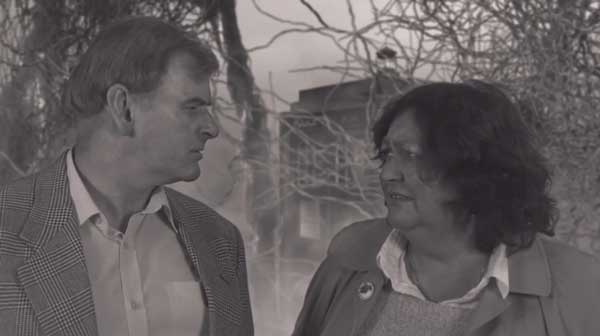
I enjoyed rewatching The Uninvited recently and I equally enjoyed talking with my friends John Isles and Nicky Smalley about it a few weeks ago for the next edition of Very British Futures. Turns out like me, John kept it on VHS tape for a long time, simply because it was British SF TV at a time of relative scarcity. I don’t think I quite managed to fit in my appreciation of Leslie Grantham as one of the chief alien bad guys, all intense stares and cool demeanor. This episode might feel a little different to the preceeding ones because I was testing the water by having a more wide-ranging conversation about the Nineties and novelisations too. Here’s some more details about the show for the record.

Principle Cast
Douglas Hodge – Steve Blake
Leslie Grantham – Chief Supt. Philip Gates
Lia Williams – Melissa Gates
Sylvestra Le Touzel – Joanna Ball
David Allister – James Wilson
Caroline Lee-Johnson – Sarah Armstrong

Writer – Peter Broker
Music – Martin Kizsko, Toby Gilks
Cinematography – Doug Hallows
Editor – Colin Goudie
Producers – Ruth Boswell, Leslie Grantham, Laura Julian, Archie Tait
Director – Norman Stone

I’ve been adding the RSS feed for the podcast to more online directories. You can find it at:
Anchor, Spotify, Google Podcasts, Apple Podcasts, RadioPublic, Breaker, Pocket Casts, Spreaker, Blubrry, and Digital Podcasts.

However you can still listen or download the show from the link below too.

Very British Futures Episode 5- The Uninvited

Thanks for reading.

Very British Futures – Star Maidens

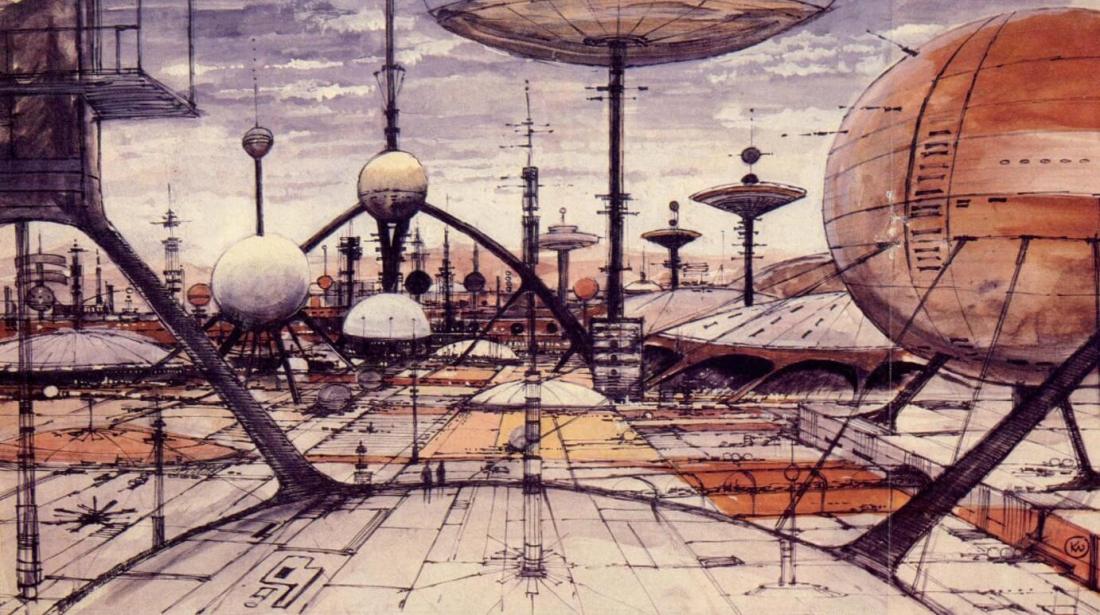
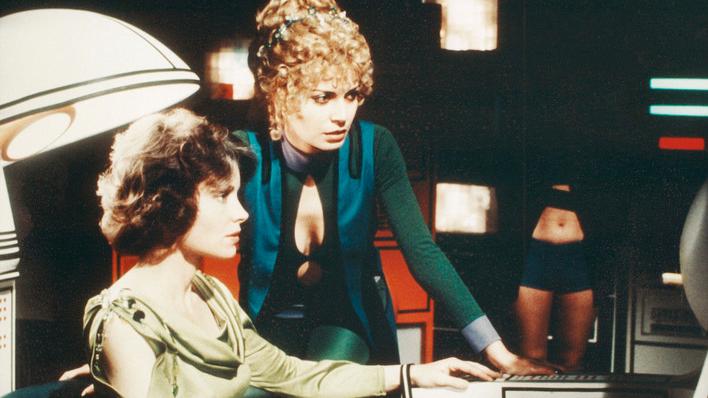
Star Maidens is exactly the kind of show I originally set this podcast up for. Not quite a lost show, but certainly an obscure one, at a time when there was not that much SF on mainstream television that was not Doctor Who or from the Gerry Anderson stable. A British-German co-production, it’s certainly got a lot of problems in both concept and execution, but there’s some interesting ideas in there and for a relatively low-budget production, the world of Medusa is quite impressive thanks to Keith Wilson’s production design skills. (see one of his design drawings above for the Medusian city). Wilson also was the lead designer on Space 1999 and the two shows share a certain look. Although the more location bound episodes set on Earth do look cheap and ugly in that special Seventies way.

Two women at a futuristic console
Liz is interrogated by Octavia

It’s also intriguing to think that this show was shown a year before Star Wars was released and rewrote the SF landscape for ever. Nevertheless the disco futurism look of SF, typified by Star Maidens would persist for a while yet. Buck Rogers in the 25th Century would be a key example. Despite the opportunities for kinky dominatrix and lesbian subtexts, and the fact that it has a plethora of beautiful women in its cast, it does not feel like a particularly sexy show, or at least no more than Space 1999 or UFO did.

We got so busy talking about the gender politics and the characters with my guests Dr Rebecca Wray and Kevin Hiley that we left out some basic details about the show. So here are the essentials you might like to have whilst listening.

Cast

  • Lisa Harrow – Liz
  • Christian Quadflieg – Rudi
  • Christiane Krüger – Octavia
  • Judy Geeson – Fulvia
  • Gareth Thomas – Shem
  • Pierre Brice – Adam
  • Derek Farr – Dr Evans
  • Dawn Addams – President Clara

Directors

Freddie Francis, Wolfgang Storch, James Gatward, Hans Heinrich

Writers

Eric Paice, Ian Stuart Black, John Lucarotti, Otto Strang

Producer

James Gatward

Very British Futures episode 4 – Star Maidens is available on all the major podcast platforms, or you can listen and download an MP3 copy below.

Very British Futures – Star Maidens

In the end, I’m glad I’ve finally got around to seeing this show, which for years I only remembered for the sticker colouring book which my grandparents bought for me back in 1976. Thanks for your continued listening and support.

Very British Futures – The Tripods

One of the benefits of inviting different combinations of guests on to each episode is that you get a variety of tones. It keeps it fresh and surprising. This episode, covering the BBC Eighties series The Tripods, for example welcomes Andrew Roe-Crines to the guest sofa, along with regular contributor Kevin Hiley. Andrew is a senior university academic and he brings a certain thoughtfulness and rigor to his answers. Combined with Kevin’s great enthusiasm for this programme, it results in our deepest and most analytical hour so far, and one that has made me look at this drama series with fresh eyes. I hope it does for you too.

The Tripods was an unusual commission for the BBC, who have tended to regard Doctor Who as fulfilling their annual family science fiction needs. There hadn’t been an example of two major SF series on BBC1 since Blake’s 7 had appeared 1978 on mid-week evenings during the Star Wars boom. Based on the popular children’s novels by John Christopher, it followed the adventures of teenagers Will, Henry and Jean-Paul (nicknamed Beanpole) as they go on the run across Europe and eventually join the human resistance against the Tripods, gigantic machines which rule the human race through “capping”, a metal circuit fused to the skull. The cap makes the wearer an obedient drone. Ultimately the resistance discover that the Tripods are in fact vehicles for an amphibious alien race known only as the Masters.

Co-funded by the Australian channel WGB, this was an epic production, with lots of location filming and impressive effects. Unfortunately that epicness also led to a leisurely pace, especially in the first season. Viewers were frustrated by the lack of Tripods in many episodes, often only appearing for a moment, striding by. But when the action came it was excellent and the second season was much livelier than the first. But it was too late and the audience never returned in large enough numbers. Unlike the current BBC/HBO adaptation of His Dark Materials, which publicly committed itself to making the whole trilogy from the start, the BBC were making decisions on a season by season basis and fresh productions from new producers were lobbying for its budget. So The Tripods became a trilogy of only two parts.

In the subsequent years there have been rumours of a Hollywood movie but nothing has come of that. Personally I think the series, with a bit rewriting, especially to boost the female participation, would be a great fit for a streaming service. You can learn more about the series by listening to the podcast, which is available on Anchor and Spotify amongst other platforms. You can also listen or download a copy below.

Very British Futures – The Tripods

Future programmes coming up on Very British Futures podcast include: Star Maidens, The Uninvited, Max Headroom, Out of the Unknown, Star Cops and The Nightmare Man. If there are any British SF shows you would cover in the future, why not drop me a line or leave a comment? All the best.

Very British Futures – Knights of God

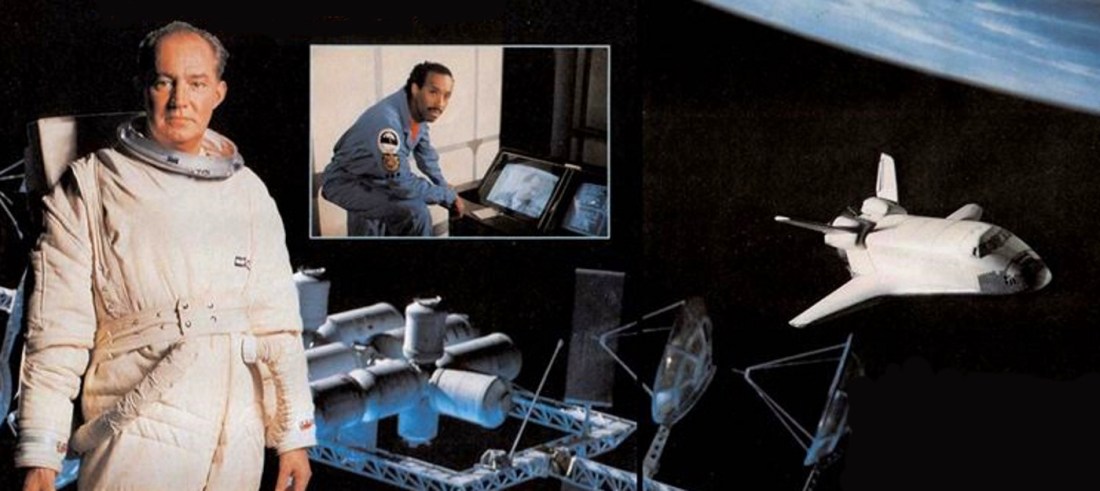
Response to the first episode of Very British Futures was very warm, and now I am keen to push on and get several more recorded between now and September, when my workload will increase. Next out of the gate is Knights of God, the ITV 1987 family adventure series set in the then future year of 2020. Now 2020 was not a bundle of fun for most of us, but at least the country had not collapsed into ruins and being ruled by a jackbooted religious order. It’s an impressively mounted television series that recalls ITV’s ambitious children’s series from the Seventies such as Sky and Children of the Stones in its scope and grittiness.

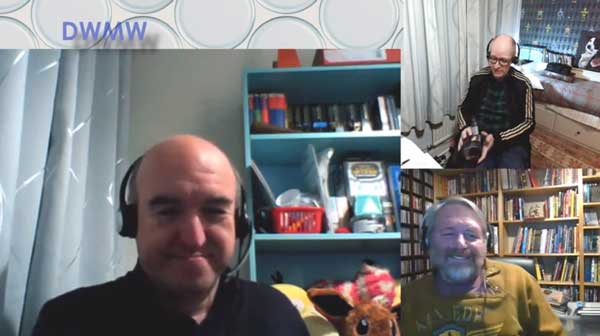
I was glad to be joined over Skype by my old Westlake Films muckers Kevin Hiley and Dr Rebecca Wray to remember the show and discuss its themes. They were worried they wouldn’t have enough to say but as you’ll hear we filled an hour nicely.

You can listen to the podcast at Anchor or on one of these platforms: Spotify, Google Podcasts, Breaker, RadioPublic, Acast or PocketCasts. Whilst I’d encourage you to use one of those, to build up my figures, if you need a copy for your MP3 player, you can download it below.

Very British Futures – Knights of God

Thanks for your support and join me next time, as we continue the theme of life under occupation and young resistance fighters with The Tripods.

Very British Futures – My Podcast Adventure

For the last few months I have had a project secretly coming together, something to look forward to as I laboured on the third year of my degree apprenticeship. I have enjoyed being a guest on other people’s podcasts but it has left me with a desire to do more. So it was only natural to start thinking about my own podcast series. Now episode one has been released on the Anchor platform and Spotify, and hopefully will gradually be made available on other sources too soon.

Very British Futures is a celebration of lesser known science fiction television series which Britain has produced over the years. I felt that there already enough excellent series and websites covering Doctor Who, Blake’s 7, Red Dwarf, The Prisoner, Quatermass and Supermarionation but there was a niche for talking about some of the less well-remembered productions. So each episode, some special guests and myself will be looking back at a different show, critiquing it and putting it into context of the history of SF. There’ll certainly be humour but the emphasis will be on appreciation rather than mockery.

1961’s Pathfinders in Space trilogy seemed a great place to start. It’s not the first British SF series by any means but it feels like the beginning of a new era of modern television. Its place as the precursor of Doctor Who means it is influential but at the same time it is not nearly as well known as it should be. Plus I knew from conversation that Nigel Anderson and Brian Clarke would be happy to talk about it and both were at ease in front of a microphone. We had already recorded several podcasts about missing Doctor Who episodes, for Nigel, and I also appeared in a video discussing the Daleks which Nigel had produced. Whilst being together in a room to record would have been pleasant, Skype’s audio quality was acceptable for a simple conversation.

It’s been good to go back to a little light audio production. Making a podcast is a lot simpler than an audio drama. Most of the work is editing the original Skype recording, applying some noise reduction, getting rid of mistakes or sections where the conversation went too far off-topic, then bookending it with music. My biggest problem has been learning to use a headset properly, being more use to a microphone on a stand or a dictaphone. I turned to my friend Chatri Ahpornsiri, who I’ve worked with on previous audio dramas, to provide the theme music and he generously provided four versions to choose from. You can hear more of his marvellous work at chatriart.bandcamp.com. There are several free to use platforms for hosting podcasts. I felt Anchor was the easiest to use and I was attracted by the way it automated posting my series on most of the major podcast outlets.

There is now a home for the podcast on the web, with more information and links to sources mentioned in the show. You can listen to the series at https://anchor.fm/gareth-preston but unfortunately you cannot download the episode easily from there. Whilst I’d prefer it if people streamed it from here or one of the other platforms for the sake of the show’s stats, I appreciate that some people would like the option to download the MP3 file for portable listening. So you can find episode one below:

Very British Futures – Pathfinders in Space

At the moment I am editing the second episode, in which Rebecca Wray, Kevin Hiley and myself talk about Knights of God. After that there are plans to make episodes about: The Tripods, Star Maidens, The Uninvited and after that I have a long list of possible candidates, and plenty of guests I am hoping to record with. Would love you to have a listen and hear back from you, what you think and what shows you would like to be covered.

Artwork by Nigel J Anderson

TV21 Daleks – The Emissaries of Jevo

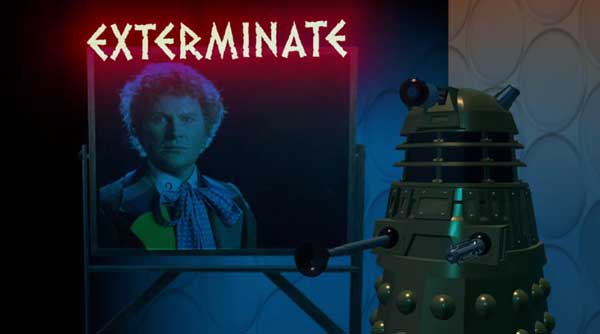
It’s time to take care of a little unfinished business. Back in 2020 I was kindly invited by Dylan Rees onto the podcast Doctor Who – Too Hot for TV to discuss the legendary TV21 Dalek comic strip. I was in the process of moving house at the time so my own copy of the strips and other related books were locked away in storage, so I had to rely on my memories and the internet for details. It all worked out in the end I think Dylan and I created a fun episode. However there was one story which neither of us could remember a single detail about. It has variously been listed by fan sites as The Emissaries of Jevo or The Seeds of Arides (the comic strip had no individual chapter titles) and ran between issues 90 and 95.

As the supposed guest expert on the show, this has irked me since and Panini’s recent restored release of the TV21 comic series in a glorious new edition last November 2020 has given me a chance to upgrade my collection and refresh my memory.

This is certainly the definitive reprint of the British classic comic strip. Thanks to Gerry Anderson’s own archive and contributions from collectors, many of the original artboards have been digitally scanned, supplemented by scans from the best surviving issues of TV21. Digital technology and printing is now at a stage where these 104 pages not only look as good as they did coming off the printing press in 1965, but it in fact often better. Bight colours zing, and the skilled draughtsmanship of Richard Jennings, Eric Eden and Ron Turner looks sharp and detailed. Well presented in bookazine format on quality paper and supported by some excellent archive articles, this is for my money the best Doctor Who publication of 2020.

The Emissaries of Jevo was wholly illustrated by Ron Turner and written David Whitaker, Doctor Who’s script editor who wrote the large majority of the strip, with supplemented help from Angus Allen. The spacecraft “Guardian” and its crew from the planet Jevo is despatched on a secret mission to Arides to destroy a mutated species of plants. The flowers, infamous for their pollen which destroys all rival organic life, have mutated to gigantic size and now threaten to poison the galaxy. Unfortunately the ship is captured by the Daleks, who are quite happy for these flowers to unleash galactic genocide. Through a ruse, Captain Kerid persuades the Dalek Emperor that Daleks are vulnerable to the seeds too and his ship is released. When the Daleks discover the trick, they pursue the Jevonians, who heroically choose to complete their mission, even though it means certain extermination.

Despite its silly premise about mutant space pollen, this is a typically good example of the strip. Whittaker had developed a general rule that when the Daleks faced human looking opponents they would always lose, but in this story that guideline is cleverly bent. Although the Daleks destroy the Jevonians, it is an empty victory since the the flowers are destroyed and even the Emperor has a moment of doubt about whether they can ever truly conquer the human spirit. Curiously the crew of the good ship “Guardian” are described throughout as androids, yet this has no bearing on the story at all. We do not learn if all Jevonians are androids or just their astronauts, we never see them use any robot abilities and the crew certainly seem to have a full range of emotions. Kirid and his second in command even have a violent argument that ends with Kirid punching his subordinate in the face.

In good piece of continuity, the Daleks used a magnetrap to capture the spacecraft, just as they had used on Robot 2K a few weeks earlier. As was discussed on the podcast, magnetism is something of go-to for Whittaker whenever it comes to Dalek science, possibly because it was a bit of science that most schoolchildren would have learnt about. The Emperor voices a chilling piece of Dalek philosophy too. When Kirid tells him the apocalyptic threat posed by the seeds, the Emperor replies “Daleks are not android, human or animal. Why should we prevent these plants achieving what we are dedicated to achieve…?”

Ron Turner’s artwork is as splendid as ever. “Guardian” is quintessential Turner design. Loosely based on the Bluebird jet plane, its a riot of fins, flanges and intakes. The Daleks meanwhile are piloting claw-like space fighters that look impressive in action. Explosions are another Turner speciality and this story has some particularly good examples, my favourite being a Dalek scientist being ripped apart by an exploding gun.

In his introduction, editor Marcus Hearn describes the comic strip as the most enduring artefact of Sixties Dalekmania and I would agree. Their influence on the programme goes right up to the present day with the recent Dalek YouTube series and the visuals of Dalek saucers and armies in the 21st century series, clearly show the echo the comic. Even the fabulous look of the modern bronze Daleks has something of a Ron Turner feel to it. All the strips are exciting and accessible, but the best of them have depth too, as expanding that Dalek empire we heard about but the series could never afford to show us.

The Daleks is available to order from panini.co.uk, priced £9.99.

Doctor Who – Too Hot for TV Episode 4.5

Recently I had a pleasure of guesting on Dylan Rees’ hugely entertaining podcast about the wider world of Doctor Who – comic strips, Big Finish audios, independent videos and similar. For this issue we were celebrating the Dalek’s own comic strip, printed in TV Century 21 at the height of Sixties Dalekmania. Although credited to Terry Nation, it was in fact largely written by David Whitaker, then script editor for the programme and was fairly sophisticated for children’s title. Certainly compared to the Doctor’s own adventures over at TV Comic. All driven by spectacular artwork by Richard Jennings, Roy Turner and Eric Eden.

In addition, we talk briefly about my BBV career, becoming a fan, and the Fine Line Doctor Who audios. It was a lot of fun to record and Dylan has done a good job editing our long conversation into a slick hour. You can find Doctor Who – Too Hot for TV on your podcast app or via:

https://www.buzzsprout.com/864883/4370129-episode-4-5-dalekmania

In addition the latest episode of the Talking Pictures TV Podcast is with us, in which I recommend the classic gothic adventure – The Most Dangerous Game.

Coming soon – Red Rising: Wrath, Talking Pictures TV and more

Hello again. How are you? It’s round-up time again and whilst I’ve been recording some more reviews for the Talking Pictures TV podcast, some good friends have been much more productive.

The latest edition of the Talking Pictures TV Podcast is out now. Now being overseen by Mel Byron, Daniel Reifferscheid and Scott Phipps, it’s in a slightly shorter but hopefully more regular format. And they’ve kindly included my cheerful appreciation of Hammer Film’s loony fantasy adventure The Lost Continent, which will be appearing on the UK channel on 4th March at 12.10am. You can download the podcast from your favourite player or the home page.

Rik Hoskin has let me know that his second graphic novel set in the world of Pierce Brown’s Red Rising books is about to be unleashed on the 19th March. Set in an empire that spans the solar system, where people are born into strict castes and most are forced to live as slaves for a ruling elite called the Golds. Red Rising – Sons of Ares: Wrath continues the story of how disgraced Gold Fitchner became the leader of a ruthless resistance movement known as the Sons of Ares. I loved the first volume and I can wholeheartedly recommend this SF epic. You can get a taste of it from the trailer below:

Finally I’ve been continuing my work at Bolton Little Theatre, producing soundscapes for Things I Know to be True and Brighton Beach Memoirs. I’m grateful for the help of two fresh volunteers Steven and Sam who come on to the sound side lately. Here’s two promos I’ve put together for the productions too.

A short monologue from this acclaimed production.
On stage 30th March – 4th April 2020

Peckinpah for Christmas -Official Talking Pictures TV Podcast

Who says Christmas must be a time for traditions? The latest episode of The Official Talking Pictures TV Podcast is out now in time for Christmas and once again I’m pleased to say I have been included, despite submitting two decidedly unseasonable movie reviews. Creator and outgoing producer Adam Roche has selected my thoughts on Straw Dogs, the infamous 1971 thriller starring Dustin Hoffman and Susan George.

Looking at the list of upcoming films and television on Talking Pictures last month, I was aware that this was likely to be a Christmassy edition, but when it came to titles I could talk about knowledgeably, it was generally the darker hued ones. Although I did consider the Alistair Sim Scrooge but I had a feeling it has already been covered, or at least would likely to be a popular choice by my fellow #podcastpals.

It’s another excellent show, with lovely reviews from the regulars, most of which have a holiday feel. It also marks a changing of the guard, as Adam is moving on to new opportunities, although he’ll still be contributing the occasional review in his inimitable style. In 2020 I’m excited to hear that the podcast will steered by three superb podcasters and regular voices Mel Byron, Scott Phipps and Daniel Reifferscheid.

This is probably my last post of 2019, so I wish you a Happy Christmas and a marvellous New Year.

Joining BERGcast – X the Unknown

I’m delighted to announce that not only is there a new episode of BERGcast, the podcast celebrating and investigating the entire Quatermass phenomena over the years, but that I am a guest on it. Jon Dear kindly invited me to join him and Howard David Ingham on Skype to discuss X – The Unknown, Hammer’s unofficial follow-up to their massively successful movie The Quatermass Xperiment. Wanting to make another Quatermass film, but denied permission by Nigel Kneale to use his character, Hammer turned to production assistant Jimmy Sangster to write a script in a similar unearthly vein, but featuring a surrogate scientist called Royston. Eventually Oscar-winning character actor Dean Jagger played the maverick scientist in his first and so far only appearance.

You can hear us discuss the film’s plot, its origins, its background of growing public unease over nuclear weapons and atomic energy, and Frazer Hines’ child acting precociousness. It was great fun to record and to rewatch this entertaining SF monster movie from early days of Hammer Studios. Find BERGcast on Apple Podcasts, Podbean, or Jon Dear’s own site bergcast.room207press.com/

Whilst on the subject of film review podcasts, the latest edition of The Talking Picture TV podcast is out now as well, featuring amongst other items, my review of Blood from the Mummy’s Tomb starring the gorgeous Valerie Leon. Again, you find it on Apple Podcasts, Spotify or its webpage https://www.attaboyclarence.com/the-talking-pictures-tv-podcast