The Man in My Head

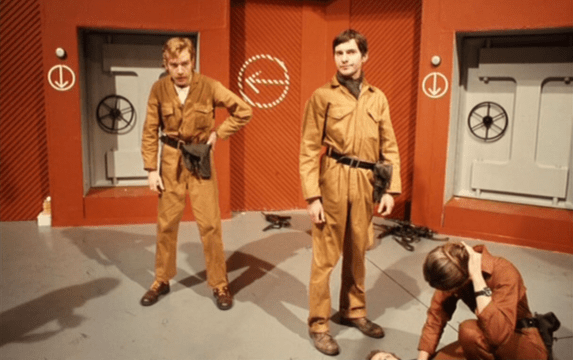
Soldiers in underground bunker

by John Wiles

More by accident than design, due to the intervening episode The Last Witness being lost, The Man in My Head continues the theme of the misuse of psychology and drug therapy which Welcome Home began. Not only that but its criticism of the military mind, with its emphasis on obedience and the chain of command, and the way most of it takes place in an underground complex, it also recalls season two’s Level 7.

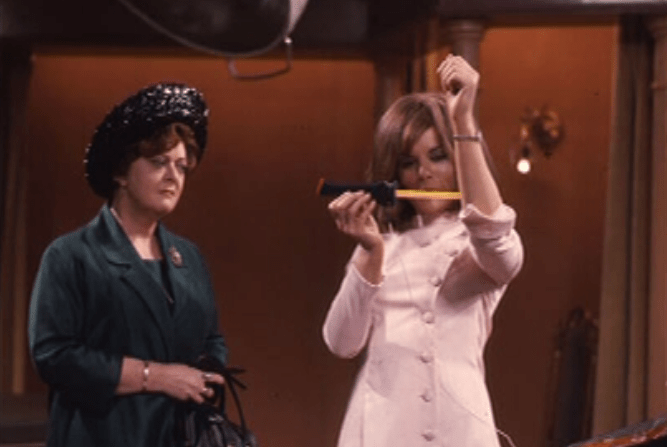
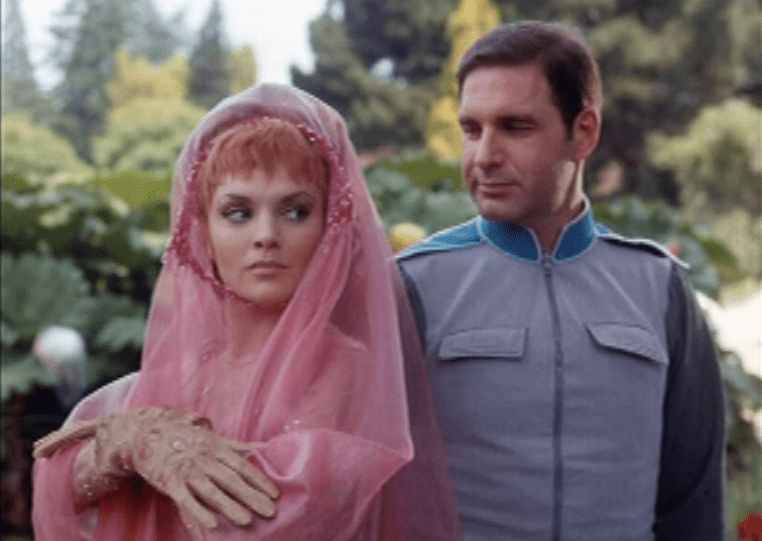
It is the ultimate in covert operations. A crack team of commandos are on a mission to infiltrate and sabotage a hydro-electric power station. Each soldier has been subliminally programmed to only remember the next stage of their mission when they hear a tone on their radio. They have been equipped with specialised personas and skills tailored for this mission. Not only that, but they have been programmed with a backup cover story in case they are captured, which they will utterly believe when it is activated. It looks foolproof on paper, but when the team hits an unexpected accident, doubt, paranoia and identity crisis are soon eating away at them.

With most of the action taking place in a single large set, there’s very theatrical feeling to this episode. Perhaps that explains the slightly larger than life performances from most of the cast. That kind of over-emphasised, reaction-heavy acting that science fiction stories often encourage. Its not necessarily a bad approach, but it lends an artificiality to the episode that makes its final revelations not as much of surprise as it could have been if the episode had been made on film and filmed in a realistic location. Yet theatricality does not mean it is visually flat. Director Peter Creegan makes great use of dramatic camera angles from above and below and the whole production is dramatically lit with the cast’s sweat gleaming faces lit quite noir-ishly in half-light.

Tom Chadbon is excellent as Captain Brinson, the initially cool leader who becomes increasingly unravelled as his leadership and even his identity is challenged by the casually superior Hine, the older scientist who has been working undercover at the plant. It’s a trivial point I’ll admit, but as we reach the end of the series, it is sort of nice to see the return of the dodgy blond moptop wig that was such a staple of the first season. This time it is Kenneth Watson who gets to sport it as Hine.

John Wiles was an experienced television writer with many credits to his name, from Dixon of Dock Green to A Horseman Riding By. He also been a script editor on several BBC shows and produced Doctor Who during most of the later part of William Hartnell’s era, despite not a great fan of science fiction. He had already provided the script for one episode in the fourth season – Taste of Evil – which is now lost. His script is clever in the way it shows how a seemingly logical idea as subliminal programming is filled with pitfalls. Especially when one of the men Fulman triggers his backup programming and becomes a soldier who has accidentally crashed landed in an enemy territory, looking on in bewilderment as his comrades seemingly prepare to carry out a random act of terrorism.

Ultimately the real villains of this piece are the military officers who regard these soldiers are little better than cheap robots who are ultimately disposable. In fact there is an inference that these men and one woman may not even have been real soldiers originally. As a story it still feels quite relevant and is probably the existing episode from this season which could be most easily remade today. It manages to do some fresh with old what-is-real / what-is-imaginary concept that underpins a lot of the fourth season. Unlike Welcome Home, which is based around the mystery of what has been done, The Man in My Head shows us its box of tricks at the start, yet still tells a story with some unexpected twists.

Welcome Home

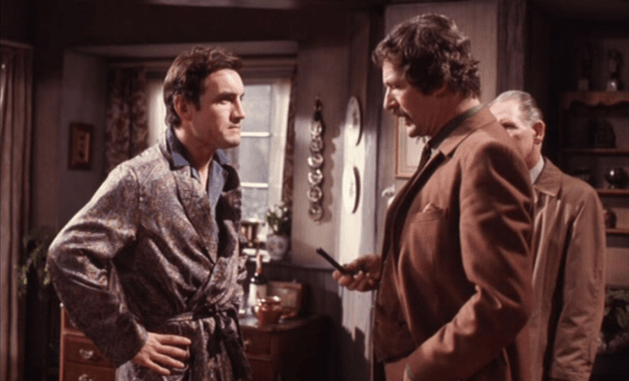
Frank Bowers confronts his imposter

by Moris Farhi

It is less a case of whodunnit than of howtheydunnit in this entertaining paranoia story. Moris Farhi MBE is definitely a renaissance man. Author of several novels, including the multi-award winning Children of the Rainbow, poet, acclaimed writer on Jewish history and philosophy, campaigner for writers imprisoned by oppressive regimes, and jobbing scriptwriter on television series from Return of the Saint to The Onedin Line. His late wife Nina Farhi (nee Gould) was a psychoanalytic psychotherapist and I wonder how much input she had on this story, which involves a psychiatrist abusing his power.

Dr Frank Bowers travels to his new cottage after a long convalescence in hospital following a car accident. To his shock, neither his wife Penny or his friends recognise him, and worse another man is living in his place, who tells him patiently that he is the real Frank Bowers.

This is a much more enjoyable example of the twist followed by twist thriller than Deathday was. There is always a danger with this kind of story that the plot become too contrived and reliant on characters acting very stupidly, but Welcome Home stays just about on the right side of logic. One of its most satisfying revelations is about Bowers’ flashback dreams, which are portrayed through time lapsed photos. We later discover that this is not just a stylistic choice by director Eric Hills, but actually a clue in plain sight as to what is really happening.

Casting Anthony Ainley as Frank Bowers One, as he is named in the credits, is a clever idea because from the start he generates distrust. Later most famous for playing recurring villain The Master in Eighties Doctor Who, Ainley had a flair for the sinister and Frank Bowers initially seems very suspect indeed. When talking to his doctor and then later on the train, his smile is a bit too wide and his bonhomie has touch of mania about it. As he desperately tries to prove his identity, only to be thwarted at every turn, first by circumstance and then by what seems to be a deliberate conspiracy, he does begin to engender sympathy though, and by the end he has become a tragic protagonist.

On the other hand Frank Bowers Two, played by Bernard Brown, first appears as a self-assured, patriarchal personality and pretty much stays like that for the whole story. The only crack in his certainty is when Penny begins to be sympathetic to the other Frank, making him accuse her of being attracted to a younger version who more openly needs her, something he says he hadn’t considered before. Bernard Brown had a long television career of playing lawyers, doctors, officers, and other authority roles. It soon becomes clear that he is the driver behind whatever is happening, but the tension comes from trying to work out what his plan really is.

Special mention should go to Norman Kay’s sinister electronic incidental music, which frequently recalls Doctor Who, another show Kay worked on. In fact thanks to the music, the outdoor filming around a weir rather reminded me of a Jon Pertwee era story.

As with much of the fourth season Welcome Home is more concerned with telling a dramatic story than exploring a concept or issue. It does however touch on the misuse of science and medicine, at a time when psychiatry and other therapies were becoming a popular subject. In shares some DNA with One Flew Over the Cuckoo’s Nest for example. Although only tangentially science fiction, it carries a warning familiar from many short stories – that people who concentrate too much on a future greater good, and justify immoral actions in the short term, frequently suffer severe consequences – and so do the people around them.


Deathday

Two men in a lounge

By Angus Hall
Adapted by Brian Hayles

Angus Hall was not impressed with the BBC adaptation of his 1969 novel. Nearly twenty years later during a correspondence in the letters page of the BBC’s cultural magazine The Listener, about the recent BBC2 25th anniversary programming, the author wrote in about the absence of any mention of Out of the Unknown in the celebrations. “I still shudder at how my perfectly respectable ‘psychological thriller’ Deathday was turned into a grotesque ‘other-worldly’ travesty by the programme-makers. I trust that Out of the Unknown remains unknown to all present and future television viewers.” Now I have never read his novel so I cannot directly compare, but I can certainly sympathise with with his disappointment because this was a poor instalment. Hall incidentally wrote over twenty books in the crime and horror genre, amongst them Crime Busters, and Devilday, which was adapted into the cult Vincent Price/ Peter Cushing movie Madhouse.

Adam Crosse is a failure. Stuck in a dead-end reporter job for the local paper. Popping pills. Married to the bitter condescending Lydia. When he discovers his wife has taken a lover and that she does not really care that he knows, his frustrations murderously boil over. Afterwards he begins an elaborate cover-up, trying to cast suspicion onto a current serial killer known in the papers as The Kitchen Killer.

I’ve deliberately kept the synopsis short this time because if I told you much more you could probably guess the ‘twist’ a mile off, just as I did. That is one of the problems with this story. The other is that as a study of a mentally ill murderer, this episode comes off a parody of Dennis Potter as its inadequate middle-aged protagonist.

Actually thinking about it that is one of the problems with the whole ‘psychological thriller’ genre that the Seventies and early Eighties used to love so much – it demonises and trivialises mental health issues. Not to mention providing an excuse for some lazy writing. Whilst the story gives us a few motivations for Crosse’s actions, his wife’s infidelity, his sexual inadequacy, the conflict between his desire to be an alpha man and his essentially passive subservient personality, too often the reason for what happens comes down – he’s a nutter.The other big annoyance I have with the genre ever since Les Diaboliques is that the question – is it real or is the protagonist imagining it? – is actually a pretty boring one that often drains the story of tension rather than creating it.

One later section I had assumed must be happening in his mind, is where Crosse goes driving at night and picks up a sexy blonde woman. Or rather she just jumps into his car at the traffic lights. I thought she might be a prostitute but its soon established she isn’t. Apparently she is just a spirited party girl who does things on a whim and for some reason decides a one night stand with a portly creepy older man would be fun, which stretches credibility to breaking point. In fact it would have only made sense if she was a fantasy but she was real. There is also an unexpected bit of gratuitous nudity as she undresses and explores his bathroom on her own, which felt oddly out of place.

The appalling decor could be a clever reflection of unhappiness in the Crosse and  Gregory households, but I suspect is just a case of hideous BBC Seventies set design. Everything seems so brown. Even the dream sequence looked ugly.

It is another episode where thirty minutes would have been more than enough. Ultimately Crosse is not a particularly interesting murderer and his mental unravelling has no sense of tragedy, since he did have much going for him in the first place. Again this overall tawdriness may be the point of the story, but if you want to see a drama about a hollow man who finds that even murder cannot free him from a modern hell of mediocrity and poor taste, catch American Psycho instead.


This Body is Mine

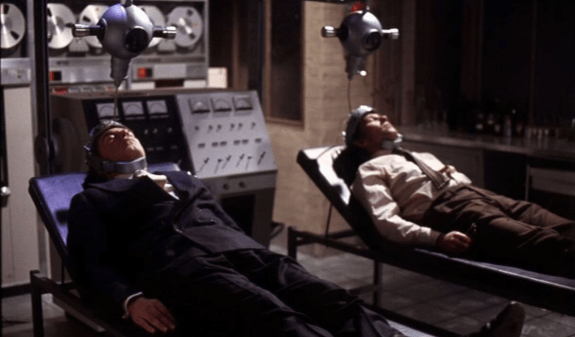
Two men in mind transfer lab

by John Tully

Probably the most obviously science fictional episode of season four, yet it’s strength comes from the character drama. In fact with a little rewriting, much of the plot could work equally well as an espionage yarn or a crime thriller.

Allen Meredith is a brilliant research scientist who has accidentally discovered a process to transfer a person’s mind into another body, whilst experimenting with a mind reading device. His mild, bookish personality means he has been taken advantage of for years by his arrogant boss Jack Gregory. Allen’s strong-willed wife Ann convinces him to kidnap Gregory, swap bodies and embezzle thousands from the business. The process is a success but Meredith soon finds that stepping into another man’s life is lot harder than just memorising the name of his wife and his date of birth. Particularly when he discovers Gregory is involved in multiple affairs and in debt to a gangster too. Meanwhile the combination of Gregory’s alpha male personality in her husband’s body proves irresistible to Ann and together they plot to steal the money and start a new life.

There’s a trio of excellent performances at the heart of this episode. Jack Hedley is splendid at convincingly playing both the powerful Gregory and the unconfident, desperately improvising Meredith trying to act a tough businessman. His craggy features, often lending to his casting as officers and other authority types, are marvellously expressive as he reacts and bluffs his way through the day. Jack Carlton, a regular face in British films in 50’s and 60’s is almost as good in the mirror role, especially as his seduces Ann to his side. There is some interesting ambiguity as to how genuine his feelings for her are. Alethea Charlton perhaps best known for her roles in ITV period dramas, as well as two appearances in early Doctor Who, including Hur the cavewoman in the very first adventure, is excellent at bringing sympathy to Ann, in what could have been a cardboard hard-boiled role. Through her we come to understand that her plan is the result of years of frustration (of many kinds) as well as ambition. Even though she betrays her husband, she visibly blooms in her attraction to Gregory. Thanks to the way the actress plays it, her howl of despair when she realises her dream of a new start has been crushed by her husband’s mistakes is played as a genuine tragedy, rather than a comeuppance. It was sad to discover that Alethea Charlton died from cancer only five years later.

Meredith’s increasingly calamitous evening and the day as he tries to be Jack Gregory have almost a black comedy element. His attempts to embezzle the money are laughably ham-fisted and almost immediately discovered, but since everyone thinks he is Gregory they assume he must be having some kind of breakdown. On top of that he inflicts a painful night on himself by not knowing that his target has health problems, and he is ill-prepared to deal with all the emotional scenes from the women in his life. By the end of the day he has unintentionally destroyed Gregory’s career!

This is an entertaining story but not too much depth to it. It’s certainly stronger that The Last Lonely Man in dealing with mind transference but the science fiction element is ultimately a gimmick for a story about a con that goes badly wrong. So even in this episode, it shows that the fourth season was less about exploring SF concepts and more about tales with a twist.

To Lay a Ghost

Lesley Anne-Down

by Michael J Bird

Plenty of changes came with Out of the Unknown‘s fourth and final season in 1971, and a new title sequence was just the start. It is an effective montage of surreal imagery that creates an uncanny mood without being too random. An infinite series of opening windows, a flower a hatching from an egg, a face pushing out a white surface. Helping immeasurably is the haunting music – Lunar Landscape by Roger-Roger, which had previously been heard in The Prisoner. More significantly, with Irene Shubik now departed and no more of her curated scripts left in the cupboard, this season saw a decisive move away from science fiction towards the supernatural and psychological suspense. This redesign was suggested by Head of Plays Gerald Savory although publicly in the Radio Times, producer Alan Bromley suggested that the reality of NASA’s Apollo programme had taken the gloss from stories set in space. Personally I think that was a rather spurious argument, not least since it ignores the fact that many of the series’ were set on Earth and that the genre encompassed far more than spaceships. To be fair though it is true that the early Seventies did see a resurgence of public interest in the supernatural.

A more likely reason for the change in style was the increasing difficulty in finding stories to adapt which were feasible on their budget, timeframe, and which did not repeat previous episodes’ plots. Already they had had to remake two old ITV Out of this World scripts  in the third season. It’s significant that only one episode this season was adapted from a literary source, Deathday by Angus Wilson, with all the rest being original teleplays. It would be simpler for Bromely and script editor Roger Parkes to approach a TV writer and ask for a supernatural story, that read a hundred or so short stories and novels in search of material, which then had to be adapted for the box. Interestingly Irene Shubik herself would venture into the same psychological realm herself with the 1973 BBC2 anthology The Mind Beyond.

Newly married Eric and Diana arrive at their new home, a large detached renovation in the middle of the countryside. On the surface their life is perfect, they are both beautiful, in love, he is a successful photographer, and Diana feels a special connection with the old house. But there are shadows too. Diana was raped by a stranger when she was a schoolgirl and the trauma has left her terrified of intimacy. A strange figure starts to appear in Eric’s photographs, always watching Diana. Then she starts sleepwalking and even attempts to kill Eric whilst in trance. Can psychiatrist and ghost hunter Dr Philimore help them exorcise this ghostly intruder?

To Lay a Ghost is an uncomfortable watch, even more so today than I think it was in 1971, due to its strain of misogyny and victim blaming. Yet at the same time it is very well made episode (with one exception) especially the outdoor filmed sequences. Ken Hannam gives these a real cinematic sense with the way he uses the camera to stalk the characters, quite literally during the point-of-view opening where the rapist follows short skirted Diana through the woods. The studio interiors are more traditional but still keep the atmosphere of unease going. That one exception is a moment when the ghost throws a light stand at Dr Philimore. The camera lingers on Peter Barkworth clearly standing waiting for his cue to duck. The climatic scene where the ghost moves in a series of flash images is simple but very effective.

Once the disturbing prologue depicting Diana’s sexual assault is over, most of the episode settles into a fairly conventional modern haunted house drama. The mysterious figure appearing in the photographs, and Diana’s attacks of sleepwalking (and sleepwalking attacks) eventually prompt Eric to look into the history of the house and discovering a historical murder involving the mistress of the house and the gardener – Thomas Hobbs. Peter Barkworth arrives as an avuncular ghost hunter, sets up his equipment and encounters poltergeist activity.

Diana is played by a young and exquisitely beautiful Lesley Anne Down, near the start of her career that would lead on to movies and a long career in Hollywood TV mini-series and soap operas. By contrast Iain Gregory, playing Eric, was almost at the end of his. Soon after appearing in Out of the Unknown he left the acting business to become an acclaimed sculptor in ceramics.

It is in the final quarter that the episode becomes really objectionable and I have to warn you that to explain it I am going to have to spoil the ending in the next paragraph or so.

Eric tells Philimore about Diana’s frigidity, a legacy of her schoolgirl trauma. He says has always tried to be understanding about her refusal to have sex. To which Philimore replies, “Yes I think that’s the problem.” He has diagnosed that Diana can only be aroused by a man who rapes her, that in fact she has been sub-consciously looking for a man to abuse her. Her latent psychic sensibilities have made a connection with the ghost of the predatory Hobbs. When Eric tries to make his wife leave the house she starts acting like an evil femme fatale, taunting him for his reluctance to force himself, before laughing mockingly as he angrily leaves. The episode closes with Diana’s excited pleadings as Hobbs’ ghost approaches her.

Whilst it would not be impossible to write a drama about a woman with such mental health problem, it would need to be far more sensitive and researched than what we have here. To Lay a Ghost treats Diana’s desire for abuse as a cheap twist to a conventional ghost story. Playing into the fictional porn fantasy that women want to be dominated and violated is tawdry and possibly dangerous. Even if the episode depicts the ghost as sinister, there’s an underlying judgement that Diana has brought her suffering on herself by her deviance. This episode left a decidedly sour taste in my mouth, despite its impressive technical qualities.


The Yellow Pill

Psychiatrist confronts patient

by Rog Phillips
Adapted by Leon Griffiths

I’ll admit I’ve always had a fondness for interrogation style dramas. Two people duelling with words and strategies. The Yellow Pill is a great example of the genre. You may carp that it is not particularly televisual and could have worked equally well as a radio play or on the stage, but that is a compliment to the quality of the dialogue and the clever short story it is adapting. Viewers of the time might have recalled watching the same story a few years earlier when ITV’s SF anthology Out of This World, story edited by Irene Shubik, adapted it in 1962. In fact Out of the Unknown was remaking the very same script, written by Leon Griffiths.

Psychiatrist Dr John Frame’s usual day is interrupted by Inspector Slinn, who wants his professional opinion on Wilfred Connor, a murder suspect. Slinn wants to know if Connor is genuinely mad or faking it. When Dr Frame begins to question Connor he is surprised to find the young man seems to sincerely believe that he is in a spaceship, tied to his chair, and that it is Frame who is hallucinating that he is a doctor. Connor tells him that they are astronauts who have just had a terrifying encounter with aliens, causing Frame to go temporarily mad. As Frame tries to make Connor accept that he is the one who has retreated into a fantasy world, he is increasingly unnerved by how much the suspect seems to know about him.

Prisoner and interrogator dramas are a staple of television drama. Stories in which the protagonist discovers their normality is a fiction is a regular plot device in science fiction. The Yellow Pill nevertheless feels pretty fresh and original.  It is an imaginative idea and well played by both men. Underplayed in fact for most of the episode. Francis Matthews, well known for playing urbane heroes, is a picture of smug complacency at first as Dr Frame, and it is quite satisfying to see him slowly crumbling. Stephen Bradley is calm, reasonable and in control almost to the end as Connor and he’s deliberately more sympathetic. In a subtle touch the broadest and most stereotypically aggressive character is Slinn, played by Glynn Edwards, something of a regular policeman face on television.

Since this is a SF series called Out of the Unknown, the question of which man is correct become obvious in retrospect. In the original short story the climax is a little more complicated by an extra twist. The truth is revealed, but one of the men is so convinced by the other’s illusion that he goes on to commit suicide. Another curious little alteration by Griffiths is that the aliens in the story are described as blue lizard men, whilst in the television script they are recalled as amorphous vaguely men-shaped blobs. Dr Frame’s secretary/mistress in the short story is seemingly his perfect woman, where as in the television adaptation she is attractive but a much more realistic person who is unhappy with their relationship as it stands. It is a good move since it makes the question of whose reality is real more nuanced.

Since this is something of a talking heads drama, the photo reconstruction probably does give a fair impression of what this lost episode would have been like, even if we lose the fine detail. I ended up watching it twice after being interrupted the first time and I still enjoyed the back and forth of Frame and Connor’s debate, even when I knew where it was heading, thanks to the performances and the way the clues are fed into the story. So my viewing of what remains of the third season ends on a high note. I have said before that it is a shame so much of this season is missing, since it seems to have continued much of the confident style of season two, with the added bonus of colour and increasingly sophisticated productions for its science fiction tales. The fourth and final season would see a significant change in style and content. More on those episodes soon.

Rating the existing episodes:
1.Beach Head
2.The Yellow Pill
3. The Little Black Bag
4. The Naked Sun
5. The Last Lonely Man


Samuel Crompton, Wyrd Sisters and more theatrics

This has been an exhausting month or so. Although the plays Samuel Crompton – A Fine Spinner and Wyrd Sisters are many months apart on the calendar, they have been overlapping to hectic effect. I’ve been directing the former with a small group of talented actors, whilst at the same time auditioning the large cast for the latter. Not to mention there being a family crisis that necessitated spending a lot much more time than I like in the local hospital. Although I am happy to report that things are looking optimistic on that score at the moment.

Samuel Crompton – A Fine Spinner is a biographical play about one of the key inventors of the British Industrial Revolution. He devised the “Spinning Mule”, a machine which mechanised the cotton industy, taking the process from weavers’ cottages to large factories producing vast amounts of cloth for the empire. Although as Donna Hughes’ play reveals, Crompton himself so little of that wealth. It has been the first bit of directing I have done in quite a few years, the first stage directing I’ve done in over a decade. So it’s been a re-learning experience. Not just helping the actor’s performances and blocking the moves, but the matter of organising rehearsal dates and rooms, thinking about props, creating the sounds and visual material, costumes, dealing with the commissioners of production Bolton Library and Museums, and the practical questions of staging a production in a old preserved building with limited facilities. The play is being staged at Hall’ith’wood, Bolton, Crompton’s former home and now a visitor attraction.

We are an element of Invention Stories – a family event with craft activities, storytelling and two performances of our play, taking place on Tuesday 26 July. The play and the day itself are admission free, although the audience for each performance is limited to 30 because of the size of the venue. If you would like to book a seat, please follow one of these links:
11.30am performance or the 1.30pm performance

Invention Stories is one of many events celebrating science and engineering as part of Manchester being the European City of Science in 2016. You can find out more at their home page.

IMG_20160705_111300


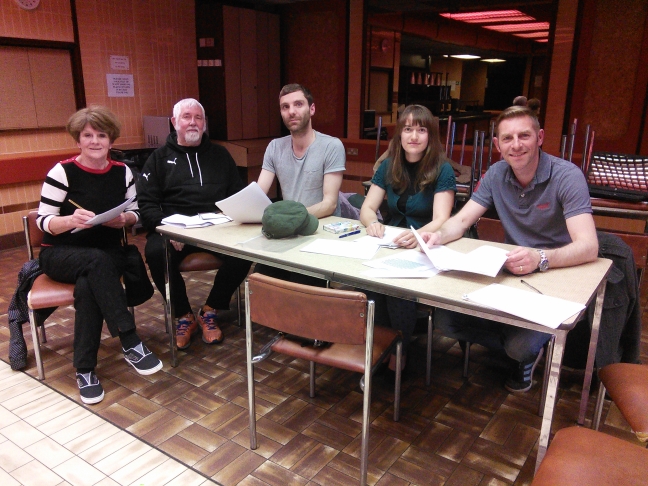
Despite the challenges I am glad we have been able to stage the play in the atmospheric room you can see above. For a while it looked as though building work would move us into the Central Library. I’ve been very lucky to have a talented and supportive small cast of volunteer actors (pictured above) who have taken on what is a quite wordy play full of narration with great aplomb. Their characterisation has been spot on almost from the word go, which has made my job a lot easier. I know them all from Bolton Little Theatre. I was quite nervous about approaching people to take part, so I’ve been grateful for the advice of Sandra Leatherbarrow (far left) and Nathalie Haley for their help with the casting. I’ve deliberately kept the staging modest, three chairs,  a table, a spinning wheel. On the day I’ll be running the technical side of the play, cuing the sounds and music, and the slideshow too. I’m definitely going to be relieved when I have this under my belt.

This educational play is definitely good practise for the far bigger challenge of Wyrd Sisters. Adapted from Sir Terry Pratchett’s novel of the same name, it brings his magnificent fantasy creation Discworld to the stage. Creating a fantasy kingdom, even a little one like Lancre, home of the Witches on a stage in a small theatre is definitely a challenge, particularly a script which has so many locations as this one. I’ve been very fortunate that veteran director and stage designer Joylon Coombs has agreed to take on the production design. He has come up with a marvellously flexible set that combines a heath with a stone paved area. Combined with lighting and gobo stencils projected on to it, I am confident that we can create a great fantasy atmosphere that is going to enjoyable in itself. Although the main focus is on the actors and Stephen Briggs’ ingenious adaptation. I am going to be using the model of the set to block out roughly what the moves will be and I hope to share some of that with you in a future post. Incidentally Joylon directed me in a production of Richard Sheriden’s The Rivals earlier this year, which also featured a clever set, recreating Restoration Bath. I played the foolish Bob Acres.

50

But before I could start properly thinking about blocking, I had to cast my play. In the past I have generally worked with a group of people I’ve known for a while. This time however I had to audition a host of actors, many of whom were strangers to me. At least I had a good number to start with. I had advertised the readthrough online but on the night I was nervous that almost no one would turn up. To my gratitude however there was a very healthy turnout. In fact several Bolton Little Theatre friends approached me later in the week, saying they were surprised when they heard how many there were. This I put down squarely to pulling power of Terry Pratchett’s name. It was nerve-wracking running it, trying to make sure everyone got a fair amount of reading time, trying not to have favourites, listening carefully. It was interesting to see which lines got laughs too, The sequence with the Players pretending to be Witches was hilarious. I was not too worried if people got the characterisation a bit off, since this was the first readthrough.

I felt it would be unfair to cast solely from the readthrough, although in the end I did cast one or two parts from that evening. I went on to have two more auditions, one for the female roles and another for the male characters who will be doubled up,  each actor playing three roles. Finally there were one or two roles where I did call on my previous experience and offered them to talented folk I’ve worked with before who know will do them justice. I was lucky in some ways to be casting a play with so many roles, so I had plenty of opportunities to recognise the actors who had been kind enough to show an interest. However I still had to make judgements and disappoint a few people who for one reason or another did not fit what I had in mind. That was definitely the hardest part, but I strongly believe in getting in touch with everyone as soon as I could regardless.

So although January and the rehearsals seem a while away yet, already I’m thinking about props and putting together the soundtrack. I’ll share more about my process soon on the blog.

Finally, in other news I have just put together a preview trailer for the whole new season at Bolton Little Theatre. Hope you like it:

Visit their home page here.

The Little Black Bag

Nurse demonstrates hi-tech tool

by Cyril M Kornbluth
Adapted by Julian Bond

This short story seems to something of a favourite with television producers. It was featured in the USA anthology Tales of Tomorrow (1952) and a year after Out of the Unknown‘s adaptation, it appeared in Rod Serling’s Night Gallery. Sadly the Out of the Unknown version is incomplete, missing about twenty minutes but there is enough to form a fairly clear impression.

A futuristic medical kit from 2450 falls into the hands of Roger Full, an alcoholic disbarred doctor. Inside the case are tools which can carry out almost miraculous cures for any illness not matter how severe. His Russian call-girl friend Angie sees the kit as a chance to become rich through cosmetic surgery and escape the London underworld. Full has his own dreams: of redemption, a place in history and changing the world. Meanwhile in the distant future, the time travel agency is monitoring the equipment and waiting to take action.

C.M. Kornbluth was a member of a group of SF writer friends who included Issac Asimov and Damon Knight. A prolific pulp magazine contributor, he died at the height of his success at 35, due in part to his heavy smoking. The Little Black Bag is his most famous work. The original is actually a prequel to his other best known work The Marching Morons, set in a future where most of humanity are idiots and are guided by a secret minority of intelligent ‘helpers’. That is the reason the medical kit is so easy to use by a man in 1964.

From what we have, this seems like an average story with a pretty straightforward plot, as the weak Roger regains his self-respect through the box, but fails to understand just how desperate and ultimately ruthless his partner in crime is. It is a shame that Angie is such a two-dimensional harridan whilst Roger is so reasonable because it renders the debate over the black bag pretty black and white. It would have been better if Angie’s background, fears and motivation for being so obsessed with money had been explored. As it is she is simply a greedy short-sighted woman.

Veteran character actor Emrys Jones, familiar to Doctor Who fans for playing the Master of the Land of Fiction, has a sensitive voice and is ideally cast as a flawed idealist. Geraldine Moffat frequently played hard-faced glamour women in film and TV, perhaps most famously in Get Carter. John Woodnutt makes the most of his supporting role as a Harley Street doctor.

The gadgets are fun and well realised by the special effect department of time. The future scenes are amusing to me for some reason. Something to do with the white polo-necked, sunglass wearing fashions of 2450 that make me smile. It is not clear why the technicians do not simply deactivate the kit as soon as they know it is missing.

Although the ending is missing, it does not take much working out what happens. It is a shame given the work on the other missing episodes that a little more restoration could not have been done to fill in the blanks. It would be intriguing to know what is in the missing sections.

I’m afraid the simple plot and lack of shades of grey in the characters make this a fairly hard episode to write much about. So I’ll sign off here.

The Naked Sun

Elijah Bailey and Gladia in the park

by Issac Asimov
Adapted by Robert Muller

I remember reading Issac Asimov’s SF detective novels as a teenager, so I was particularly interested in how they would adapt this story. Unfortunately, in compressing and simplifying the book’s plot to fit fifty minutes scripter Robert Muller loses much of what made the original so entertaining. The most obvious problem is that our hero Bailey has to make one or two almost magical leaps of deduction that are barely supported by the given evidence. It does not help that The Naked Sun is very much a sequel to The Caves of Steel, previously script edited by Irene Shubik for BBC’s Story Parade back in 1964. So certain aspects like Bailey’s relationship with robot partner R Daneel Olivaw are taken as read. The whole story feels like a continuation, with episode one missing.

New York detective Elijah Bailey is summoned to the planet Solaria to investigate the seemingly impossible murder of respected scientist Rikaine, the first crime on the planet for two centuries. Solaria’s population is a mere two thousand people and virtually all of them live solitary lives on their own estates with an army of robot servants, communicating with others via holograms and monitors. The only possible suspect seems to be Rikaine’s glamorous wife Gladia who was with him on one of her rare conjugal visits, but Bailey suspects she has been framed by someone else. Confined to his own house and suffering from agoraphobia thanks to living in an enclosed city all his life, Bailey and his android partner R Daneel Olivaw must break through the taboos of this neurotic society to uncover the real culprit.

Future Earth is regarded as a backwater in humanity’s galactic empire and its inhabitants regarded as little better than trailer park dwellers by ‘spacers’ and their descendants. So there is an irony in an Earth detective being required to solve a crime. This class distinction runs deeply through the story. Think Columbo where most episodes center on the shabby ‘tec outwitting a rich upper-class murderer. This episode is sadly missing the irony of a member of a despised segment of society investigating and exposing his ‘betters’. Also in the book, Bailey is unfit, agoraphobic and out of his depth in this strange robotised society, surrounded by suspects who physically and mentally superior. Although this element is still in the dialogue, with the detective frequently being dismissed as a “primitive”, casting a handsome and athletic Paul Maxell underminds it. Particularly when most of the Solarians are played by gnarled looking middle-aged men in bizarre wigs.The obvious exception is femme fatal Gladia, played well by actress/singer Trisha Noble, wearing a series of exotic space fashions.

Condensing the plot, Muller concentrates on the crime of passion and the theme of the spacers’ repressed humanity. Nevertheless the murder is part of a larger conspiracy which cannot be ignored entirely. However it comes across unsatisfyingly, dropped in almost at the end with a speech that goes something like. “He was the murderer, and by the way, he had a plan to conquer the universe with a robot army too.”

This time the robots are essentially men with dark glasses and monkish robes in vinyl. Amongst them I glimpsed one of Doctor Who‘s regular monster actors John Scott Martin.

Once again Derek Handley and his Loose Canon friends do a respectable job with reconstructing this lost episode, despite having even fewer photographs to work with and some missing audio too. Probably the biggest problem comes near the start, where due to reusing a single photo, Elijah seems to be grinning continually through the first five minutes or so.

The Naked Sun is a straightforward tale that covers some of the same ground as The Machine Stops with its warnings about over-dependence on technology and the importance of physical contact. I suspect I would have enjoyed it more if I could have watched the actual episode but at least this version preserves some evidence of what was the BBC’s most elaborate Asimov adaptation.

Beach Head

large eyed alien sitting in pod

by Clifford D Simak
Adapted by Robert Muller

Clifford D Simak is not as well-known an author as he once was, perhaps due to lacking a famous film adaptation of one of his works. Yet he was one of the major figures of the so-called Golden Age of science fiction, alongside the likes of Asimov, Heinlein and Clark, winning three Hugos, two Nebulas and several lifetime achievement honours. His work is notable for its quiet religiosity and recurring use of the rural Wisconsin landscape where he lived. His work has rarely been adapted for other mediums. Before Beach Head, the only example was The Outer Limits translating his uncharacteristically violent tale”Good Night Mr Jones” into the second season episode The Duplicate Man. Beach Head is much more typical of his style, a contemplative tale about the hubris inherent in the space exploration genre, as typified by Star Trek.

Even before they arrive on planet 0243/B, an Earth expedition is already troubled by the increasingly odd behavior of its leader, Commandant Tom Decker. A veteran of thirty seven interplanetary missions, Decker’s sour personality seems to tipping into some kind of depressive mania, and the ship’s new medical officer and sole female crew member Cassandra Jackson is bearing the brunt of it. Expecting to find only the usual minerals and low level lifeforms, the scientists are amazed to discover 0243/B is home to an intelligent alien race, the first ever encountered by human space travellers. But their excitement turns to fear when the aliens’ first translated words are “You will never leave. You should not have come. You will die here.”

Beach Head is the first of four reconstructed lost episodes in the BFI box set. Combining a sound recording from 1969 with publicity photos, photoshopped images and CGI animation. Doctor Who fans will recognise the style. Indeed this episode was created by many of the talents behind the well-regarded Loose Cannon reconstructions of missing Doctor Who stories. They have done a creditable job at retelling the story, especially considering they only had a handful of photographs. It helps that the early robot sequences lend themselves to CGI, since the man-shaped robots are faceless and identical. Thanks to their many hours of work, we have a taste of what looks like one of series’ best-looking space opera stories.

If you like Ed Bishop, a familiar face and voice from Gerry Anderson’s shows, not to mention 2001 A Space Odyssey and countless British drama series, you are going to love Beach Head, since it feels as though two-thirds of this episode is made up of Decker declaiming his bitter philosophy to the crew. It seems what he has learnt from his years of exploring space is that there is nothing in the galaxy that cannot be simply explained by basic human science, no extraterrestrial problem which his ship’s sophisticated technology cannot overcome. When Dr Jackson tells him she was inspired to become an astronaut to explore the unknown, he scoffs, “There is no Unknown. Only the unexpected.” Initially he talks about the emptiness of their mission, discovering worlds with nothing on them but rocks and poisonous insects. After they meet the aliens and hear their ominous yet oddly passive warning he becomes at first paranoid, then fatalistic, believing their indifference to his Earth ship is a sign of their superiority. By the end of the drama he gives an explanation of sorts for his behaviour, that he has developed a sensitivity about dangerous planets, which is an oddly romantic notion and a sign of how his initial boorish pragmatism has been dented. His relationship with Cassandra Jackson remains ambiguous, hovering between attraction and distrust.

The nameless aliens are a rather endearing race with their large eyes, slightly goofy looking rubbery bodies and unhurried manner. The scene at the alien village is deliberately undramatic, but memorable for the sight of these beings in their cocoon-like houses. It would be the perfect cover for a SF novel. They are also a clever sleight of hand. We and the ship’s crew concentrate on them and expect them to produce the danger. Too late the explorers realise that the real threat comes from an unexpected environmental effect.

Whilst the robots from another lost episode The Prophet enjoyed a new lease of life in Doctor Who, the robot servants in this story have been lost to posterity outside of this reconstruction and that’s a shame because like the aliens, they are entertaining. Aside from their blank globe heads, their brightly coloured torsos remind me of the later Doctor Who robot the Kandyman. An early scene sees the first pair pulling parts out of crates and reassembling more of their brothers, a neat and realistic idea.

Whilst most spaceship interiors in the series have been rather humdrum and conservative, designer Tony Abbott creates wonderful futuristic cabins and corridors with large sweeping curves, funky inflatable furniture and plenty of colour. They are of their time but they still look impressive now, in the same way the sets of The Prisoner have aged well.  Similarly the alien planet’s surface, with white translucent foilage and trailing cobwebs is excellently realised and looks as good as any of Space 1999‘s alien worlds would in a few year’s time.

The BBC felt confident enough in this production to enter it into the Festival Internazionale del Film di Fantascienza, but it failed to repeat the success of the previous year’s The Machine Stops. Perhaps part of the trouble was that whilst visually appealing and rich in atmosphere, the plot lacks the growing tension and drive of that earlier gem. Beach Head deliberately ends in an ironic low-key manner. Our human adventurers finally face the alien unknown and find it uncaring as it defeats them, leaving them marooned and helpless. Too late they understand the mystery of why the natives of this world are sophisticated, yet have such a primitive stone-age lifestyle. Judging by this reconstruction, this episode is a creditable example of thoughtful literary SF.