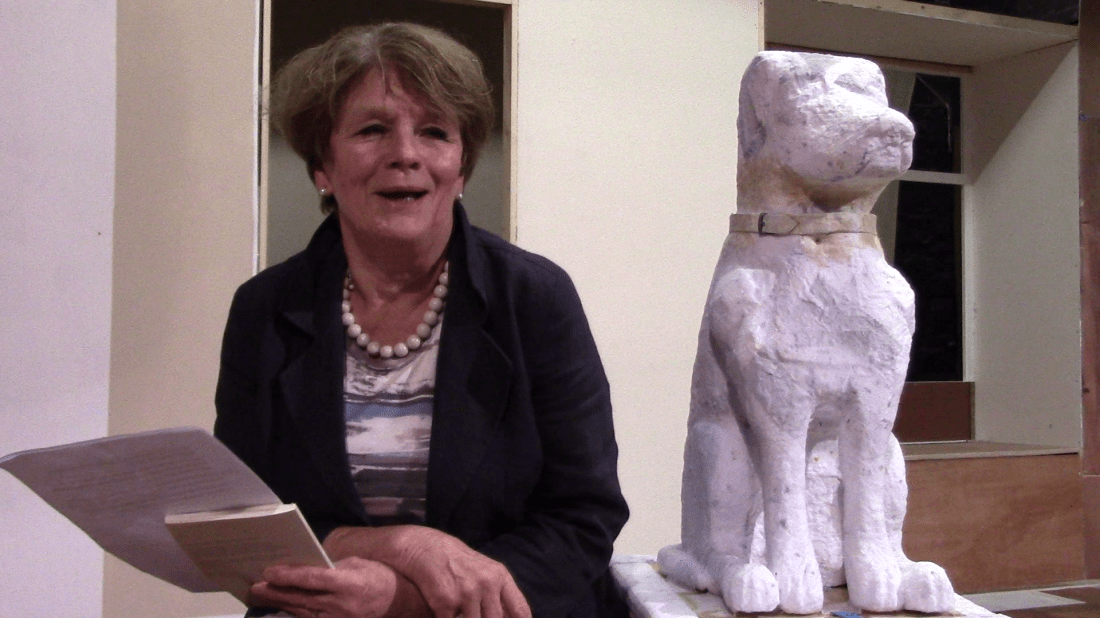
I was shocked, along with the whole North West amateur theatre scene, by the sudden death of Sandra Leatherbarrow on Friday 13th October 2023. Not only because she was a good friend of many years, but because I am currently working in her last production, Blue Stockings at Bolton Little Theatre. I had only been speaking to her on Thursday night, little knowing that under two hours later I would be watching paramedics hurrying in, after she suffered a stroke. I still have emails in my inbox from her, about the play and providing technical help to the Little Theatre Guild conference she was simultaneously organising.
Sandra was always filled with energy from the first time I met her at the theatre. She loved directing and acting, and was always prepared to assist with the less glamorous side of the theatre too, regularly serving as house manager for other productions, and being a long time member of the committee. She cast me in a dual role of medical officer and private in My Boy Jack, one of the plays I am proudest of from my career. She kindly took on the role of Samuel Crompton’s mother in a short play I directed at Hall’ith Wood called A Fine Spinner. I provided sound cues for many of her productions.
I wish I had a hilarious anecdote to share but right now my memories are of a bundle of energy, occasionally exasperating, certainly eccentric but in a productive way that raised up everyone around her. Not just at Bolton Little Theatre, over her life she was involved in several companies, not to mention being a keen golfer. I’m sure I’m going to find out even more over the next few weeks about all her achievements. She supported so many people. In my case I know that each year she lobbied for one of my pantomime scripts to be produced, which I appreciated even though it has not happened yet.
Sad as it is that Blue Stockings will now be a tribute to her, rather than simply her latest production, it is an excellent choice by fate. It’s cast includes old friends and young actors who had only just met her, everyone grateful for the opportunity to work with her and who have been inspired. It’s a play about remarkable women who helped leave the world a better place. Exactly what Sandra did.
I’ve been improv acting as a simulated patient over the last few years, and the odd voiceover, but between October 21st and 28th I’m heading back to the stage as an actor in Blue Stockings, by Jessica Swale. The play is on at Bolton Little Theatre. This one of several productions of Jessica Swale’s popular debut play being staged nationwide that week.
1896. At Girton Colllege, female students are welcomed to study at the University of Cambridge for the first time. The Girton girls study ferociously and many match their male peers grade for grade. Yet, whilst the men graduate, the women leave with nothing but the stigma of being a ‘blue stocking’ – an unnatural, educated woman. The play follows them over one tumultuous academic year, in their fight to change the future of education. There is laughter, thwarted romance and bravery from both the women and their few male supporters. Whilst in the background is the suffragette movement, which ironically might do as much to damage their cause as support it.
I play Radleigh, one of Cambridge dons who is against encouraging women to study degrees, viewing it as youthful indiscretion which will destroy their future prospects of marriage and respectability. It is a fairly small part, appearing in two scenes but I must admit I was struggling to memorise my lines after leaving that part of my brain unexercised for years. But they are in there now and I hope my performance gets richer now with each rehearsal. This is all useful practice for a much larger role I’ll be taking on next year in Hangmen by Mike Bartlett.
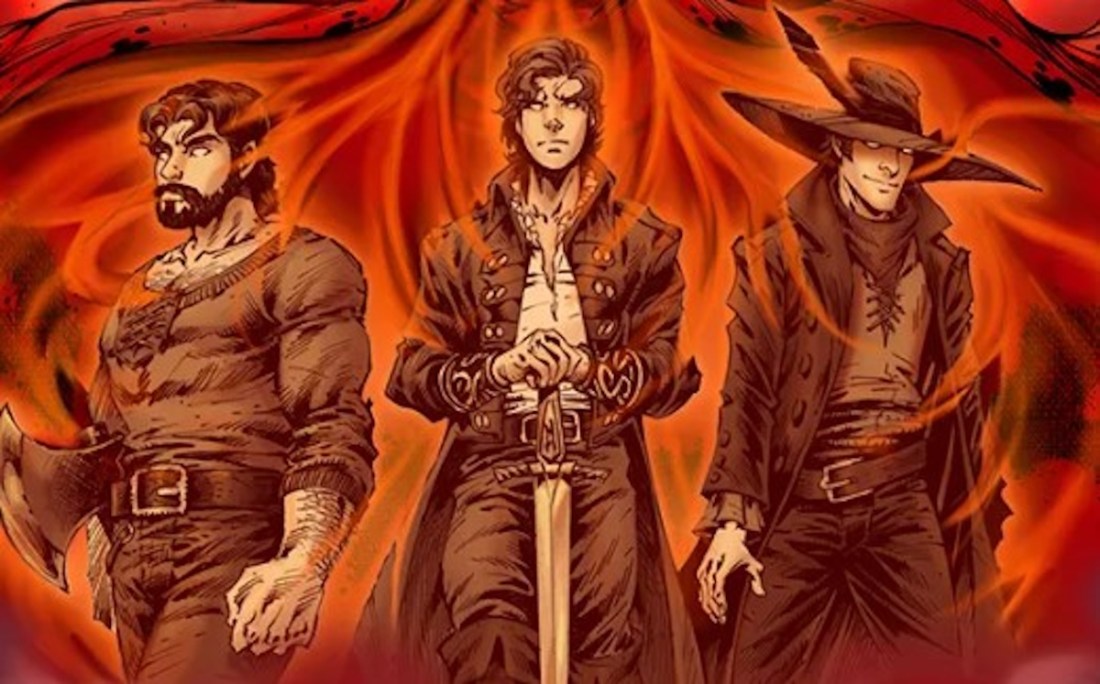
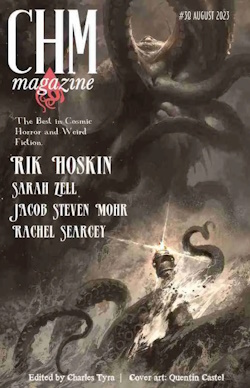
I posted recently that Rik Hoskin had recently written the comic strip adaptation of Book Two of The Wheel of Time – The Great Hunt. He has recently had a couple more interviews published, where he talks about Robert Jordan’s writing and the experience of adapting such a famous, influential fantasy world.
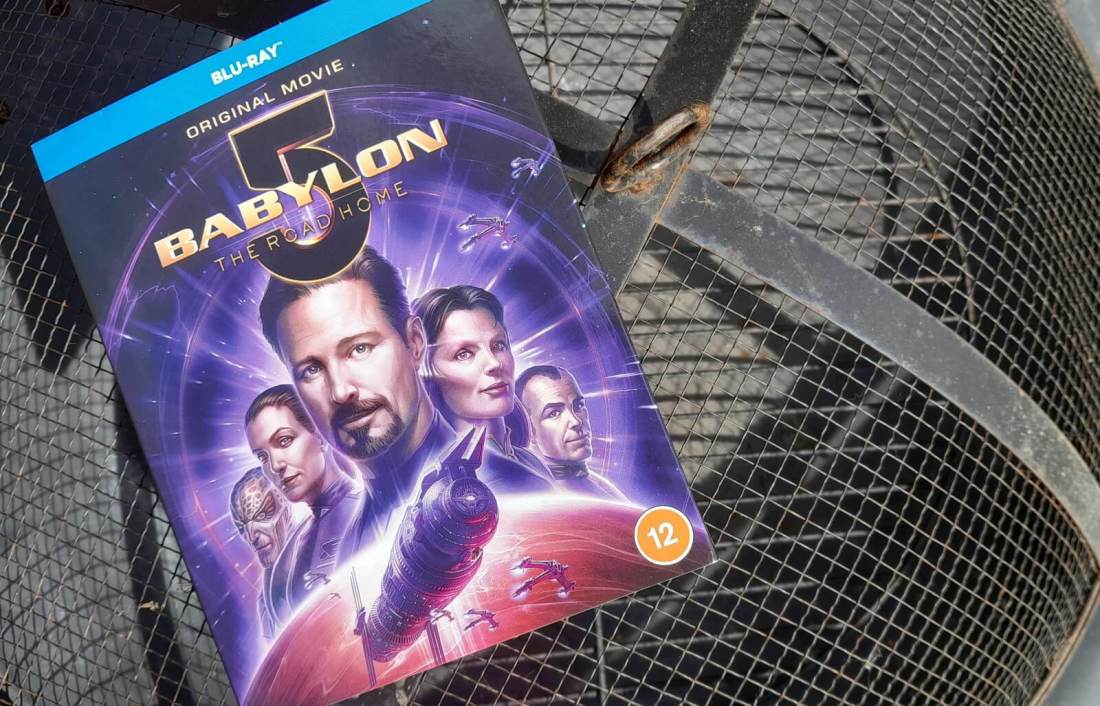
Sixteen years since the last straight to DVD revival, twenty-five years since the original television series gave its last bow, Babylon 5 returns polished up as an animated special The Road Home. Is it the beginning of a new era, or a nostalgic curio for the die-hards?
Time has been kind to Babylon 5. It was never a series which relied on the quality of its effects and a movie quality production. It’s strengths was its unashamed respect of literary SF and the power of a good story well told. Matched with rich characterisation that allowed its flawed protagonists to both fail hard and triumph satisfyingly over the years, spending most of the intervening time in stories that were often imaginative and morally grey. After years of only being accessible on VHS and DVD, recent years have seen it return to wide syndication, availability on streaming services and after a long campaign by fans, a HD remastering, all of which has enabled it to be enjoyed by new generations of fans, some of whom were not even born when its final story Sleeping in Light went out on TNT.
Babylon 5 was influential in several ways. It was one of the first SF series to embrace CGI, using the groundbreaking NewTek Video Toaster, which made computer graphics feasible on a cable television budget. It popularised the concept of the story arc. Instead of self-contained, almost interchangeable episodes where the status quo would always be reset after an hour, creator and chief writer J Michael Straczynski (known as JMS to fans) planned a “novel for television” to be told over five seasons. The idea was mocked as vainglorious by many, yet the programme proved that there was an audience who would commit to the journey. Now it would be hard to find a TV series which doesn’t have ongoing threads. Finally there was the way JMS embraced the fledgling internet, specifically Usenet to communicate directly with watchers in a way that hadn’t been possible before. He gave us an insight into the writing and production process of an ongoing, often struggling TV series that was fascinating and educational, as well as building up a whole community around the show.
It’s that ongoing community and the recent revived interest which has allowed The Road Home to exist. That and apparently a new willingness at Warner Bros to exploit a franchise which it was previously content to sit on.
The plot of The Road Home taps into Hollywood’s current love of multiverses and alternative worlds. On his first official engagement off-station, President John Sheridan becomes unstuck in time as the result of a malfunction in the new tachyon-based power generator he is supposed to be inaugurating. Teleporting into the future and the past, he then finds himself travelling sideways in alternate versions of the Shadow War, where the Shadows or the Vorlons win, both with cataclysmic results for humanity and its allies. Worse, if he cannot jaunt home, the multiverse itself might collapse.
Rather like a wedding, how much the viewer gets out The Road Home depends a lot on how many faces you recognise. If the above synopsis seems confusing, then this animated movie will be a lot of sound and fury, signifying not much. As an introduction to Babylon 5, it’s too reliant on pre-knowledge for the vast majority. Yet thanks to JMS’ script and the obvious affection of the production team, at the same time it’s a film that contains everything that made Babylon 5 what it was, good and bad. Action and big SF concepts like quantum physics, nestle with pulp staples like ancient alien cities being discovered, powerful aliens being reawakened, and passionate declarations of undying love. Smart jokes like a galactic vista being interrupted by a search of socks, share time with clunky one-liners. B5 could be moving but it could be amusingly pretentious too and there’s some windy philosophy at “the Rim” of the universe, delivered with deathly, if mellifluous, tones, which could have come straight from an obscure prog rock album sleeve notes.
Tragically, the series has lost more than the usual percentage of cast members. The voice cast contains all the surviving regulars, led energetically by Bruce Boxleitner returning to the role of John Sheridan. It’s great to hear Patricia Tallman, Peter Jurasik, Claudia Christian, Bill Mumy and Tracy Scroggins in character once more. They are joined by a cast of creditable actors taking on other beloved characters and thanks to good casting and direction from casting director Liz Carroll and Matt Peters respectively, none of them jar in the ear. Sadly the episodic nature of the story means that few of the regulars get much time to shine, apart from Sheridan and Delenn, but there’s a lot of fun to be had with the return of fan favourite, the gnomic alien Zathras and most of the funniest moments belong to him.
Visually the film looks marvellous, enjoyably opening out and subtly updating the old locations on the space station and Epsilon 3. It has that recognisable Warner Bros look that’s been seen in many of their recent superhero cartoon movies, tall figures with great cheekbones. Just about everyone is instantly recognisable, although it took me a few moments to recognise Elizabeth Lochley. The production team cleverly incorporate several iconic visual scenes from the series, such as the launching of the Starfurys or the reveal of The Great Machine.
I’m reviewing the bluray release, which comes in a slipcase and has two extras, an enthusiastic commentary by Boxleitner, JMS and supervising producer Rick Morales, and an appreciative making of documentary B5 Forever with some interesting behind footage of the cast recording their parts.
During the documentary, JMS says he has ideas for future animated stories and I certainly hope this special is successful enough for more. As a victory lap and a celebration for long time fans, The Road Home is a treat that doesn’t disappoint. For newcomers, the pilot film The Gathering or the TV movie In the Beginning is still the place to start.
I had the great pleasure recently of joining my friends Rebecca, John and Dani to record an edition of their podcast I Don’t Do Sci-Fi. This time, Dani was being exposed to Nigel Kneale’s 1972 BBC Christmas Day ghost story – The Stone Tape. It is a pioneering blend of science fiction, horror, and psychological drama that has left a lasting impact on viewers and critics alike.
The story revolves around a team of scientists and technicians from Ryan Electronics who move into an old Victorian mansion called Taskerlands, which has been converted into a research facility. Their objective is to develop a new disruptive technology that surpasses anything in the existing market. However, they soon discover that Taskerlands has a dark history and an eerie presence lurking within its walls.
In a room said to be haunted, Jill, the lead computer programmer sees the ghost of a terrified Victorian maid. Soon, everyone bar one young man can hear her screams.
The team conjecture that they have uncovered a phenomenon nicknamed the “stone tape theory,” a concept suggesting that buildings can absorb and replay the energy of past events, essentially becoming a recording of the past. This notion serves as the central theme of the play, blending elements of the supernatural with scientific exploration. When the experts try to understand the process better, hoping to turn it into the next generation of consumer technology, they learn it has psychological effects too. Whilst Jill begins to fear that there may be deeper layers to the stone recording, but containing what?
It stars Jane Asher, Michael Bryant, Iain Cutherbertson and Michael Bates, and was directed by Peter Sasdy. I’d last seen it on the big screen in 2022 as part of the excellent Nigel Kneale Centenary celebration in London, organised by Jon Dear and introduced by Ms Asher herself.
Whilst I’m on the plugging trail, let me also mention that I am currently working on the sounds for the next Bolton Little Theatre production – The Ladykillers – which is running from 26th June and 1st July. It’ll be a funny night and you can find out more here.
The Day of the Triffids aired on BBC1 in 1981 and became one of those SF television series that broke out of the genre ghetto and became part of popular culture, fondly remembered by many who saw it back then. Perhaps this shouldn’t be a surprise since the novel of the same name by John Wyndham had been a bestseller, remaining in print since it debuted in 1951. The series follows the story of a group of survivors living in a post-apocalyptic world after a meteor shower has rendered most of the population blind and given rise to deadly, venomous plants called Triffids. The main protagonist is Bill Masden, a young farmer who has ironically retained his sight due to being protected by bandages after a Triffid attack. As he navigates the dangers of post-apocalyptic England, he must also deal with the threat posed by the plants, which are able to move on their own and attack humans.
Like the book, the series explored themes of survival, adaptation, and morality. Produced by David Maloney, directed by Ken Hannam and adapted for television by Douglas Livingstone, it starred John Duttine, Emma Relph, and Maurice Colbourne.
I had an excellent time recording this episode with Rik Hoskin, and Chris and Ella Burton and we got unexpectedly deep in places when it came to the moral challenges faced by the characters. You listen to our debate by finding Very British Futures on YouTube, Spotify, Apple, and many more platforms. Or go to its page on the podcast website.
In other news, I am currently back on the sound desk at Bolton Little Theatre for the upcoming play Flamingoland which runs 20th to 27th May 2023. Written by ex-Coronation Street actor Deborah McAndrew, it’s the story of two sisters, their daughters, and a local pest control officer. Mari is terminally ill and spends her days organising her funeral and her will. Her sister Bridie wants her to focus on making the most of her remaining time. But the whole family is poisoned by a secret from their teenage years. Will bringing it out in the open help them to heal or is too late? Sound effects for this one are fairly domestic. Probably the biggest challenge was filming a video sequence at the open mic night at the Doffcocker Inn, Bolton, for the finale. But it gave me a chance to put a new 4K Canon XA50 camera and shotgun microphone through its paces.
Aladdin – Aldbourne Light Entertainment Club production February 2023
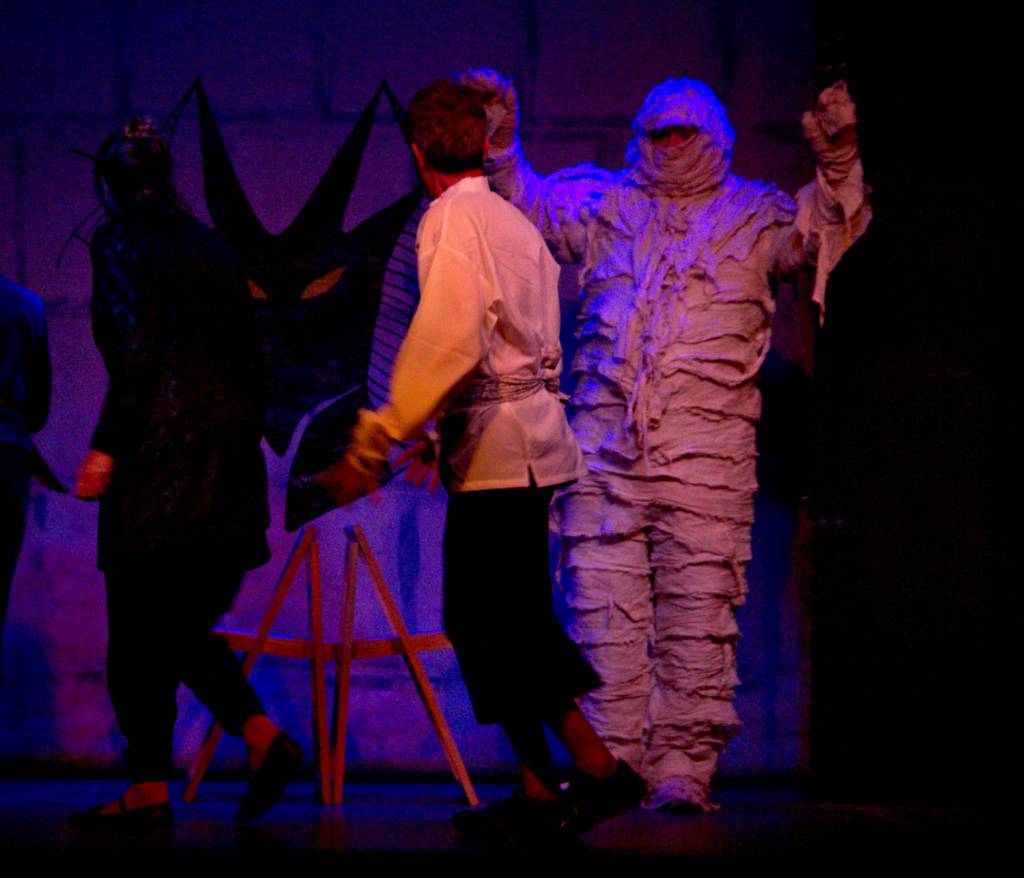
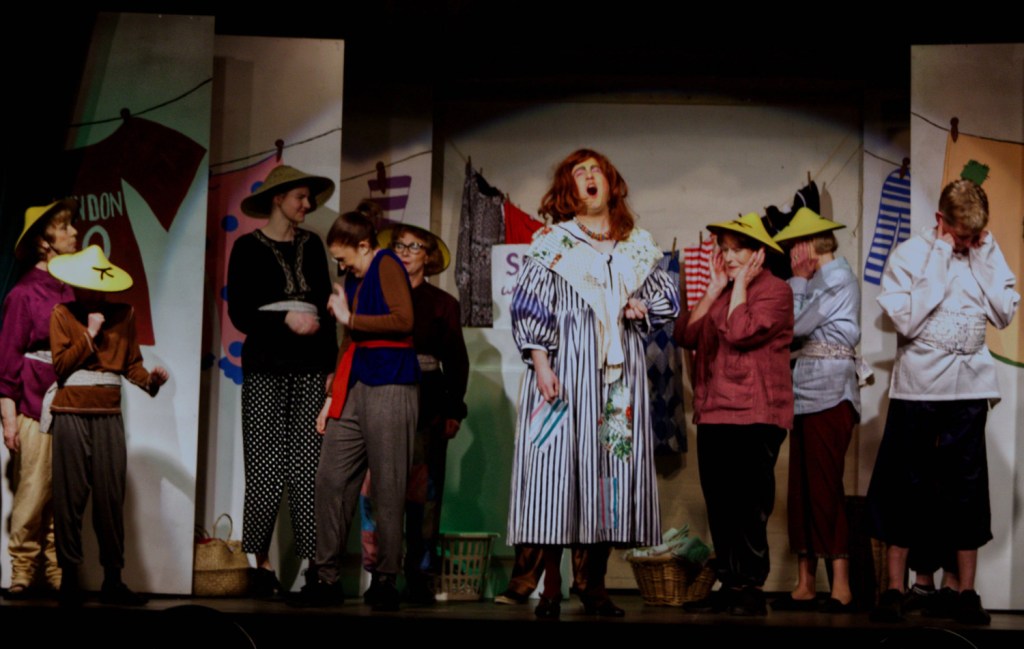
Did you experience the return of pantomime to the Memorial Hall stage? A fantastic production and enjoyable occasion all round. I passed the Hall during the (fully booked) matinee and heard the audience very much playing their part.
Many congratulations to all concerned!
Aladdin – Aldbourne Light Entertainment Club production February 2023
Aladdin was following in a fine tradition of light-hearted plays in Aldbourne. However, it’s tricky to pinpoint the first panto (if anyone has any details to share, it would be great to hear from you).
In the first decade of the twentieth century a tradition of Fairy Plays arose, inspired (according to Mr Google) by Féerie, that had its roots in France. Here in Aldbourne, this seems to have taken the form of performances like “Jack & The Beanstalk”…
Following the good advice of my friend Kevin, producer of Tripodscast and I Don’t Do SciFi, my show Very British Futures is now available on YouTube, making it even more accessible to listeners all over the world.
Very British Futures as you’ll know if you read this blog regularly, is my discussion podcast about the rich library of science fiction television which has been produced by my native country. Moving to YouTube is a savvy addition, as the platform is already a go-to destination for people looking for content on a wide range of topics. The YouTube app already comes installed as standard on many smart TV’s and set top boxes. Therefore we have the possibility for more people to discover and engage with Very British Futures thanks to the platform’s massive global reach.
You can find the podcast by searching for “Very British Futures” on the YouTube app. Or you can follow this link to my channel. I am afraid I haven’t had time to add much visually to the episodes. Each has a new piece of artwork, but its still essentially an audio production. All the existing episodes are there and I’ll be adding each new show simultaneously alongside the standard podcast.
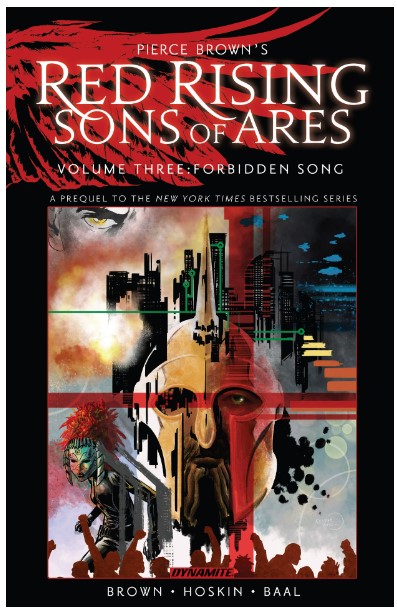
In other news, the final part of the comic strip prelude to Pierce Brown’s Red Rising trilogy, Sons of Ares, has been published. It’s written by my old friend Rik Hoskin and illustrated by Kewber Baal. The first two collections were superb and I’m looking forward to the conclusion. To quote its Amazon page: “The last two entries into the Sons of Ares had Fitchner on his heels. In the first, he was driven by love and desperation to save his wife Brynn before her execution at the hands of the Board of Quality Control. Then, in book two, Fitchner went head to head with both of his early allies — Arturius and Quicksilver. His wrath left Arturius dead and set back Quicksilver’s dream of expanding exploration and human habitation to other stars. In Forbidden Song, Ares may not always be in control. But he has a plan — and it’s a doozy. Forbidden Song is one part Ocean’s 11, one part Les Miserables, and it sets the fuse for the Rising that Darrow will inherit.”
And you’ll be hearing Rik soon as a guest in the next episode of Very British Futures, talking about The Day of the Triffids.
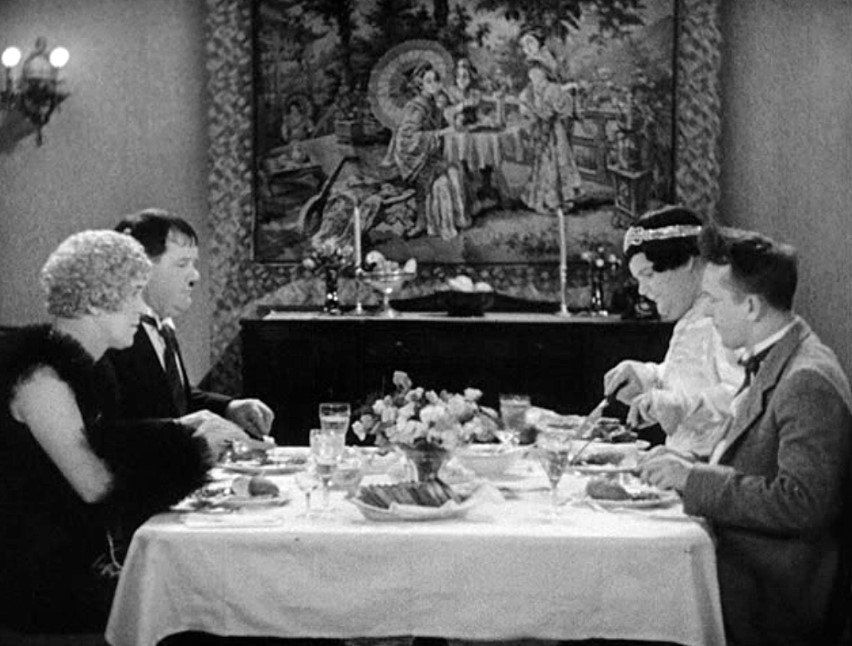
Finally, my long association the Official Talking Pictures TV podcast continues, and the latest edition is just out. It includes my review of the hilarious Laurel and Hardy short Twice Two, featuring the boys in the dual roles of their usual personas AND their sisters (and each other’s wife). You can hear it on all the major platforms or online here.
Late last year I signed up to the Matchmaker.FM website, looking for potential new contributors to my series Very British Futures. Part of that membership was the option to offer myself as a guest for other people’s podcasts. To my surprise, Tony Rambles got in touch, inviting me to appear on his series The Living Numbers. This is a conversational podcast talking to people from many walks of life. As Tony himself puts it:
“The interview podcast where amazing people tell their stories through conversations with numbers, laughter and life lessons. Everyone is interesting if you ask the right questions.”
I accepted his kind invitation and recorded a pleasant conversation with him over Zoom just after the New Year’s day. Tony was an excellent, enthusiastic interviewer. We talked about my pantomime acting and writing, the origins of my podcast, and my career as a Technical Officer in higher education. You get to hear me err and pause a little more that usual too, because I try and edit those tics out of my own recordings. 🙂
Chocky was a science fiction novel by John Wyndham, the final one published in his lifetime (1968). It tells the story of an 11 year old boy named Matthew, who begins to exhibit strange behavior and abilities that concern his parents. They learn that Matthew has an imaginary friend named Chocky, who is actually a highly advanced alien being with a mission to help humanity. The novel was adapted for radio, but most famously into an ITV television series which led to two original sequels, all written by Anthony Read. In the first series, closely based on the novel, Chocky saves Matthew and his sister’s lives following a boating accident, This leads to press attention and Matthew being kidnapped by a mysterious secret organisation, who hypnotise him to contact Chocky directly. After Matthew is released, Chocky bids him goodbye, not wanting to endanger him more. Chocky’s Children reunites Matthew and Chocky when he discovers he has a psychic link with Albertine, a maths prodigy of similar age but a more fiery temperament. She too, has a connection to the alien and together they discover new powers, including telekenesis and a psychic attack. In the final series, Chocky’s Challenge, Matthew has moved to New York, but Albertine has joined forces with three more of Chocky’s human contacts to create the first cosmic energy generator. Once again the secret organisation tries to control them and even captures Chocky within a prison. This time it is the teenagers who must rescue their extra-terrestrial ally.
Although the novel is narrated from the viewpoint of Matthew’s father, the series are much more from the children’s perspective. Very popular at the time with CITV viewers, the series has been released on VHS and DVD several times and continues to gain new fans.
As part of the research for this episode, I spoke to producer Richard Bates (A Touch of Frost, The Tripods) who originally obtained the rights for a television adaptation of Chocky, and served as both creative consultant and producer of the third and final series. I had intended to include clips from our conversation in the final show but annoyingly I lost the file. Joining me for this edition is my regular guest Dr Rebecca Wray, and author, publisher and old friend Will Hadcroft. Both of them coincidentally have also talked with Richard Bates in the past. We had an excellent conversation and it was hard to edit it down to even the generous 90 minutes I have given this episode. There was also time to talk about Will’s writing career and Rebecca’s new podcast I Don’t Do Sci-Fi.
Hope you are well. I’ve been lucky enough to be invited on to two more excellent podcasts recently – Here Lies Amicus and I Don’t Do Sci-Fi.
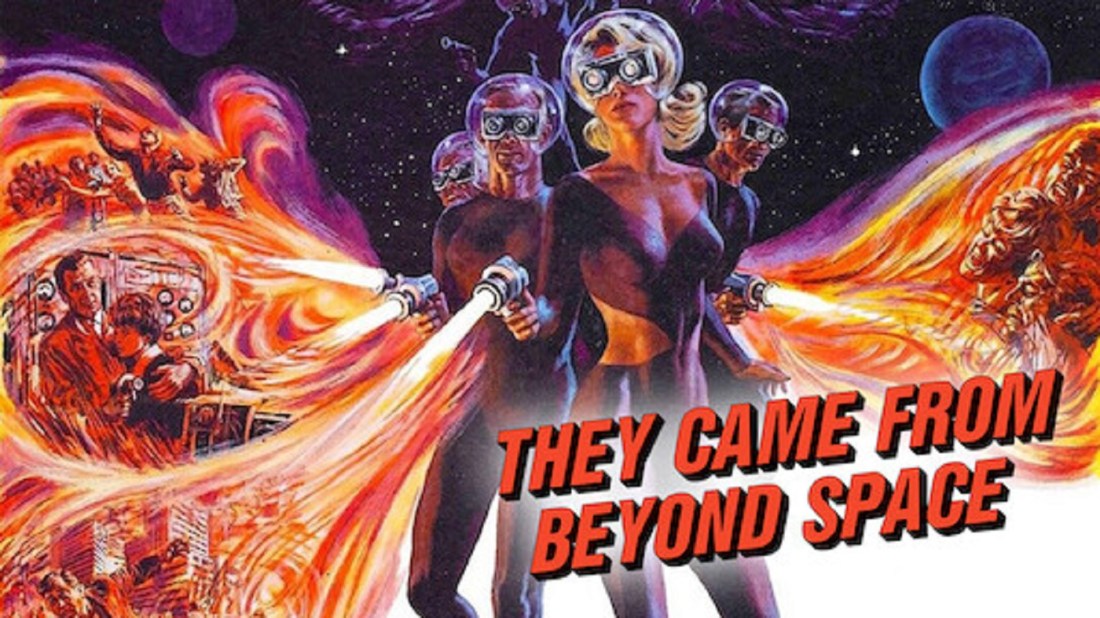
Here Lies Amicus is the brainchild of Cev Moore and is an in-depth review of the films of legendary Sixties and Seventies exploitation studio Amicus. Run by Milton Subotsky and Max J Rosenberg, Amicus were one of Hammer Films’ main rivals and often fished in the same pool of actors and filmmakers as the people at Bray Studios. Probably best remembered now for their horror anthology movies like Tales from the Crypt and Asylum, Amicus also made pop music vehicles, thrillers and also two low budget science fiction movies: The Terrornauts and They Came From Beyond Space. This double bill was the subject of the October 2022 episode Amicus in Outer Space!
To be honest I thought I had mentioned this at the time but looking back through my blog I shamefully omitted to post about it. I know Cev through our mutual association with the Official Talking Pictures TV podcast, where he also has an interest in reviewing the channel’s fantasy output. He kindly provided some useful background info on the two films, in addition to us re-watching them. Whilst neither film is great, they both have a lot of interest in them. The Terrornauts is more ambitious, featuring scientists being abducted and taken to an ancient alien space station to defend the solar system from an invasion fleet, but consequently it falls so much further, betrayed by wooden dialogue and bargain basement model work. They Came from Beyond Space is another variant on the alien possession trope, set in the Home Counties and having more than a touch of The Avengers about it. Unfortunately, the thin plot is padded out with a lot of busywork about infiltrating the aliens’ base and has a dull lead in Robert Hutton. Nevertheless, I had an excellent time discussing both titles with Cev.
Moving bang up to the date with a podcast only released yesterday – I Don’t Do Sci-Fi is the spiritual sequel to last year’s impressive Tripodscast, from the same team of Dani Wray, Rebecca Wray, John Isles and Kevin Hiley. It’s a conversational podcast based on the concept that Dani is an SF novice who in the past has had little exposure to a lot of the genre. So her friends are showing her examples of futuristic fiction, starting with the cult BBC drama Star Cops. Most episodes will feature a special guest and kindly I was invited to be part of the debut. Recording in person is always fun and we had a lively time revisiting the series which I covered in my own podcast last year.










 The Phantom Frame