Late last year I signed up to the Matchmaker.FM website, looking for potential new contributors to my series Very British Futures. Part of that membership was the option to offer myself as a guest for other people’s podcasts. To my surprise, Tony Rambles got in touch, inviting me to appear on his series The Living Numbers. This is a conversational podcast talking to people from many walks of life. As Tony himself puts it:
“The interview podcast where amazing people tell their stories through conversations with numbers, laughter and life lessons. Everyone is interesting if you ask the right questions.”
I accepted his kind invitation and recorded a pleasant conversation with him over Zoom just after the New Year’s day. Tony was an excellent, enthusiastic interviewer. We talked about my pantomime acting and writing, the origins of my podcast, and my career as a Technical Officer in higher education. You get to hear me err and pause a little more that usual too, because I try and edit those tics out of my own recordings. 🙂
Chocky was a science fiction novel by John Wyndham, the final one published in his lifetime (1968). It tells the story of an 11 year old boy named Matthew, who begins to exhibit strange behavior and abilities that concern his parents. They learn that Matthew has an imaginary friend named Chocky, who is actually a highly advanced alien being with a mission to help humanity. The novel was adapted for radio, but most famously into an ITV television series which led to two original sequels, all written by Anthony Read. In the first series, closely based on the novel, Chocky saves Matthew and his sister’s lives following a boating accident, This leads to press attention and Matthew being kidnapped by a mysterious secret organisation, who hypnotise him to contact Chocky directly. After Matthew is released, Chocky bids him goodbye, not wanting to endanger him more. Chocky’s Children reunites Matthew and Chocky when he discovers he has a psychic link with Albertine, a maths prodigy of similar age but a more fiery temperament. She too, has a connection to the alien and together they discover new powers, including telekenesis and a psychic attack. In the final series, Chocky’s Challenge, Matthew has moved to New York, but Albertine has joined forces with three more of Chocky’s human contacts to create the first cosmic energy generator. Once again the secret organisation tries to control them and even captures Chocky within a prison. This time it is the teenagers who must rescue their extra-terrestrial ally.
Although the novel is narrated from the viewpoint of Matthew’s father, the series are much more from the children’s perspective. Very popular at the time with CITV viewers, the series has been released on VHS and DVD several times and continues to gain new fans.
As part of the research for this episode, I spoke to producer Richard Bates (A Touch of Frost, The Tripods) who originally obtained the rights for a television adaptation of Chocky, and served as both creative consultant and producer of the third and final series. I had intended to include clips from our conversation in the final show but annoyingly I lost the file. Joining me for this edition is my regular guest Dr Rebecca Wray, and author, publisher and old friend Will Hadcroft. Both of them coincidentally have also talked with Richard Bates in the past. We had an excellent conversation and it was hard to edit it down to even the generous 90 minutes I have given this episode. There was also time to talk about Will’s writing career and Rebecca’s new podcast I Don’t Do Sci-Fi.
Hope you are well. I’ve been lucky enough to be invited on to two more excellent podcasts recently – Here Lies Amicus and I Don’t Do Sci-Fi.
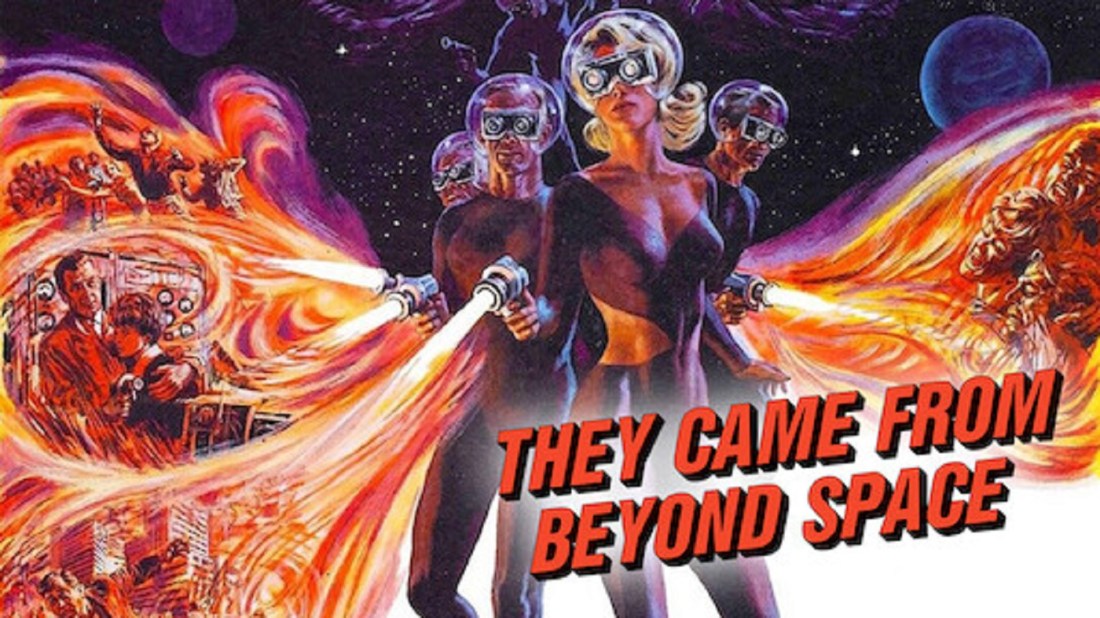
Here Lies Amicus is the brainchild of Cev Moore and is an in-depth review of the films of legendary Sixties and Seventies exploitation studio Amicus. Run by Milton Subotsky and Max J Rosenberg, Amicus were one of Hammer Films’ main rivals and often fished in the same pool of actors and filmmakers as the people at Bray Studios. Probably best remembered now for their horror anthology movies like Tales from the Crypt and Asylum, Amicus also made pop music vehicles, thrillers and also two low budget science fiction movies: The Terrornauts and They Came From Beyond Space. This double bill was the subject of the October 2022 episode Amicus in Outer Space!
To be honest I thought I had mentioned this at the time but looking back through my blog I shamefully omitted to post about it. I know Cev through our mutual association with the Official Talking Pictures TV podcast, where he also has an interest in reviewing the channel’s fantasy output. He kindly provided some useful background info on the two films, in addition to us re-watching them. Whilst neither film is great, they both have a lot of interest in them. The Terrornauts is more ambitious, featuring scientists being abducted and taken to an ancient alien space station to defend the solar system from an invasion fleet, but consequently it falls so much further, betrayed by wooden dialogue and bargain basement model work. They Came from Beyond Space is another variant on the alien possession trope, set in the Home Counties and having more than a touch of The Avengers about it. Unfortunately, the thin plot is padded out with a lot of busywork about infiltrating the aliens’ base and has a dull lead in Robert Hutton. Nevertheless, I had an excellent time discussing both titles with Cev.
Moving bang up to the date with a podcast only released yesterday – I Don’t Do Sci-Fi is the spiritual sequel to last year’s impressive Tripodscast, from the same team of Dani Wray, Rebecca Wray, John Isles and Kevin Hiley. It’s a conversational podcast based on the concept that Dani is an SF novice who in the past has had little exposure to a lot of the genre. So her friends are showing her examples of futuristic fiction, starting with the cult BBC drama Star Cops. Most episodes will feature a special guest and kindly I was invited to be part of the debut. Recording in person is always fun and we had a lively time revisiting the series which I covered in my own podcast last year.
I like to mix it up on the Very British Futures podcast. After the jolly, lightweight Dominick Hide plays we plunge into the pitch black dystopia of the BBC’s harrowing TV play Nineteen Eighty-Four. Based on George Orwell’s famous prophetic novel, this is ambitious drama brought more lustre to Nigel Kneale and Rudolph Cartier reputations, and remained a high point of Peter Cushing’s career.
The story is set in a futuristic austere Britain where the government is led by the IngSoc (English Socialism) party, headed by a man known as Big Brother. The Party seeks to control every aspect of people’s lives, including their thoughts, emotions, and behaviour. Winston Smith (Peter Cushing) is a low-ranking member of the Party who works in the Ministry of Truth, where he is responsible for altering historical records to conform to the Party’s version of reality. Despite being a loyal member of the Party, Winston is secretly unhappy with the oppressive regime and begins to rebel against it. He begins a secret affair with Julia (Yvonne Mitchell), a party member from the Fiction department. Together they become involved with a group known as the Brotherhood, which is rumoured to be a group of rebels who are plotting against the Party. However the Brotherhood is actually a myth created by the Party to lure out and eliminate any potential dissenters. Despite his efforts to rebel against the Party, Winston is captured and tortured until he fully conforms to their ideology. The novel ends with Winston being released back into society, fully loyal to the Party and completely brainwashed.
Writers Andrew Scott Roe-Crines and John Isles return to the show to join me in discussing the messages of the book and strengths of this television play. Find out about what the papers said, how the IngSoc party operates and the nightmare of Newspeak.
Now I am starting work on the next episode, about ITV’s Chocky trilogy.
Time travel is a dangerous business, not only for what effect changes in the past might affect, but the lure of nostalgia for a seemingly more exciting, more authentic world. A temptation which young Dominick Hide cannot resist any longer. He’s a time travelling historian from a future where life is peaceful and advanced, but most records of the past have been erased by an unknown catastrophe. His curiosity about the wild world of 1980 leads to an adventure which changes his life and that of Jane, a boutique shopowner with whom he falls in love, despite being married to Ava in his present.
Play for Today is generally remembered for its dramatic socially conscious dramas, yet over the years it has featured several notable comedies such as Mike Leigh’s Nuts in May and Jack Rosenthal’s Bar Mitzvah Boy. In fact one of its most successful and beloved installments was a science fiction romantic comedy The Flipside of Dominick Hide. In this episode, we analyse this play and its sequel, Another Flip for Dominick.
Making a welcome return visit for this episode are the warm and witty Tim Reid and Charles Auchterlonie, the hosts of The Randomiser, a podcast reviewing Doctor Who old and new, as well as other British cult TV. Hope you enjoy this one.
You can listen to Very British Futures on all the major podcast platforms, or online at Anchor.FM
It’s been longer arriving than I hoped but Season Two of my podcast Very British Futures is finally taking flight. I’ve found a better way of planning my time, and so I’ve been able to invest some energy into editing my recordings from the last few months.
So first released blinking into the online world is our discussion of The Aliens, E4’s 2016 drama with blackly comic moments, set in a world of human and alien drug dealers, ghettoised resentful alien immigrants and one hapless protagonist who keeps trying to do the right thing but generally just digs himself deeper into trouble.
It has a marvellous cast of people who were just getting recognised for their talent, including Michaela Cole (I Will Destroy You), Jim Howick (Ghosts) and Michael Socha (Being Human) and Michael Smiley (Kill List) and was produced by a lot of the same team responsible for Misfits.
This is also best produced episode so far, thanks to the technical brilliance of Kevin Hiley (Tripodscast) and being the first to be recorded in an actual room instead of online. I was joined by two guests from Tripodscast: Rebecca Wray and Dani Wray. Both of them were excellent and had plenty of fascinating observations about the show and its characters. Look out for their forthcoming new series with John Isles I Don’t Do SF in the new year.
You can listen to the episode at Anchor FM or on all the major podcast platforms. You can also check its dedicated page at my new website for the podcast which also has links for further reading, including the original E4 website which contains a lot more background information about the fictional history of the aliens’ arrival in Britain. For the first season I also put the episode up on this blog as a downloadable MP3. I’ve decided to stop that for season two, partly to cut down on housekeeping, and also to hopefully encourage more listeners to the podcast platforms and build up the podcast’s official stats. If you would like to download a file to listen to offline, may I suggest checking out the episode’s page at Spreaker, which has a download option.
Hope you enjoy this episode. More coming soon, continuing with The Flipside of Dominick Hyde.
I always enjoy recording podcasts, either my own or as a guest. September is turning into a busy month for me. First off is the second part of my interview for The Time Scales YouTube channel. Greg continues our conversation with questions about writing pantomimes, Bolton Little Theatre, Will Hadcroft’s Fine Line story The Chattath Factor, promoting yourself on social media, taking rejection, and the future of Doctor Who. You can watch Part Two here and I hope you’ll find it interesting. Greg and his wife have done a great job creating a programme out of our lengthy, pleasant conversation.
You might remember The Randomiser from previous mentions, a brilliant Doctor Who podcast featuring my old friends Tim Reid and Charles Auchterlonie. It’s a chat show where the two of them debate a story chosen at random, alongside several mini-features like “No complications”, finding magic moments of greatness and naffness in the long-running programme. The latest episode is out now and I had the pleasure of being their special guest for the the second time. We talked about The Faceless Ones, the recent Star Trek The Motion Picture cinema re-release, Bob Baker and Dave Martin’s fascinating children’s drama King of the Castle and held a tribute to the much missed Bernard Cribbins. I only hope we did justice to him. You can listen to Just looking for Wombles, officer on their Anchor.fm website or find them on all the major podcast platforms.
Several fun news items to report on today. My old friend Will Hadcroft has achieved one of his personal ambitions (and mine too someday) of having an official Doctor Who story released. The Resurrection Plant is being released on CD and download by the BBC and Penguin Books on 4th August 2022. It features the Second Doctor (as played by Patrick Troughton), together with Jamie and Zoe and is read by Frazer Hines, who not only played Jamie in the television series but in recent years has been acclaimed for embodying the Second Doctor in new adventures for Big Finish. Here’s the description:
The TARDIS brings its occupants to Calico Three, an Earth-like planetoid where industrial foundries are worked alongside sophisticated technology. The Doctor is staggered to learn about the Resurrection Plant, which re-births anyone mortally wounded in the line of work. While Jamie is put to work in the foundry, Zoe and the Doctor investigate the Plant – but when the machine goes terribly wrong, they must work with the locals to combat a horrifying monster. The Doctor also uncovers a shameful secret that, for him at least, hits close to home.
Will’s been on the publicity trail for his audiobook and was recently extensively interviewed by Greg for the YouTube channel The Time Scales. He’s also just guested alongside myself on The Folklore Podcast.
Hosted by author, lecturer and folklore expert Mark Norman, The Folklore Podcast is a long running series which “…began in the summer of 2016, after it became apparent that there were very few podcasts which dealt with folklore in an accessible and yet informative way. Most were of the storytelling, ‘campfire’ variety. The ethos of this podcast is simple. To bring world-class experts in the fields of folklore and its associated areas of interest to a wide audience, completely free of charge.” (taken from the official Folklore Podcast website)
Will mentioned my name to Mark after being invited on to talk about the crossovers between Doctor Who and folklore. What followed was an entertaining hour and a bit of conversation between the three of us, looking at the ways the programme had used not just British myths but legends of other cultures too, such as China and Greece. A theme developed that in an almost Scooby Doo fashion, whatever was introduced as supernatural was almost inevitably unmasked as alien by the end of the story. We gave special attention to The Daemons, The Awakening, The Curse of Fenric and The Shakespeare Codex. Our debate moved into the show’s educational remit, its treatment of religion and the often thin line between genuine folk stories and cinema inventions. I enjoyed guesting a lot, and you can listen to the finished episode on your favourite podcast platform or directly from the website.
Speaking of podcasts I have recorded two conversations so far, covering The Aliens and The Flipside of Dominick Hide and I am currently editing them for hopeful release later this month. So watch this space.
I am pleased to say that I have graduated from Manchester Metropolitan University after four years, having achieved a First Class honour in BSc Digital Technology and Solutions Apprenticeship.
Finally, I have begun work as the sound designer/operator on Bolton Little Theatre’s forthcoming production of ‘Allo ‘Allo by Jimmy Perry and David Croft. Based on the hit BBC sitcom it will be running from 12th to 17th September and you can book tickets now. This includes me using QLab extensively for the first time and to support this and future web design work I’ve bought my first MacBook after a lifetime of PC use.
Last week, the tenth and final episode of The Tripodscast was released. It’s fittingly one of their best episodes, a lively discussion of some of Samuel Youd’s (aka John Christopher) other novels, interspersed with an interview with his children Nick and Rose. They now run The SYLE Press, a small imprint dedicated to putting their father’s work back into print. It’s an interesting conversation, not only for what it reveals of the author in his private life, but as a picture of what is involved in being an independent publisher. Samuel Youd wrote in great many genres over his career, from gothic romance and family sagas to more literary portraits of the time he was living in.
You can listen to this episode and the rest of the series on your favourite podcast app or at https://anchor.fm/the-tripodscast Of course I am biased but I think it’s a quality mini-series for anyone wanting to hear more about the books or the TV series.
It’s been fascinating to watch this podcast develop in confidence and ambition. Initially intended as discussion podcast between three friends looking at the SF series The Tripods Trilogy in books and TV, it has developed into an in-depth examination of Samuel Youd, the making of the television series and its ongoing fandom. It’s scored interviews with all four lead actors, some of whom have rarely been interviewed before, plus the series producer and television veteran Richard Bates, whose career includes script-editing or producing The Avengers, The Darling Buds of May and A Touch of Frost. Writer Will Hadcroft, was another excellent contributor, not only as a viewer but as someone who corresponded with and met Youd.
You’ll be hearing from John Isles, Rebecca Wray and Dani Wray in forthcoming episodes of Very British Futures.
Recently I had the pleasure of taking part in a Talking Pictures TV podcast special about the legacy of the legendary television and film production company ITC. Hosted by comedian and writer Mel Byron, I was part of a panel of guests including ITC historian and writer Jaz Wiseman, and Cevin Moore, the podcaster behind Here Lies Amicus and House of Hammer. Jaz was our focal point, as the author of several books and many articles on ITC including a recent involvement with The Persuaders! Take 50 bluray and book box set. It was an enjoyable hour of conversation about what made the ITC formula such a success and about its lynchpin – Lord Lew Grade.
ITC began in the early days of British commercial television, and from the start its founder Lew Grade wanted to make exciting, glamorous dramas on film which could compete directly with the output of Hollywood. His first success was The Adventures of Robin Hood with Richard Greene, quickly followed by several more swashbucklers, plus a memorable spy series with Patrick MacGoohan Danger Man, before landing on the series which in many ways defined the ITC formula – The Saint. Now showing on Talking Pictures TV from the beginning, including the rarely shown black and white episodes, and available for a short time online at their streaming service https://www.tptvencore.co.uk/
The Saint caught the imagination of both UK and the all important USA market, and made an international star of Roger Moore. From this series came a long succession of handsome, fashionably dressed crimefighters including The Persuaders!, The Adventurer, Jason King, Man in a Suitcase and more. Meanwhile Lew Grade’s remarkable instinct led him to invest in Gerry Anderson, a young producer with an idea for a new kind of family puppet show. Thus Supercar led on to a whole universe of SF shows including the iconic Thunderbirds. Not to mention countless TV variety specials, comedies, and movies. ITC showcased the best of the British film industry just when it really needed a boost, as cinema attendance dwindled and television audiences swelled.
Whilst some critics carped on the production line mentality of the ITC formula, and its constant focus on winning American sales, the success of the business and Lew Grade’s willingness to invest in a hunch, also allowed for remarkably innovative shows, such as The Prisoner, Sapphire and Steel and The Muppet Show.
The carefully preserved ITC library means that many of its shows are still being shown regularly in the UK and around the world, with many getting beautifully restored high-definition bluray sets. The legacy continues and in time I’ll be taking a closer look at some of it in the Very British Futures podcast. Meanwhile the Talking Pictures TV podcast rolls on, with more from me soon on The Outer Limits.