No time for a catchy post title I’m afraid but I’ve got a few bit of news about myself and my friend Rik Hoskin.
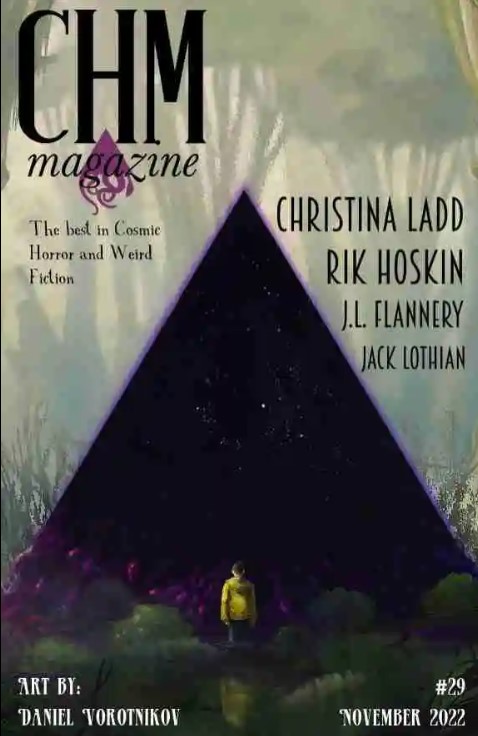
Rik first! His latest short story has been published in Cosmic Horror Magazine, entitled The Invincible. It is available in print or digital format. Cosmic Horror, stories in which humans encounter vast, terrifying and often uncaring creatures or forces is intrinsically linked with the works of HP Lovecraft and his alien elder gods. These beings often act through unknowable motives, have dimensions which the protagonists find hard to comprehend and there is often a theme that we mortals almost without the monsters being aware of them. Aside from Lovecraft, another favourite of mine from this genre is The House on the Borderland by William Hope Hodgson. More recently, it has been interestingly suggested that the award-winning television series of Chernobyl had horror overtones and could be an example of a new kind of cosmic horror, with radiation as the uncaring, unstoppable monster.
Rik has also given a excellent video interview to a Spanish website dedicated to Brandon Sanderson’s Cosmere universe. Talking to Tamara of cosmere.es Rik talks about adapting Sanderson’s manuscript White Sand into a series of successful graphic novels, working on other Brandon Sanderson properties, and his working process. He also talks about his career, including Deathlands, Disney comics, Game of Khans and his own original novel Bystander 27.
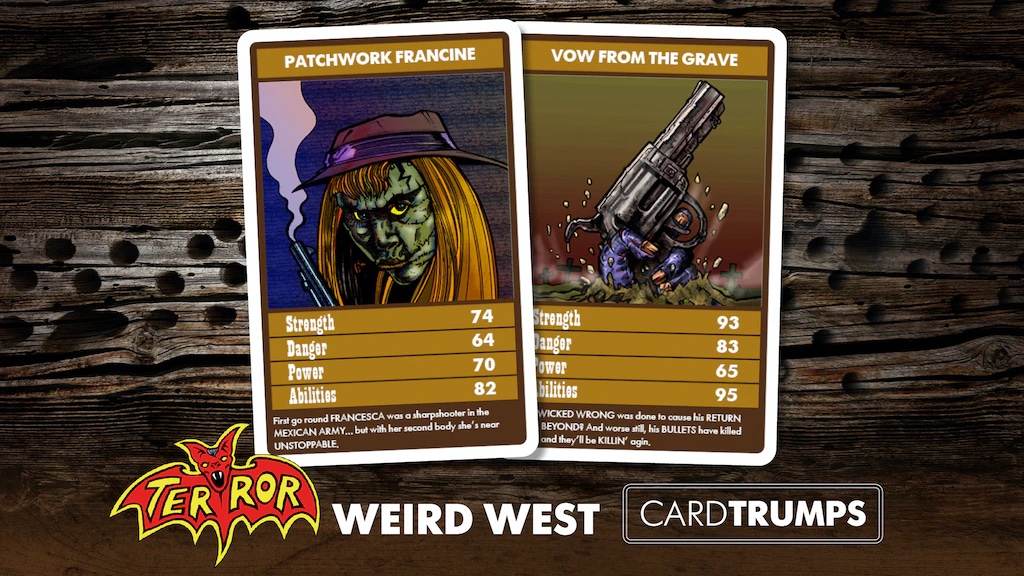
The wild west is one of the USA’s greatest creations. Based on historical fact, but the legend, landscape and characters have grown into a defacto fantasy kingdom. One that is big enough to hold many kinds of stories, from simple white hat/black hat children’s adventures, to gritty period drama to out and out horror. That’s where Card Trumps enter the picture with their latest pair of card games – Weird West – a easy to play Trumps style game featuring real life personalities mixed with hideous monsters, each realised with lurid artwork from Tim Brown and droll descriptions from Rik Hoskin.
Horror and the sinister works well in the West because it is already a harsh environment, where death can be sudden, a character can be isolated away from help, and it’s believable that there are unknown regions, or even bizarre creatures like Bigfoot. A theme of horror is the modern world coming up against ancient terrors and evils that its characters are trying to put behind them. The colonisation of the west is often that classic drama of an old life fighting back against a modern European civilisation with new kinds of danger. Putting monsters from the old country like vampires and zombies into the land of Stetsons and Colt 45 Peacemakers has novelty appeal too. Most of my references are movie based and amongst notable entries in this sub-genre are the anthology Grim Prarie Tales, Dead Birds, and Ravenous. There was also DC’s western occult hero Jonah Hex, television cult series Wild Wild West (forget the movie) and many of the works of horror author Joe R Lansdale.
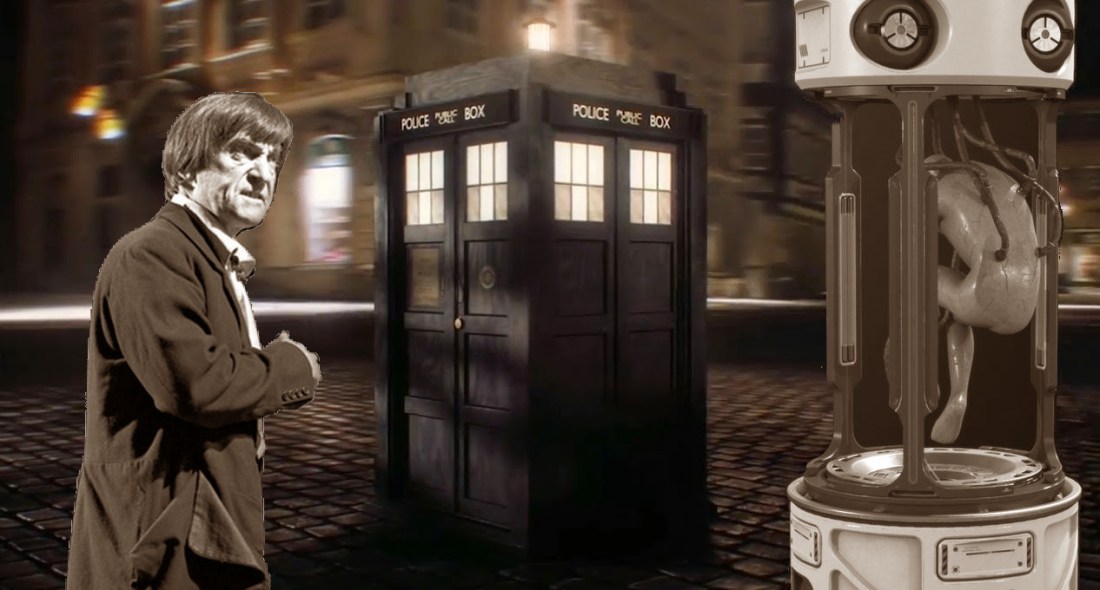
That tank looks kinda familiar
Long time readers of this blog will already be familiar with the work of Hoskin and Brown from their previous packs of Horror Cards, inspired by Top Trumps infamous Horror packs released in the Seventies. They’ve been extremely well received and this latest range has already achieved its Kickstarter minimum but there’s still time to pledge money and get hold of your own sets and some attractive stretch goals. I was sent some preview samples and can confidently it is well up to the standard of their previous titles.
I always enjoy recording podcasts, either my own or as a guest. September is turning into a busy month for me. First off is the second part of my interview for The Time Scales YouTube channel. Greg continues our conversation with questions about writing pantomimes, Bolton Little Theatre, Will Hadcroft’s Fine Line story The Chattath Factor, promoting yourself on social media, taking rejection, and the future of Doctor Who. You can watch Part Two here and I hope you’ll find it interesting. Greg and his wife have done a great job creating a programme out of our lengthy, pleasant conversation.
You might remember The Randomiser from previous mentions, a brilliant Doctor Who podcast featuring my old friends Tim Reid and Charles Auchterlonie. It’s a chat show where the two of them debate a story chosen at random, alongside several mini-features like “No complications”, finding magic moments of greatness and naffness in the long-running programme. The latest episode is out now and I had the pleasure of being their special guest for the the second time. We talked about The Faceless Ones, the recent Star Trek The Motion Picture cinema re-release, Bob Baker and Dave Martin’s fascinating children’s drama King of the Castle and held a tribute to the much missed Bernard Cribbins. I only hope we did justice to him. You can listen to Just looking for Wombles, officer on their Anchor.fm website or find them on all the major podcast platforms.
Recently I’ve had the pleasure of being interviewed by Greg for his Youtube channel The Times Scales, a place dedicated to Doctor Who. I’d originally planned to try and keep to a disciplined hour, but we ended up talking for nearly three, so the interview is being released in two halves. You can watch part 1, about being a fan of the classic series, thoughts on the so-called Wilderness Years, and the joy of its mainstream success when it returned. We also talk about my BBV productions, Audio Visuals and my own fan audio stories. The second half will continues with more about Westlake Films, my pantomimes, the future of Doctor Who and the excellent writing advice of Georgia Cook.
We had met online via Will Hadcroft, whom Greg had already interviewed as part of Will’s promotion of his BBC audiobook The Resurrection Plant. Greg was interested in covering my journey as a creative too, so we arranged a date and had an enjoyable conversation. Greg proves to be an excellent interviewer and I think he’ll only get better. You can watch part 1 now below and I hope you get something good out of it. If you have any questions yourself as a consequence, feel free to drop me a line here or on Twitter @gazhack.
It’s surprising to realise that Doctor Who has rarely used the Industrial North as a setting. We have seen adventures set in futuristic factories and warehouses, visited the beginnings of the Industrial Revolution in Mark of the Rani and had a few romps into Steampunk. Big Finish has touched on it in The Peterloo Massacre and Industrial Evolution but that landscape of terraced houses, looming smoke-belching factories and municipal buildings that could be found from Birmingham to Newcastle has remained the province of Coronation Street and contemporary drama. So having the Second Doctor, Jamie and Zoe land on the corner of a cobbled street in Will Hadcroft’s The Resurrection Plant feels quite fresh.
Not that this is the actual North of England. In fact the TARDIS has brought our friends to Calico Three, a small habitable planet where the rural colony the Doctor remembers is in the grip of an unexpected mechanisation. What’s more the factories are capitalism run wild, with human workers mere expendable cogs in the machine. But nobody minds because on this planet everyone can be brought back to life thanks to the Resurrection Plant, even if occasionally they change gender along the way. The travellers investigate but are soon captured, just in time for a factory accident to lead to the creation of a terrifying mutation in the newly grown humans.
The author captures the the characters of the regulars extremely well. Patrick Troughton’s Doctor can be hard to capture in print, since so much of his character is in his delivery, but here he’s compassionate, curious, mischievous and has moments of righteous indignation. Jamie and Zoe both get moments to shine on their own too. The story seems to be setting up as a Frankenstein-influenced piece about Ren, a technocrat facing up to consequences of treating his workforce as commodities, together with a fearsome but misunderstood monster, but there’s a second act twist which takes us into another kind of drama, one that I was worried was going to ruin the authentic Sixties atmosphere that Will had recreated. Thankfully he skilfully avoids this.
Fraser Hines has been sharing his enjoyable Troughton impersonation for a while in Big Finish audio plays and books. It’s great to hear it again. Elsewhere he is an excellent reader in general and tells the story with animation and a good pace. Similarly impressive is the soundscape.
There are echoes of The Rebel Flesh and The Quatermass Experiment, but ultimately this is a great original adventure. It tells a story probably too difficult for the television series of the time to realise well, and instead takes advantage of the freedom of prose. An excellent addition to this year’s mini-Troughton celebration, along with the recently released animated recreation of The Abominable Snowmen.
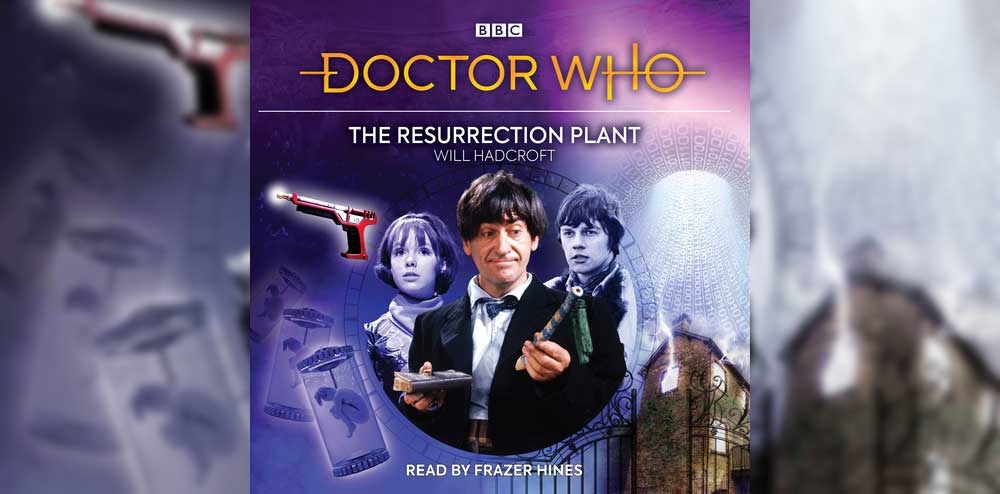
CD cover
Will Hadcroft of course is a friend of mine and its been marvellous to see him achieve the ambition of writing an official Doctor Who story. He’s previously written several novels and many moons ago an adventure for my old fan audios Fine Line, called The Chattath Factor, which has recently been re-released on Youtube. It was a marvellous story to end my fan series on.
Several fun news items to report on today. My old friend Will Hadcroft has achieved one of his personal ambitions (and mine too someday) of having an official Doctor Who story released. The Resurrection Plant is being released on CD and download by the BBC and Penguin Books on 4th August 2022. It features the Second Doctor (as played by Patrick Troughton), together with Jamie and Zoe and is read by Frazer Hines, who not only played Jamie in the television series but in recent years has been acclaimed for embodying the Second Doctor in new adventures for Big Finish. Here’s the description:
The TARDIS brings its occupants to Calico Three, an Earth-like planetoid where industrial foundries are worked alongside sophisticated technology. The Doctor is staggered to learn about the Resurrection Plant, which re-births anyone mortally wounded in the line of work. While Jamie is put to work in the foundry, Zoe and the Doctor investigate the Plant – but when the machine goes terribly wrong, they must work with the locals to combat a horrifying monster. The Doctor also uncovers a shameful secret that, for him at least, hits close to home.
Will’s been on the publicity trail for his audiobook and was recently extensively interviewed by Greg for the YouTube channel The Time Scales. He’s also just guested alongside myself on The Folklore Podcast.
Hosted by author, lecturer and folklore expert Mark Norman, The Folklore Podcast is a long running series which “…began in the summer of 2016, after it became apparent that there were very few podcasts which dealt with folklore in an accessible and yet informative way. Most were of the storytelling, ‘campfire’ variety. The ethos of this podcast is simple. To bring world-class experts in the fields of folklore and its associated areas of interest to a wide audience, completely free of charge.” (taken from the official Folklore Podcast website)
Will mentioned my name to Mark after being invited on to talk about the crossovers between Doctor Who and folklore. What followed was an entertaining hour and a bit of conversation between the three of us, looking at the ways the programme had used not just British myths but legends of other cultures too, such as China and Greece. A theme developed that in an almost Scooby Doo fashion, whatever was introduced as supernatural was almost inevitably unmasked as alien by the end of the story. We gave special attention to The Daemons, The Awakening, The Curse of Fenric and The Shakespeare Codex. Our debate moved into the show’s educational remit, its treatment of religion and the often thin line between genuine folk stories and cinema inventions. I enjoyed guesting a lot, and you can listen to the finished episode on your favourite podcast platform or directly from the website.
Speaking of podcasts I have recorded two conversations so far, covering The Aliens and The Flipside of Dominick Hide and I am currently editing them for hopeful release later this month. So watch this space.
I am pleased to say that I have graduated from Manchester Metropolitan University after four years, having achieved a First Class honour in BSc Digital Technology and Solutions Apprenticeship.
Finally, I have begun work as the sound designer/operator on Bolton Little Theatre’s forthcoming production of ‘Allo ‘Allo by Jimmy Perry and David Croft. Based on the hit BBC sitcom it will be running from 12th to 17th September and you can book tickets now. This includes me using QLab extensively for the first time and to support this and future web design work I’ve bought my first MacBook after a lifetime of PC use.
Last week, the tenth and final episode of The Tripodscast was released. It’s fittingly one of their best episodes, a lively discussion of some of Samuel Youd’s (aka John Christopher) other novels, interspersed with an interview with his children Nick and Rose. They now run The SYLE Press, a small imprint dedicated to putting their father’s work back into print. It’s an interesting conversation, not only for what it reveals of the author in his private life, but as a picture of what is involved in being an independent publisher. Samuel Youd wrote in great many genres over his career, from gothic romance and family sagas to more literary portraits of the time he was living in.
You can listen to this episode and the rest of the series on your favourite podcast app or at https://anchor.fm/the-tripodscast Of course I am biased but I think it’s a quality mini-series for anyone wanting to hear more about the books or the TV series.
It’s been fascinating to watch this podcast develop in confidence and ambition. Initially intended as discussion podcast between three friends looking at the SF series The Tripods Trilogy in books and TV, it has developed into an in-depth examination of Samuel Youd, the making of the television series and its ongoing fandom. It’s scored interviews with all four lead actors, some of whom have rarely been interviewed before, plus the series producer and television veteran Richard Bates, whose career includes script-editing or producing The Avengers, The Darling Buds of May and A Touch of Frost. Writer Will Hadcroft, was another excellent contributor, not only as a viewer but as someone who corresponded with and met Youd.
You’ll be hearing from John Isles, Rebecca Wray and Dani Wray in forthcoming episodes of Very British Futures.
Hope you have had a Happy Easter. I’m delighted to spread the word that Rik Hoskin and Tim Brown, the creators of the Terror Trumps card games I’ve talked about before on this blog, have just launched a new Kickstarter campaign for Fantasy Trumps.
Set in the medieval fantasy kingdom of Talamander, the 36 cards depict heroes, monsters, wizards, fare folk and their kin. All illustrated in the glorious retro style of the previous Terror cards and featuring Rik’s witty mini-bios. Not only that but they’re compatible with the earlier card games too.
Fantasy Trumps Promotional Video
Their first two Kickstarter campaigns were a great success and I’m wishing them all the best for this third release. You can learn more about the game and offers for supporters by visiting their Kickstarter page.
Recently I had the pleasure of taking part in a Talking Pictures TV podcast special about the legacy of the legendary television and film production company ITC. Hosted by comedian and writer Mel Byron, I was part of a panel of guests including ITC historian and writer Jaz Wiseman, and Cevin Moore, the podcaster behind Here Lies Amicus and House of Hammer. Jaz was our focal point, as the author of several books and many articles on ITC including a recent involvement with The Persuaders! Take 50 bluray and book box set. It was an enjoyable hour of conversation about what made the ITC formula such a success and about its lynchpin – Lord Lew Grade.
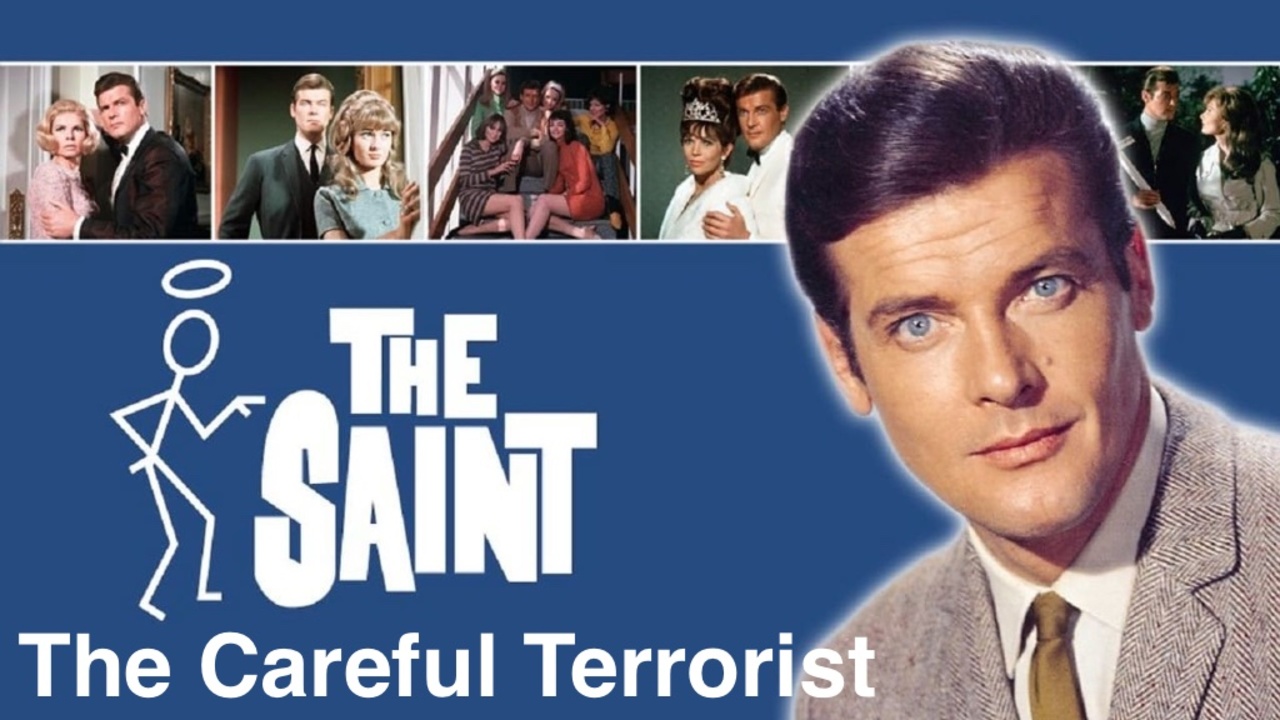
ITC began in the early days of British commercial television, and from the start its founder Lew Grade wanted to make exciting, glamorous dramas on film which could compete directly with the output of Hollywood. His first success was The Adventures of Robin Hood with Richard Greene, quickly followed by several more swashbucklers, plus a memorable spy series with Patrick MacGoohan Danger Man, before landing on the series which in many ways defined the ITC formula – The Saint. Now showing on Talking Pictures TV from the beginning, including the rarely shown black and white episodes, and available for a short time online at their streaming service https://www.tptvencore.co.uk/
The Saint caught the imagination of both UK and the all important USA market, and made an international star of Roger Moore. From this series came a long succession of handsome, fashionably dressed crimefighters including The Persuaders!, The Adventurer, Jason King, Man in a Suitcase and more. Meanwhile Lew Grade’s remarkable instinct led him to invest in Gerry Anderson, a young producer with an idea for a new kind of family puppet show. Thus Supercar led on to a whole universe of SF shows including the iconic Thunderbirds. Not to mention countless TV variety specials, comedies, and movies. ITC showcased the best of the British film industry just when it really needed a boost, as cinema attendance dwindled and television audiences swelled.
Whilst some critics carped on the production line mentality of the ITC formula, and its constant focus on winning American sales, the success of the business and Lew Grade’s willingness to invest in a hunch, also allowed for remarkably innovative shows, such as The Prisoner, Sapphire and Steel and The Muppet Show.
The carefully preserved ITC library means that many of its shows are still being shown regularly in the UK and around the world, with many getting beautifully restored high-definition bluray sets. The legacy continues and in time I’ll be taking a closer look at some of it in the Very British Futures podcast. Meanwhile the Talking Pictures TV podcast rolls on, with more from me soon on The Outer Limits.
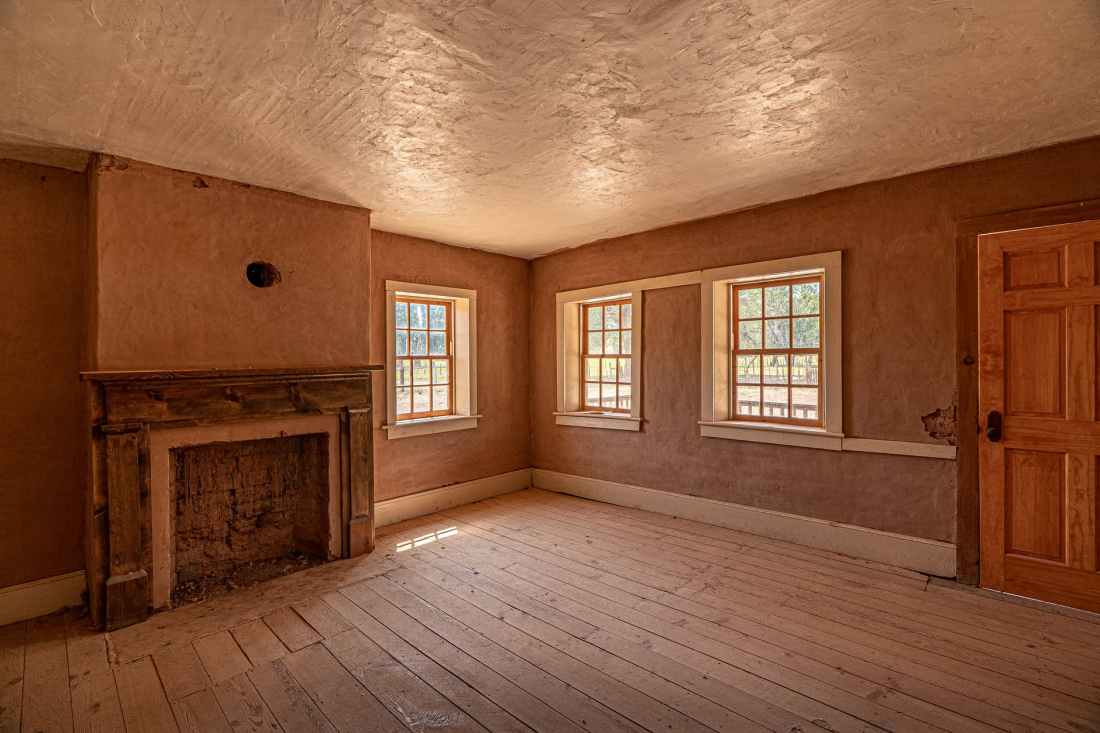
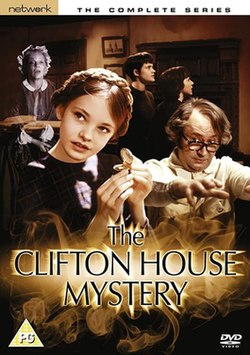
Network continue their quest to release the obscurest shows from British television’s past. I’m fairly knowledgeable about cult TV but I’ll admit I had never heard of The Clifton House Mystery until I received it as a Christmas present. One of a series of children’s supernatural dramas produced by HTV in the Seventies and it would seem the most obscure. Is it a lost gem or a forgettable turkey?
Conductor Timothy Clare, his wife Sheila and his three children Jenny, Steven and Ben move into a large detached house in Bristol. They briefly meet its previous inhabitants, the elderly Mrs Betterton and her granddaughter Emily, but she seems oddly anxious to leave a house she has lived in most of her life. Emily meanwhile tells Jenny in secret to look out for “the Grey Lady”. Steven is inexplicably drawn to buy an old Victorian soldier’s helmet being sold at the house auction. As the family being to settle in, a series of supernatural events afflict them. Objects fly out of their hands, Steven sees a screaming man’s face in the helmet and Jenny does indeed meet a ghostly elderly woman. After a dinner party for Timothy’s prospective American agent goes frighteningly wrong, the family turn to an amateur ghost hunter Milton Guest for help.
Watching The Clifton House Mystery today, the first aspect that struck me was the almost complete lack of any emotional sub-plot for the protagonists. If this was being made today, there would definitely be a link between the emotional health of the family and the hauntings. Perhaps friction between the parents who seem rather caught up in Timothy Clare’s career and their neglected children? Or teenage growing pains for Jenny being linked to poltergeist activity. Or generally the lack of any obvious affectionate behaviour between anyone. Then there is Milton Guest, a middle-aged apparent bachelor, who admits he’s never seen a ghost, even though he lectures on them. Here’s a character who could have been portrayed as a rather tragic or suspicious, like George Tully in Sapphire and Steel, but instead is almost immediately taken at face value after a few polite protests. But all that is left deep down in sub-text in favour of plot exposition and the most straightforward of reactions to everything from the haunting to the state of the house.
Simply because this is a children’s drama does not automatically prevent it from being scary. Executive producer Patrick Dromgoole had previously overseen such memorable teatime chillers as Children of the Stones and King of the Castle, and would go on to produce Robin of Sherwood in the Eighties. All these programmes had great atmosphere and memorable moments of fear. But here is a series that seems to actively pull back from anything genuinely scary. It’s two best horror moments, the ghostly screaming face, and later a moment when Jenny walks into her brothers’ bedroom to find the Grey Lady standing watching them, who then turns to look directly at her, are cliffhangers which are promptly cut away from, with no real follow-up. Mostly the story plods through its six episodes, steadily building up its story with no real urgency. The family might be disturbed and inconvenienced by the haunting, but there’s little real threat.
This series belongs to that sub-genre where the ghosts act as a window into history, rather than being malevolent creatures. In this case the children and the audience learn about the Bristol riots of 1831, when 4th and 13th Dragoons were summoned by the mayor to quell a mob which had laid siege to the city hall whilst protesting about their lack of representation in parliament. The Dragoons had eventually charged the crowd resulting in 4 deaths and over 80 wounded.
Playing ghost hunter Milton Guest, Peter Sallis is the only really recognisable face in the cast, and he delivers another one of his affable Yorkshireman performances. The four children all give those kind of stage school performances that you often find in children’s television, competent but not very naturalistic. Probably the best scenes of the series are actually in the first episode before the hauntings start, as a group of nosy, gossipy locals and the family pour over the contents of the house auction. At this point the show feels as though it could go into Jack Rosenthal territory, before the main fantasy thread appears.
The Clifton House Mystery was co-written by Harry Moore, a writer and producer often associated with Sherlock Holmes related dramas, as well as another children’s ghost series The Georgian House. His co-writer was Daniel Farson, a great-nephew of Bram Stoker, the creator of Dracula, and best remembered as British television’s first onscreen investigative journalist.
The only extra on the DVD is a gallery of some publicity and set photos of the cast. I love the way Network are releasing so much vintage television on DVD, obscure discoveries as well as series which already have a fandom. But not everything vintage is automatically great and The Clifton House Mystery is nowhere near as interesting or stylish as other supernatural titles as Sky, Shadows, or Sapphire and Steel. Give this one a miss unless you are a completest like me.