Go Ape! Or Get Your Stinking Paws Off My DVD Boxset

go_ape

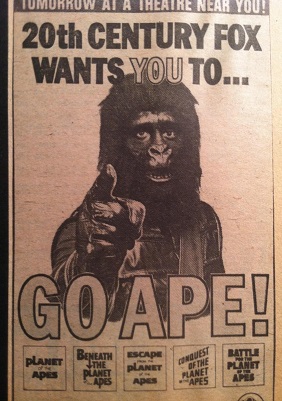
I am a terrible hoarder of unwatched DVD boxsets. It’s a modern blight of our affluence. So this year I’ve been doing my best to reduce the clutter on my DVD shelves and that has led me to this six disc collection in an orange slipcase. Watching the five Apes movies in order for the first time I’m struck by how good the continuity is, especially considering that most of the films were not planned with sequels in mind. Little details like reusing the design of the spacecraft throughout the films mean a lot because I like my film series to fit together into one world.

Planet of the apes (1968)

The opening half hour is already visually striking, even before the apes appear. The spaceship crash is ingeniously created and because it is shot from the ship’s POV it hasn’t dated. Once the astronauts are on the surface there’s an emphasis on their tiny figures in a large unforgiving landscape. Taylor is a well-conceived protagonist who’s a bit more interesting than the average straight-arrow hero. He’s confrontational, cynical and self-reliant, but also intelligent, capable, passionate and ultimately concerned for the individuals around him, even if he doesn’t entirely respect them. I also approve of the way he doesn’t go “on a journey” to become a cuddlier, more sensitive man. He survives and achieves a kind of victory by the end.
Watching the film again, I’m impressed with how balanced its components are. It’s a satisfying action adventure, a witty satire on Western society, in particular race, class and religion, and it’s a meaty science fiction concept too. Seeing ape versions of environments like zoos and museums is unsettling. A definite droll highlight is the funeral service Taylor interrupts, with the priest eulogising that the deceased “never met an ape he didn’t like”, unconsciously quoting cowboy star Will Rogers. There’s a couple of terrific horror moments too, the gorillas posing for a photo over a pile of dead humans, and the later discovery of a stuffed Dodge in the museum.
The impact of John Chamber’s ape prosthetics cannot be under-estimated, a great melding of nature observation and theatricality. The apes are realistic enough to be convincing, whilst having faces that convey recognisable human qualities, such as the aristocratic orang-utans. Jerry Goldsmith’s marvellous and imaginative music score is another big factor, increasing the sense of Taylor’s alienation and the peril of the fight scenes.
Noticeably absent from this first film is the theme of gorilla militarism that becomes a much bigger motivation in the series later. Here the gorillas are simply straightforward blue collar workers.
Zira’s changing relationship with “Bright Eyes” as she names Taylor is cleverly written and played. Whilst always sympathetic, at first she treats him very much as an amusing pet. Later she has a moment when she’s resisting the idea of him being an equal, before accepting him as a person and in their last scene actually kissing him (clearly shown as a sign of affection rather than attraction take note).
Although its ending is a well-known part of pop culture, and in fact spoiled by the DVD box art, seeing it in context the moment is still chilling. I think it’s partly because of the lack of music, just the sound of the indifferent waves upon the beach, partly the way Charlton Heston sells it, and perhaps partly in the emotion of the glass painting itself, thanks to artist Emil Kosa.

Beneath the Planet of the Apes (1970)

It’s slightly irrational but with its mutants with psychic powers, an underground city, a more obvious antagonist in General Ursus and a new emphasis on action and militarism, this first sequel feels much more of a conventional science fiction movie than the original. To me is one of the main reasons why this sequel is inferior to the original. Another problem is that there is an inbuilt feel of repetition in the first half of the movie, as Brent undergoes the same series of discoveries that Taylor did, not to mention the fact that with the addition of a beard, James Franciscus has been cast as a knock-off Charlton Heston. That’s a shame really because Franciscus is fine in the lead and handles the action convincingly, but because of his cloned look, the film is continually reminding you that he isn’t Chuck.
There are some impressive scenes. The mass unmasking of the mutants is a great set piece. The gorilla army on the march and the mass hallucination they are attacked by is an unexpectedly vivid moment, especially the statue of the Lawgiver weeping blood. Ruined New York is not as poignant as the statue because the melted buildings give the whole place more of a fantastical atmosphere and thus less recognisable.
The film’s story may be darker but it also feels shallower. The first film touches on all kinds of modern concerns whilst this one is a cruder anti-war, anti-bomb parable. It also mostly misses the humour of its predecessor, aside from Cornelius and Zira pretending that he struck her, in order to deceive Zaius.
It’s quite brave move to seemingly finish the series so definitely but in the coming years that knowledge of the destruction of Earth does lend an extra frisson to the further sequels. That last line from some unknown omnipotent narrator is portentous yet I find it quite effective, a moment of very literary SF.

Escape from the Planet of the Apes (1971)

In retrospect it is such an obvious idea, reverse the journey of Taylor and make some intelligent apes the misunderstood strangers in an alien civilisation. That it works so well and makes this third sequel almost as much fun as the original owes a lot to Roddy McDowell and Kim Hunter and their strong performances. It also benefits from the return of much of the droll humour of the first film, making the fantasy seem much more believable. The sequence where they explore Seventies USA as celebrities is one of my favourite parts of the film and its loveliness only enhances the tragedy of the third act. The scene where they face a congressional enquiry and win the audience over with their wit is another highlight.
It’s a smart piece of continuity that the villainous scientist pursuing the couple is Dr Hasslein, the scientist Taylor was narrating to in the first film. The story is an excellent tragedy. We know from the beginning about Zira’s past as a human zoologist and that sooner or later that is going to catch up with them. Carrying on the mirroring of the first film, their very existence challenges the society they have landed in, and it is almost inevitable they will be imprisoned and killed.
The film’s sympathies are almost completely with the chimpanzee couple, although commendably human society is depicted not so much as actively evil, more misguided and short-sighted. Only Hasslein is unquestionably the bad guy for his hubris in trying to change future history.
Natalie Trundy gets the best of her four roles in the Apes series, as sympathetic zoologist Dr Branton, even though she basically in the role of supportive girlfriend of the human hero Dr Dixon.
I remember the final scene of the young Caesar beginning to talk being quite haunting. Watching it this time, not so much because the looping of the film to make the chimp appear to talk is more obvious to me this time. Nevertheless it is an effective end and the only film in the series to end on a cliffhanger they had already planned to resolve.

Conquest of the Planet of the Apes (1972)

Despite the fact that it often looks more like a made for television movie, thanks to an even lower budget, this is an entertaining if downbeat seventies SF parable. The metaphor about black slavery may be anything but subtle, especially compared to the first film, but it does create some striking scenes in Ape Control as human guards herd crowds of frightened apes about, moving them with cattle prods and whips. Making MacDonald, the apes’ chief supporter amongst the government a black man is also rather obvious, even if Hari Rhodes plays him well.
Roddy McDowell impresses once again by making Caesar noticeably different to Cornelius. Much more aggressive and less humorous. Once a slave he quickly takes on the mantle of the alpha male in a prison block, with a wide streak of cynicism. As a result the studio re-edit of the final scene to make him a peacemaker, rather than a revenger, doesn’t really work. Those final words about treating the conquered humans with justice and fairness ring hollow, especially against a city on fire.
Using the Irvine Campus of California University was a good decision, since the place certainly looks futuristic without the need for too much set dressing. Dressing nearly all the apes in jumpsuits however does lend an air of cheapness to the enterprise and it was no surprise to read that a lot of the futuristic props and sets were recycled from Irwin Allen television productions. It seemed in keeping with the TV feel of much of the film. But the story is brisk and benefits from no gratuitous romantic sub-plot being shoehorned in. If the series had ended here it would have been a satisfying conclusion.

Battle for the Planet of the Apes (1973)

The final film in the original series is not great but it’s not a turkey either, thanks to the care taken to keep the continuity links with the previous films, and the performances, especially Roddy McDowell and more interestingly singer/actor Paul Williams as the optimistic, curiosity-driven orang-utan Virgil. It’s a more hopeful conclusion to the saga, although there remains a shadow that the promised human and ape equality will fail and humanity will devolve into mute hunter gatherers again.
As with the previous film there is something of television movie feel about it all, with lots of recycled props and masks from older films. Aside from the debate about whether the future can be changed or not, after Caesar hears the voice of his father describing it, the plot in this one is shallowest yet. It is essentially a western, with the good ranchers facing gorilla black hats and mutant enforcers from the railroad company. It’s not about themes of racism and nuclear war anymore, it is about captures, escapes and a chimpanzee having to do what a chimpanzee must do.

Planet of the apes (2001)

A misfire on several levels, director Tim Burton’s “reimagining” suffers from not really being about anything more than a nostalgic desire to do an Apes movie with modern technology. The film’s highlight is undoubtedly Taylor’s arrival in Ape City, watching in amazement along with Mark Wahlberg at a culture that is simultaneously non-human but with echoes of our own. The detail in the costumes and implements, drawing on Asian and African influences is beguiling. I feel this is where Burton’s real interest lies, just realising a simian-centric culture.
However neither he nor writers William Broyles Jr, Lawrence Konner and Mark Rosenthal have an idea what story to set in that world. So we get a script that tries to be different for difference’s sake, making the planet definitively alien for example and bringing in genetic engineering, neither of which really adds to the interest. As for the ending, it just doesn’t make any sense tagged on to the end of the story we’ve just watched, let alone having a huge statue of Thade on Earth without any more justification than it’s a surprise.
Performance wise it’s largely a disappointment too. In the role of Taylor, Wahlberg is his usual dull frowning self, whilst Helena Bonham-Carter gives one of her worst performances as Ari, failing to convey any sense of being a non-human and perfunctorily running through her admittedly trite dialogue. In fact only Tim Roth really comes out with any credit, putting in the energy and conveying Thade’s personality with his whole body and movement.
Rather than telling a good adventure tale whilst holding a mirror up to our current culture, this remake is just a succession of sub-plots about characters we don’t really care about, leading to an underwhelming time travel revelation. And it’s a tribute to John Chamber’s original make-up that the ape prosthetics of thirty plus years later do not look significantly better.

I’m going to leave the recent two CGI movies for another time, especially since I haven’t seen Dawn yet. Watching these movies again has been an entertaining experience. Strange to think the Apes movies were the biggest SF movie franchise until Star Wars came along four years later. They were very much films of the restless Seventies, when pre-Star Wars, USA cinematic SF tended to be gloomy and message driven rather than just escapism. The best of the Planet of the Apes series combined that intelligence with good characters and a sense of adventure and Saturday matinee peril.
Santa Claus Conquers the Mayans

For the past few years, my friends and I, under the guise of Westlake Films, have made some kind of comedy video to tie in with Christmas. This year’s production, made despite all kinds of problems and completed against the clock by director/editor Kevin Hiley, is Santa Claus Conquers the Mayans. Written by John Isles, it features a Mancunian Santa and his Chief Elf in a race against time to stop a deadly boardgame from destroying the world. A plan that involves robbery and Mexican wrestling.

As well as helping to make the film in general assistant category, I also make a couple of onscreen contributions, playing a dubious Australian TV historian and providing the opening narration.

You can find out more about Westlake Films and our past work at our website: http://www.westlakefilms.co.uk

Merry Christmas everyone!

Arsenic and Old Lace

arsenic

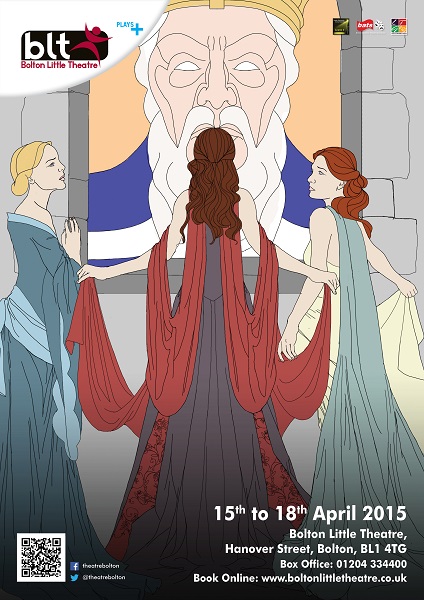
I’m shamelessly plugging my upcoming appearance in “Arsenic and Old Lace”, the classic American black comedy by Joseph Kesselring. I’m playing Dr Herman Einstein, the plastic surgeon and cringing henchman of the fiendish Jonathan Brewster. Armed with a comic German accent, I’ve been part of a hard working cast of actors and technicians at Bolton Little Theater and the rehearsals have been busy but rewarding.

The play is on for seven nights between 6th to 13th of December, tickets are £10 and if you are interested in watching then find out more from: http://boltonlittletheatre.co.uk/whats/arsenic-and-old-lace/

Written in 1939, this brilliantly constructed comedy, has impressively stood the test of time. As a writer I love the script, not just for its tightly designed plot and atmosphere of matter of fact madness, but for some jokes about writers which are still bang on target. Take Office O’Hara, the would-be playwright for whom his policeman job is “just a temporary thing”. “How long have you been a policeman?”, asks Mortimer, “Twelve years”, replies O’Hara blithely. Later on, after boring the room senseless with his hours long pitch, the cop protests, “I know the first two acts are a bit long, but I can’t see what we can leave out!”

It’s a play that combines slapstick of hiding dead bodies with some sharp satire on the hypocrisies of the monied establishment. The Brewster sister are hailed for the good works, but they are shown to be rather prejudiced as well as murderers. Their money and position means that the police treat them with rather too much respect. Although we are a British theater troupe, we are playing with American accents, because somehow the comedy just doesn’t work without them. This play is both timeless, yet fixed to a specific place and time.

Expect some production photos in a little while.

Our First

Unmade bed
Photo by Daria Shevtsova on Pexels.com

I wrote this as entry to a recent flash fiction competition run by Creative Industries Trafford. It’s an attempt to get out of my comfort zone and write something in a completely new area for me – writing explicitly about sex. Hope you like it.

We lie together, side by side now, and I am enjoying our achievement. I slowly pass my hand from her shoulder which still bears the faint imprint of the bra strap, down her side, over the slight curve of her hip, communicating my tenderness. Her eyes are closed. Is that a smile on her lips for me? She makes a contended noise in the back of her throat and I feel a rush of relief. It’s far too warm for in the flat for sheets, leaving me free to see her pale skin, warmed by the tawny light coming through the blinds. I can see the patches that are a rougher pink, the shallow folds of fat around her hips and tummy, which I gently run my fingertips across. Her skin dimples to the pressure of those fingers. All my movements are steady and thoughtful now, no need to play her passionate strong man now, at least not for today. Now I am keen to project another kind of lover. One to hold her, to accept her. My other arm is around her and I have to shift it a little, get more comfortable. The movement stirs her face and she looks into mine.
“Was it what you expected?” she asks, smiling. She seems confident in my answer but there must be some fear there too? We danced for so long on our keyboards.
“No, it was better,” I reply. Of course I do. I want her to feel good, to feel loved. I want to live up to her hopes. I need her to think that I’m that man. My biggest desire for this night.
I move my hand around to her front. She rolls back a little on the peach coloured sheets which add to warmth of the picture, created from this bedroom. We smile at each other as my hand crosses the top of her thigh and finds her cock, now resting, trailed with our stickiness. As I hold its warmth she utters a deep murmur of appreciation, a little bit phony but I appreciate her performance.
This is fun, this sharing. This satisfying building up of each other’s fantasies.

My pitch? Orcs podcasting on Youtube.

A few years ago I wrote a pitch for a Warhammer 40000 anthology called “Fear the Alien”. In case you don’t know, Warhammer 40000 is a huge SF franchise that has grown around a tabletop wargame set in a distant future. A universe where humans, elves, orcs and other races were fighting a never ending war with super technology rather than magic, although this scenario was equally fantastical. I must admit I was not a player or collector of the series, nor had a read any of the earlier books. However it was an open submission window, and after doing some research on various Warhammer fan sites I felt confident enough to pitch my idea and included the sample below. The story was about an orc engineer who fancied himself a filmmaker and who was trying to make a propaganda video.

I think you can guess that I never heard back from the publishers Games Workshop. However recently I came across the sample again and not only still liked it, but I performed it at local open mic evening in Bolton called Georges to a good response. So I thought I would share it here:

A shell exploded above them, illuminating the trooper’s furrowed brows in orange light. He gaped at the foreign looking object in BlastGud’s hands.
“Wot kinda gun izzat?” he asked, his yellow eyes flicking between the Lookbox and his own shoota. His weapon had a huge front barrel leading back into a lump of crudely welded together powerpacks, with a metal frame wrapped in leather strips making up the butt. Before the Mek could answer, the soldier’s eyes had glazed over. BlastGud’s gun was lighter, obviously less powerful that his own and not worth haggling for.
BlastGud raised the Lookbox to his eye. “Iz not gun. Iz Lookbox. New mech.” His thumb pressed the red button. The top of the troopers head was blurringly framed in the viewfinder. BlastGud frowned and squeezed the button until the picture was sharp. Now he had a perfect view of the soldier’s disappearing back. He lumbered forward to keep pace with the ShootaBoyz, who ignored him.
“Can memorise wot you can see. See it again,” he explained. He did a quick pan of the mountain ridge ahead of them, catching two more colourful shell bursts. Then stopped the LookBox and presented the viewer to the trooper.
The orc scowled but nevertheless looked into the viewer. He glanced up and glared at BlastGud, confused for a moment. Then he looked at the mountain range and shrugged.
“See better with mi eyes. Your mech is garbage!” he advised.
BlastGud’s explanation was cut off by a horn blast. Immediately the ShootaBoyz were jostling with each other to find a space on the ridge that looked down into the valley. The signal meant the humans had been spotted entering their patch and everyone wanted to be first to get a shot in. BlastGud raised his Lookbox, drooling a little in excitement. This was what he had come for – combat. Seeing the glorious Boyz in action. Best fighters in the clan, thanks to his shootas.
“There dey are!” shouted Fista, waving his blaster-harpoon kombi. Through the viewfinder, BlastGud zoomed in on a column of marines, cautiously clambering over a rockfall to the far east. One of them seemed to look straight at him.
“WAAAGH! Let ’em ‘ave it!” cried Fista. The air was alive with radioactive beams and streams of hot metal as the Orks poured death into the valley. The clacking, barking, roaring sound of the shootas was wonderfully painful in BlastGud’s ears and he considered adding some kind of mechanism to Lookbox to make it work louder. People would really know he was working then. It would make the film better too. The ground around the humans exploded into a dust cloud. A few shots came out of the brown mist but none reached the ridge.
After two minutes of this Fista howled to them to stop firing. A few minutes later, they did. They peered into the dust as it cleared. To their joy several burnt human bodies were revealed, sprawled on the ground. The Boyz roared in approval. Fista was the first over the ridge, greedy to scavenge the human weapons for himself. BlastGud followed him as he lolloped down the slope. A shadow moved behind the rockpile beyond. Fista’s comrades got one cry of warning out before a column of angry red plasma struck out from a human trooper’s rifle, hitting Fista square in the neck. Instinctively, BlastGud followed the arc of Fista’s severed head as it flew backwards over the ridge and landed with a metallic thump on the rock. He filmed it as it lay there smouldering, wondering if this moment counted as a funny or a feel bad.

On a Cold Martian Night – My first published magazine short fiction

starburst

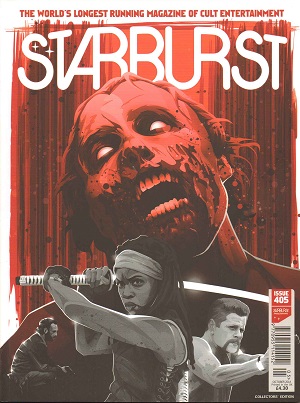
I’m excited to announced that first commercially published short fiction is now out on the newsstand, inside issue 405 of Starburst – the world’s longest running magazine of cult media.

“On a Cold Martian Night” is a sharp little story of the dangers of future colonisation, especially the danger humans bring along with them. Thanks to Rylan Cavell for his moody artwork.

One of the magazine’s requirements is that submitted stories be no more than 2000 words, and it was quite a challenge to hone my original draft of 3000+ words! However I think the painful editing process created a much stronger piece. If you do read it I’d love to know what you think?

Also in this issue is coverage of The Walking Dead, an interview with George R R Martin, a look at Seventies grindhouse cinema, and plenty more about what is going on in the worlds of cinema, books, television and games.

Starburst #405 is available online from http://www.starburstmagazine.com , and also W H Smith, newsagents and specialist SF shops like Forbidden Planet.

Brand new Mercy Thompson comicbook

MercyHopcross01-Cov-Garcia2

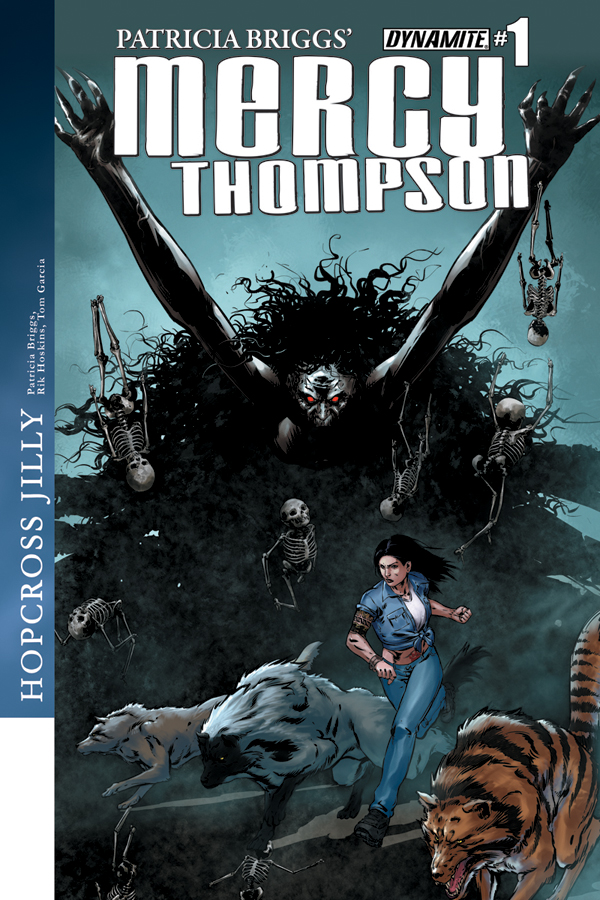
My good friend and fellow writer Rik Hoskin (creator of the Agents of Psyence, whose audio series I produced) has just told me about his latest project. He’s scripting the Mercy Thompson horror comic for Dynamite Publishing, working alongside author/creator Patricia Briggs.  Mercy Thompson is the heroine of a series of popular urban fantasy novels. A young Native American woman who can shapeshift into a coyote, and who’s life inevitably brings her into touch with mysteries and dangers within Washington’s hidden supernatural community

You can view some excellent preview art here:

http://www.bleedingcool.com/2014/07/31/exclusive-first-look-at-patricia-briggs-mercy-thompson-1/

Issue 1 (of 6) can be ordered now and will be out in October.  A full listing of Dynamite’s October titles is here: http://www.dynamite.com/htmlfiles/previews.html

Rik’s been an inspiration to me as a someone who’s made that transition from part-time amateur to full-time professional writer. He’s done it by not only being very good at writing, but by his versatility, working on many children’s comic titles, horror short stories and SF novels, sometimes under pseudonyms.

And someday I will return to the Agents of Pysence audio series. Yes, someday…

About Face

I originally wrote this short piece for my page on the neo:artists website. Originally I had intended it to be the center of a piece of art, full of imaginary sketches from God’s heavenly scribble pad.  As I’m no longer a member it has been taken down but I quite like this one, so I thought I would give it another airing on this blog. I hope you enjoy it too.

From:      God

To:          Uriel

Date:      Sixth Day

Subject:  Re: About the Face

Greetings. Thank you for your update, lots of big ideas there, really thinking outside of the mantle which I like. Frankly I think it’s too late to be making any major changes to Man’s body at this stage, though I agree that the monkeys do find prehensile tails useful. They would be handy for opening doors when Man’s hands are full. Did put a prototype together but ultimately I think a tail spoils the symmetry.

    Now I want you and your team to concentrate on finalising Man’s face. I appreciate that making Man in My image is bit vague when you are trying to map My multi-dimensional infinite measurements on to a three dimensional model, but looking at your designs so far I do not think you are quite there yet.

    Four eyes is excessive, if not paranoid. Don’t forget I’m giving Man FIVE senses including hearing and instinct.  Plenty enough for security. For similar reasons I think the nostrils need a more prominent structure. In some of your drawings Man looks too much like the snake and you know my feelings on THAT matter.

    However let me emphasise the many elements I have been pleased to behold. Firstly I like the variety. By readjusting the spaces between the components, it is surprising how many different versions can be created. And that’s before I get a look into changing the colour, size and thickness of the components. This might be a big statement, but potentially Man has an infinite range of appearances. Every one of My people can be a unique individual, a face that has never been seen before and never will be again. This reflects their souls, each one of which will be a one-off. If Man realises this, it should make him look after his brothers and sisters, and treat them well.

    Secondly these faces will also change in interesting ways over the life of Man too. With animals it often hard to read their stories in their faces. Perhaps a bit of greying in fur or scars, but otherwise once they are adults they’ll have to rely on other senses to read how old others of their kind are. Man however will have a face that will constantly change, and I feel become more personable as time passes. Good work there, I hope Man appreciates it.

    Yes keep the forehead uncluttered. Move the ears to either side and you get an interesting stereoscopic effect that is very handy for determining the location of a sound.

   Send me some revised sketches and I shall finalise the design. Hold on to that one with the eyes on either side of a spade-shaped head. Not very appropriate for Man but I’ve got a shark that’s missing something and I think that shape could be a good fit.

    Not long now till rest day!

Taken my first step

Hello. This is my first post to my first WordPress page. I’ve heard a lot about this site and its been recommend to me by friends. Essentially it is going to be here partly as an online creative CV for my work and partly as a place for new writing and oddments that perhaps wouldn’t fit in my usual online haunts. This page may well alter a bit as I work out how to customise it in the early days.

A little bit about me, for any readers who might find this page out of curiosity, I am a writer and producer who has been responsible for both amateur and professional productions. I have worked in short stories, non-fiction, video and radio.

More on all of that – soon.